
Interstellar comet 3I/Atlas is observed by the Europa Clipper mission with details that surprise scientists


The Europa Clipper probe, on a trajectory towards Júpiter, captured unprecedented images and data of the interstellar comet 3I/ATLAS on November 6, 2025. The observations took place approximately 164 million kilometers away and revealed intense activity on the object, including the release of gases and the formation of tails. Cientistas highlight that some aspects of the tails do not completely fit the predicted models.
The instrument Europa Ultraviolet Spectrograph (Europa-UVS) recorded emissions of hydrogen and oxygen atoms, as well as dust-related signals. Essa opportunity arose because the probe’s position allowed a unique view, complementary to limited observations of Terra and Marte at that time. The data contributes to understanding the composition of objects coming from other stellar systems.
The main mission of Europa Clipper investigates the moon Europa of Júpiter in search of conditions for life. However, the encounter with 3I/ATLAS also served to calibrate instruments and collect valuable information about interstellar comets. The probe continues its journey, scheduled to arrive at Júpiter in 2030.
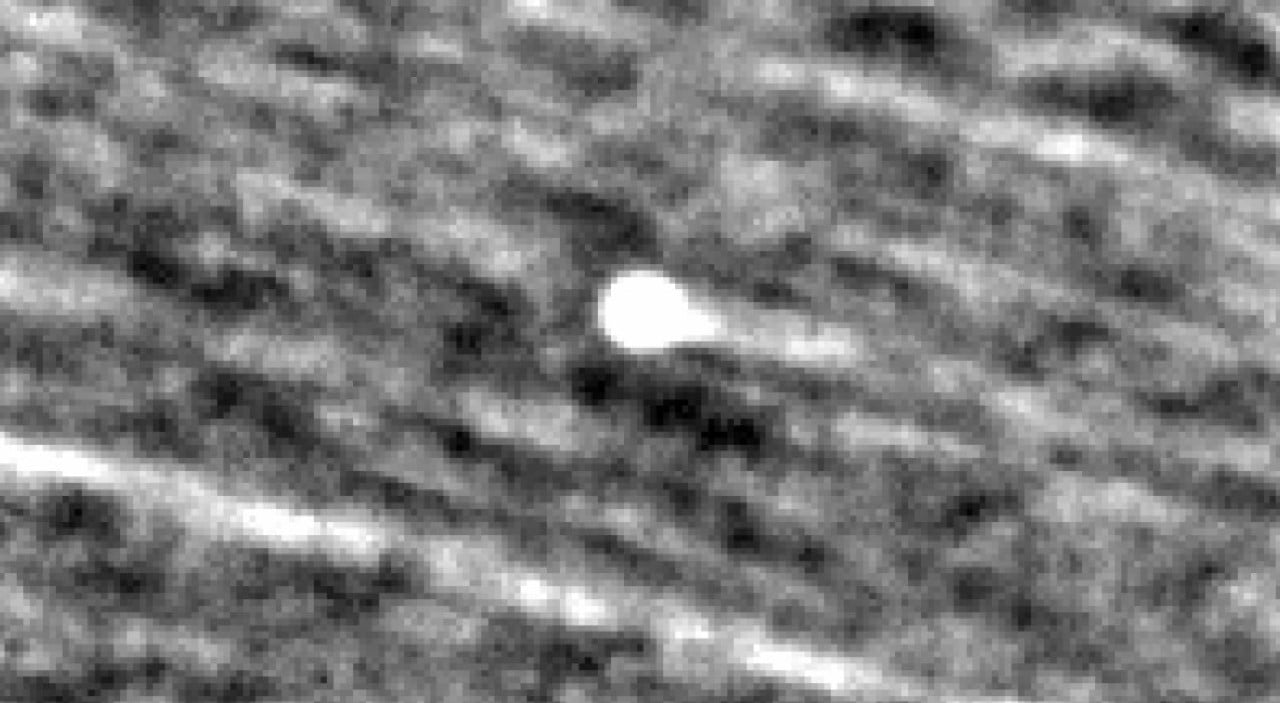
Observations carried out by the probe
Europa Clipper was ideally positioned to observe 3I/ATLAS just after the comet’s perihelion. The UVS instrument detected gases escaping from the nucleus, confirming intense activity typical of comets heated by Sol.
The composite images show the coma, cloud of gas and dust surrounding the nucleus, in different ultraviolet wavelengths. Essas views highlight the ion tail in blue and green tones, while the dust tail appears in red.
Details of the observed tails
The 3I/ATLAS tails showed features consistent with initial models, but included elements that were not fully explained. The ion tail followed directions expected from interaction with the solar wind, but the geometry of the dust tail revealed additional complexity.
Scientists use this data to refine models of the behavior of interstellar comets. The observation distance allowed us to capture extensive structures that ground-based telescopes could not fully access.
Chemical composition detected
The spectrograph identified hydrogen and oxygen atoms released by the sublimation of water ice. Esses elements indicate the presence of water molecules in the comet’s nucleus.
Dust-related signals suggest material ejected from the nucleus. Pesquisadores look for limits or detections of carbon associated with dry ice, common in comets.
Possible traces of other compounds will help compare 3I/ATLAS with objects from Sistema Solar. The composition reflects conditions in the interstellar environment where the comet spent billions of years.
Context of interstellar objects
3I/ATLAS is the third interstellar object confirmed to visit Sistema Solar. The first, 1I/’Oumuamua, passed in 2017 without evident cometary activity.
The second, 2I/Borisov, displayed a clear tail in 2019. Esses visitors offer rare windows into materials from other star systems.
The hyperbolic trajectory of 3I/ATLAS confirms an external origin. Raios cosmic objects have altered their surface over billions of years in interstellar space.
Trajectory and recent perihelion
The comet reached perihelion days before observations of Europa Clipper, about 203 million kilometers from Sol. Essa proximity activated the sublimation of ice, generating the observed tails.
High speed, greater than 60 km/s, characterizes objects not gravitationally bound to Sol. The passage does not pose a risk to Terra, with a minimum safe distance.
Post-perihelic activity
Activity continued intensely after perihelion, with continuous ejection of material. Isso allowed Europa Clipper to record emissions consistent with active comets.
The data reinforces that 3I/ATLAS maintains preserved characteristics of deep interstellar space. Prolonged exposure to cosmic radiation created distinct crusting on its surface.
Importance to astronomy
Studies of interstellar comets reveal planetary formation processes in other systems. The chemical composition indicates an abundance of volatiles such as water and dry ice.
Comparisons with local comets highlight differences caused by distinct environments. Observações like these expand knowledge about the Oort cloud and regions beyond.
Instrument calibration
The meeting served to test and calibrate the Europa-UVS in real conditions. Detection of known emissions validated the spectrograph performance.
These tests prepare the instrument for analysis of the atmosphere of Europa. The accumulated experience benefits the main mission when reaching Júpiter.
The 3I/ATLAS observation represents an unexpected opportunity that enriches the scientific legacy of Europa Clipper. Dados collected remain under analysis by international teams, promising lasting contributions to the understanding of interstellar objects and their relevance to astrochemistry.



