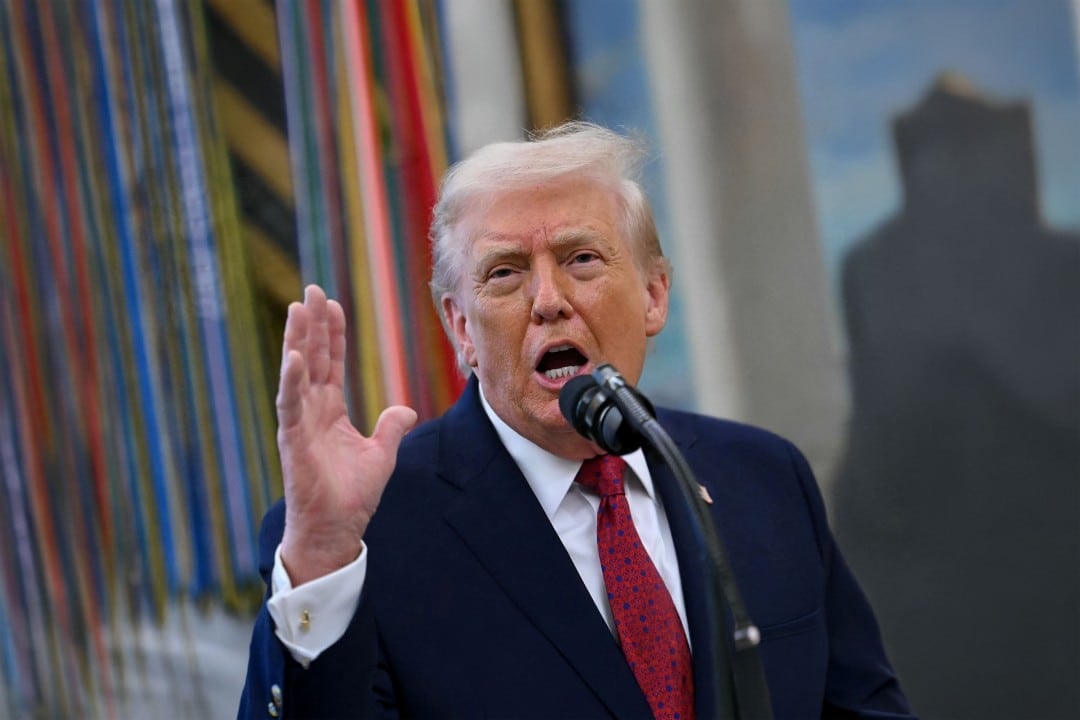
In a move to calm rising diplomatic tensions, the president of Colômbia, Gustavo Petro, has detailed a crucial telephone conversation with the former president of Estados Unidos, Donald Trump. The dialogue, the first direct contact between the two, had as its main focus the complex political situation in Venezuela and the bilateral strategies to combat drug trafficking, topics that have generated significant friction between the two nations.
The contact initiative came from the need to establish a direct line of communication to avoid misunderstandings that could escalate into conflict. Petro has publicly highlighted that the absence of dialogue would represent a dangerous path to war, a scenario he seeks to avoid at all costs to ensure stability in the region. The conversation was later confirmed by Trump through his social networks, where he mentioned the discussion about drugs and other bilateral issues.
This high-level exchange occurred after a period of heated rhetoric, including statements by Trump that suggested the possibility of military intervention in Colômbia. The call therefore served as an attempt to reestablish diplomacy and manage expectations, realigning relations that had been weakened by exchanges of public accusations.
The origin of diplomatic tension
Relations between Bogotá and Washington had deteriorated considerably before the telephone conversation. The verbal escalation reached a critical point when Donald Trump, in public statements, described Colômbia as a “very sick” country, insinuating that the local government was not doing enough to combat drug production and trafficking.
These statements were interpreted by the Colombian government as a direct threat to its national sovereignty. The situation worsened when reports emerged that Trump had considered military action in the country, similar to that planned for Venezuela, under the pretext of eradicating drug trafficking. Essa stance generated a wave of rejection in Colômbia.
Trump’s bellicose rhetoric provoked an immediate reaction not only from the government, but also from the Colombian population. The environment of uncertainty and the perception of an imminent threat made direct dialogue between leaders an urgent necessity to defuse the diplomatic crisis before it spiraled out of control.
The context of mutual distrust highlighted the fragility of existing communication channels. The connection between Petro and Trump was, in this scenario, a fundamental step to replace public statements with private and more constructive negotiation, seeking to reverse the trajectory of confrontation.
Details of the conversation between the leaders
During the phone call, which lasted approximately one hour, President Gustavo Petro took the opportunity to present his vision on the two most sensitive topics on the bilateral agenda. Ele enfatizou a importância de restabelecer canais formais e permanentes de comunicação não apenas entre as presidências, mas também entre as chancelarias de ambos os países para garantir um fluxo de informação constante e confiável.
Petro reiterated his maxim that “if there is no dialogue, there is war”, a phrase that summarized the gravity of the situation from his point of view. The absence of direct conversations, according to him, leaves room for misinterpretations and impulsive decisions that can have unpredictable and devastating consequences for regional peace. The conversation was an effort to fill this diplomatic vacuum with concrete facts and proposals.
The Venezuelan issue as a central point
One of the axes of the discussion was the prolonged crisis in Venezuela, a point of great divergence between the nations of the hemisphere. Colômbia, as it shares an extensive border, deals directly with the humanitarian and security consequences arising from Venezuelan instability, including the migratory flow and the presence of armed groups.
Petro presented to Trump the Colombian perspective on the need for a negotiated and diplomatic solution to Venezuela, contrasting with approaches that favor sanctions and isolation. The position of the Estados Unidos is a determining factor for any outcome, and the alignment of strategies, or at least a mutual understanding, is seen as essential.
The dialogue sought to find common ground or, at the very least, reduce friction over how to deal with the Nicolás Maduro government. Para to Colômbia, stabilization of Venezuela is a national security priority, and the conversation was a platform to advocate an approach that favors regional stability over confrontational policies.
Defense of Colombian drug policy
In direct response to Donald Trump’s criticisms and insinuations about supposed leniency in the fight against drug trafficking, Gustavo Petro vigorously defended his government’s actions. Ele used the conversation to present concrete data that, according to him, prove unprecedented success in cocaine seizure operations. The Colombian president made a point of highlighting that he dedicated two decades of his public life risking his own safety in the fight against powerful cartels, refuting any accusations of inaction. Ele argued that the results obtained by his administration represent “facts, not rhetoric”, detailing that the volumes of drugs intercepted are equivalent to billions of doses that were prevented from reaching the consumer market in Estados Unidos and Europa. Essa reaffirmation of commitment was a strategic point to deconstruct the negative narrative and demonstrate that Colômbia continues to be a fundamental partner, albeit with a renewed approach, in the global war on drugs.
Popular mobilization in defense of sovereignty
Trump’s statements, which were perceived as threats to Colombian sovereignty, did not go unnoticed by the population. In response, thousands of citizens responded to a call from President Petro and mobilized in several cities across the country to express their support for the government and defend national autonomy.
The main demonstration took place in the historic Praça of Bolívar, in Bogotá, where a crowd gathered in a clear sign of unity against any form of external pressure. In his speech at the event, Petro classified the mobilization as a direct and forceful response to the former North American president’s speeches, reinforcing the message that Colômbia would not accept intimidation.
The importance of communication channels
The search for formal and stable diplomatic channels is imperative for maintaining peace and regional cooperation. Interrupted or weakened lines of communication can lead to misunderstandings and escalations of tension that could otherwise be avoided.
Repercussions for América Latina
The relationship between Colômbia and Estados Unidos transcends the bilateral sphere, generating implications for the entire América Latina. The policies and speeches adopted by Washington and Bogotá directly influence the political and economic stability of neighboring countries, especially on sensitive issues such as security, migration and the fight against organized crime.
The way in which the Venezuelan crisis and drug trafficking are managed by these two nations can strengthen or weaken regional alliances. The instability in this relationship serves as a warning of the need for coordinated and diplomatic approaches, as disagreements can quickly turn into crises with continental impact.