
Serious battery defect forces BYD to recall almost 89,000 Qin Plus DM-i vehicles in China


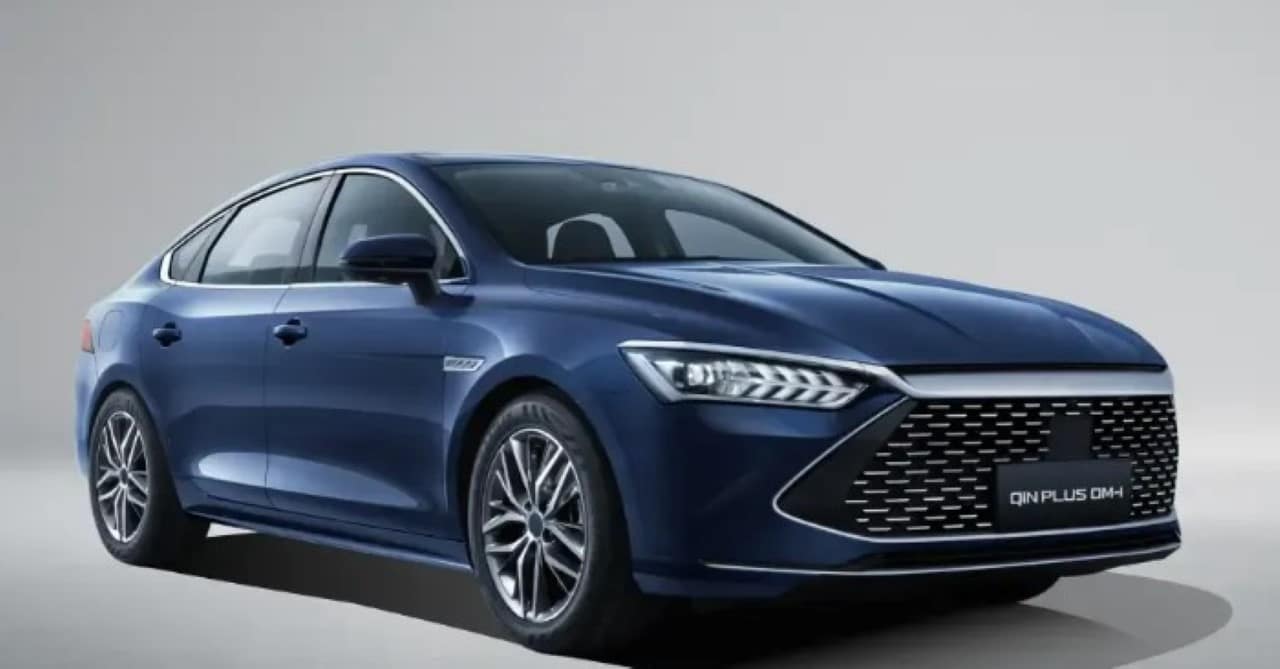
BYD, one of the world’s largest electric vehicle manufacturers, announced a large-scale recall on China involving 88,981 units of its popular plug-in hybrid sedan, the Qin Plus DM-i. The measure was motivated by the detection of a serious flaw in the manufacturing process of the lithium battery pack, which presents potential risks to the safety of occupants and the integrity of the vehicle. The call covers cars produced between January 2021 and September 2023.
The decision was formalized with Administração Estatal to Regulação of Mercado of China (SAMR), the body responsible for supervising the quality and safety of products in the country. Segundo the manufacturer’s official statement, non-compliance can, in extreme scenarios, result in short circuits in the electrical system, increasing the risk of fires. Este recall adds to other recent recalls from the brand, highlighting quality control challenges amid accelerated production to meet growing global demand for electrified vehicles.
The company has already started planning to contact the owners of the affected vehicles and said that the repairs will be carried out free of charge. The solutions involve both software updates and the possible physical replacement of defective components, depending on the diagnosis carried out at authorized dealers. The case reinforces the importance of regulatory vigilance in a rapidly advancing technology sector.
Technical details of the failure and associated risks
BYD’s internal investigation, corroborated by analysis from the Chinese regulatory agency, found that the root of the problem lies in an inconsistency in the battery pack assembly process. Especificamente, the failure is related to inadequate sealing and positioning of certain internal components, which may allow moisture infiltration or improper contact between power cells under certain conditions of use, such as intense vibrations or extreme temperature variations. Essa vulnerability creates a path for a thermal short circuit to occur. Once initiated, this event can lead to a chain reaction known as “thermal runaway”, where the rapid increase in temperature and pressure within the battery pack can result in the release of flammable gases and, consequently, a fire. Além the risk of fire, the failure can also manifest itself in less drastic ways, such as the sudden loss of vehicle power while driving or the impossibility of starting the car, compromising the active and passive safety of passengers. The automaker emphasized that, although the risk is considered high, the probability of occurrence under normal conditions of use is low, but preventive action is essential to guarantee the safety of all customers.
BYD Action and Proposed Solutions
To mitigate the identified risks, BYD developed a two-pronged remediation strategy, combining remote technology and physical intervention. The first step is to release an over-the-air (OTA) software update. Este new firmware improves the battery management system (BMS), making it more sensitive to abnormal variations in voltage, current and temperature. With the update, the system will be able to detect early warning signs of a short circuit, alerting the driver through the instrument panel and, in some cases, limiting the vehicle’s power to avoid a critical event.
The second phase of the recall requires owners to take their vehicles to an authorized dealer for a detailed inspection of the battery pack. Técnicos specialists will carry out a complete check of the structural integrity and internal components of the system. Caso any anomaly or sign of premature wear related to manufacturing fault is found, the battery pack will be replaced in full, at no cost to the customer. The company assured that it has sufficient stock of parts to meet the recall demand and that it is working to minimize vehicle downtime in the workshop.
Affected models and manufacturing period
The recall announced by BYD is specific to the Qin Plus DM-i model, one of the brand’s flagship sales in the Chinese market.
The vehicles involved in the recall were manufactured over a period of more than two years, specifically between January 14, 2021 and September 29, 2023.
Owners can check whether their vehicle is included in the call using the vehicle identification number (VIN) on the manufacturer’s official channels.
The role of the Chinese regulatory agency
The Administração Estatal to Regulação of Mercado (SAMR) of China played a key role in making this recall official.
The agency has intensified oversight of the electric vehicle industry, reflecting the government’s growing concern about consumer safety.
SAMR’s role is not limited to reacting to incidents, but also to establishing more rigorous production and testing standards for critical components, such as batteries.
The automaker’s recent call-up history
This call for the Qin Plus DM-i is not an isolated event for BYD, which has faced other significant calls in recent months.
In October, the company had already carried out a recall for more than 115 thousand units of the Tang DM-i and Yuan Pro models, due to potential fire risks related to other electrical components.
In September, a problem in the air conditioning system that could cause electrical failures led to the recall of almost 97 thousand units of models Dolphin and Yuan Plus.
Adding up the three main recalls carried out in the second half of the year, the number of BYD vehicles called for repair exceeds the mark of 300 thousand units, highlighting the challenges of maintaining consistent quality control during a period of exponential expansion.
Procedures for vehicle owners
BYD will begin notifying owners of affected vehicles via mail, email and telephone contact in the coming weeks.
The company recommends that, until the repair is carried out, drivers remain alert to any alerts on the dashboard or abnormal behavior of the vehicle, such as unexplained loss of autonomy or excessive heating during charging.
BYD Sales Amid Challenges
Despite the news about the recalls, BYD’s sales figures continue to demonstrate the brand’s strong position in the market.
In the month of October, the automaker’s global sales registered an increase of 12% compared to the same period of the previous year, reaching a total of 441,706 units.
The plug-in hybrid (PHEV) segment, of which the Qin Plus DM-i is part, was the main driver of this growth, with a 31% increase in sales, totaling 214,297 vehicles.
This performance suggests that, to date, consumer confidence in the brand and the transition to electrified vehicles has outweighed concerns generated by production failures, although the long-term impact on the company’s reputation remains unknown.



