
BYD’s Qin Plus DM-i model has 89,000 units recalled in China due to lithium battery risk


BYD model Qin Plus DM-i has a recall of 89 thousand units in China due to risk in lithium battery
BYD, recall, Qin Plus DM-i, electric car, lithium battery
BYD, one of the world’s largest electric vehicle manufacturers, announced a large-scale recall on China involving 88,981 units of its popular plug-in hybrid sedan, the Qin Plus DM-i. The measure was motivated by a serious flaw identified in the manufacturing process of the lithium battery pack, which presents potential risks to the safety and operation of cars. The call affects vehicles produced between January 2021 and September 2023.
The call was officially registered with Administração Estatal for Regulação of Mercado of China (SAMR), the body responsible for supervising the quality and safety of products in the country. Segundo the manufacturer’s statement, non-conformity in the component can lead to a power failure while driving the vehicle or, in more extreme cases, to a thermal runaway event, which increases the risk of fire. The company promised to carry out the necessary repairs at no cost to the owners.
The specific failure is related to an inconsistency in the high voltage battery pack assembly process. According to the documentation submitted to the regulatory agency, this irregularity can compromise the internal electrical insulation, increasing the potential for short circuits. The condition represents a significant hazard as it can affect the performance of the vehicle management system (VMS) and, consequently, the safety of the occupants.
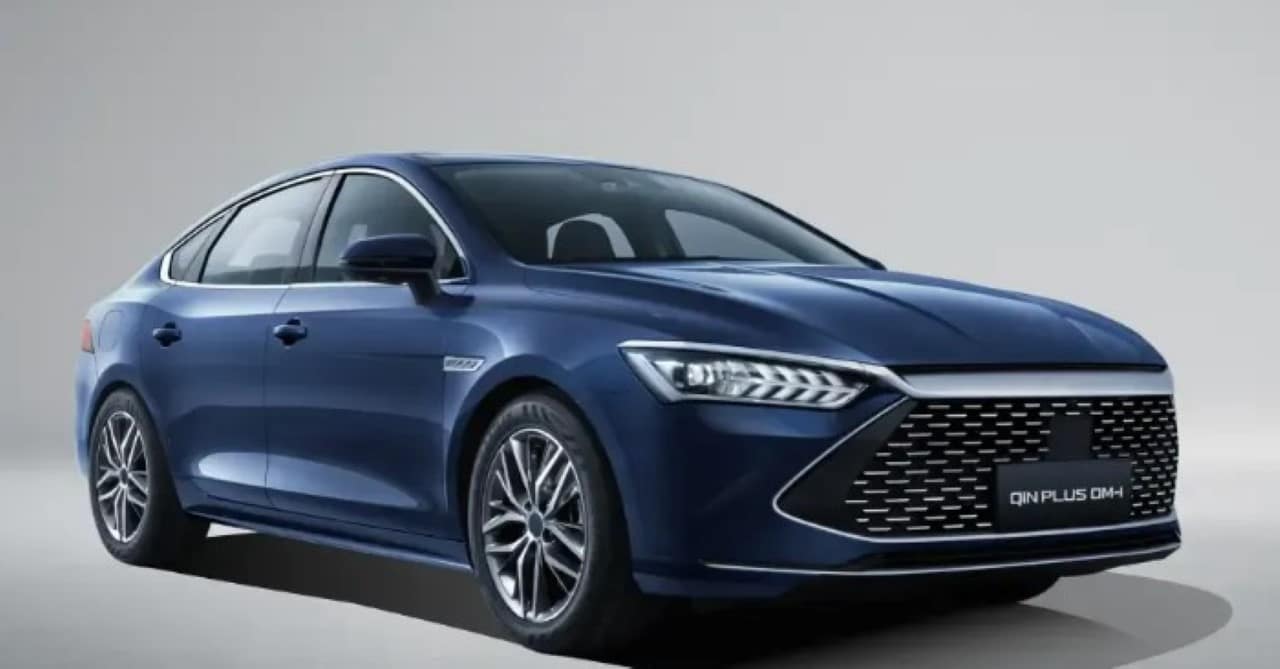
BYD stated that although the probability of the defect occurring is low, the risk associated with a catastrophic battery failure warrants the recall of all potentially affected units. The company stressed that customer safety is its top priority and that all corrective measures will be implemented to completely eliminate the identified hazard.
The solution proposed by the manufacturer
To resolve the issue, BYD outlined a two-step action plan that combines remote technology and physical intervention. The first phase consists of updating the battery management software (BMS) via an over-the-air (OTA) update. Este new software improves the battery monitoring system, allowing it to more accurately detect anomalies that may indicate the presence of a manufacturing defect. The update adjusts the alert parameters so that any deviation in the performance of the power cells triggers an immediate warning to the driver, instructing him to contact an authorized dealer. The second step of the process involves a detailed physical inspection of the battery pack at BYD service centers. Caso the analysis confirms the presence of the manufacturing nonconformity, the assembler will completely replace the defective component, at no cost to the consumer. The company guaranteed that the procedure will be carried out free of charge and that the owners will be contacted to schedule the service.
Associated risks and warning to drivers
The main risk arising from manufacturing failure is the sudden loss of energy while driving, which can compromise drivability and increase the chance of accidents, especially at high speeds. Além In addition, the possibility of thermal runaway, a phenomenon in which the battery temperature increases uncontrollably, represents a serious risk of fire that can destroy the vehicle and endanger the lives of the occupants. The vehicle management system (VMS) may not be able to adequately mitigate this failure.
BYD has advised owners of affected vehicles to be aware of any warning messages displayed on the car’s instrument panel. Embora the software update helps identify the problem, the company reinforces the importance of drivers looking for a dealership as soon as possible after receiving the recall notification to carry out a physical inspection and, if necessary, replace the component.
Corrective measures implemented by BYD
The automaker has started notifying the owners of the almost 89,000 Qin Plus DM-i vehicles involved in the recall. The company is using multiple communication channels, including apps, emails and telephone contact, to ensure that all customers are informed about the need for repair.
The OTA software update has already started to be distributed remotely, being a crucial step towards immediate risk mitigation. Este update does not require a visit to the dealership, as it is installed automatically when the vehicle is connected to a 4G or 5G network.
For cases where physical battery replacement is necessary, BYD has ensured that its dealer network is prepared to carry out the service. The battery pack will be replaced by specialized technicians, following strict safety protocols.
The company has also made an online tool available on its official website where owners can check whether their vehicle is included in the recall by entering the vehicle identification number (VIN). Essa measure aims to facilitate access to information and speed up the correction process.
Recurring call history
This is not an isolated case for BYD, which has faced other significant recalls in recent years. In October of the previous year, the company recalled more than 115 thousand units of the Tang DM-i and Yuan Pro models due to a potential fire risk related to the batteries. The failure, at the time, was also linked to manufacturing problems that could compromise the integrity of the component.
At the beginning of the same year, a recall affected more than 96 thousand units of the Dolphin and Yuan Plus models. The problem identified was in the air conditioning system’s wiring harness, which could cause a short circuit and, in extreme cases, a fire. Essas consecutive calls raise questions about the company’s quality control amid its rapid production expansion.
In total, adding the three main recalls carried out over a period of one and a half years, the number of BYD vehicles recalled for repairs exceeded the mark of 300 thousand units. Essa series of incidents highlights the challenges faced by the electric vehicle industry in maintaining quality and safety standards on a massive production scale.
The role of the Chinese regulatory agency
The Administração Estatal to Regulação of the Mercado of the China (SAMR) has played an increasingly strict role in monitoring the safety of electric vehicles. The agency has intensified oversight of battery quality, a critical component for the safety of EVs. The agency’s proactive action has been essential in pressuring automakers to investigate and correct production flaws quickly. The Chinese market, being the largest in the world for electric vehicles, sets standards that often influence the sector globally.
Steps for Affected Homeowners
BYD has already started contacting the owners of the vehicles involved in the Qin Plus DM-i recall. The company recommends that car owners wait for the official notification, which will be sent through various communication channels. Além In addition, it is possible to check the vehicle’s eligibility for the recall through the manufacturer’s official website, by entering the vehicle identification number (VIN) in an online consultation tool. Para drivers who receive the notification, the next step is to schedule a visit to an authorized dealer for inspection and, if necessary, free replacement of the battery pack.
Increase in sales despite challenges
Despite news about the recall, BYD continues to record significant growth in its global sales. In October, the company’s sales reached 441,706 units, an increase of 12% compared to the same month of the previous year. Esse performance is mainly driven by the plug-in hybrid (PHEV) segment, which saw 31% growth, totaling 214,297 units sold.
On the other hand, sales of 100% electric vehicles (BEV) had a more modest increase of 17%, reaching 222,559 units. The success of PHEV models in the Chinese domestic market, where government subsidies and consumer preference for models with greater autonomy drive demand, reflects the company’s successful strategy to meet local needs.
[/TEXTO_INICIO]



