

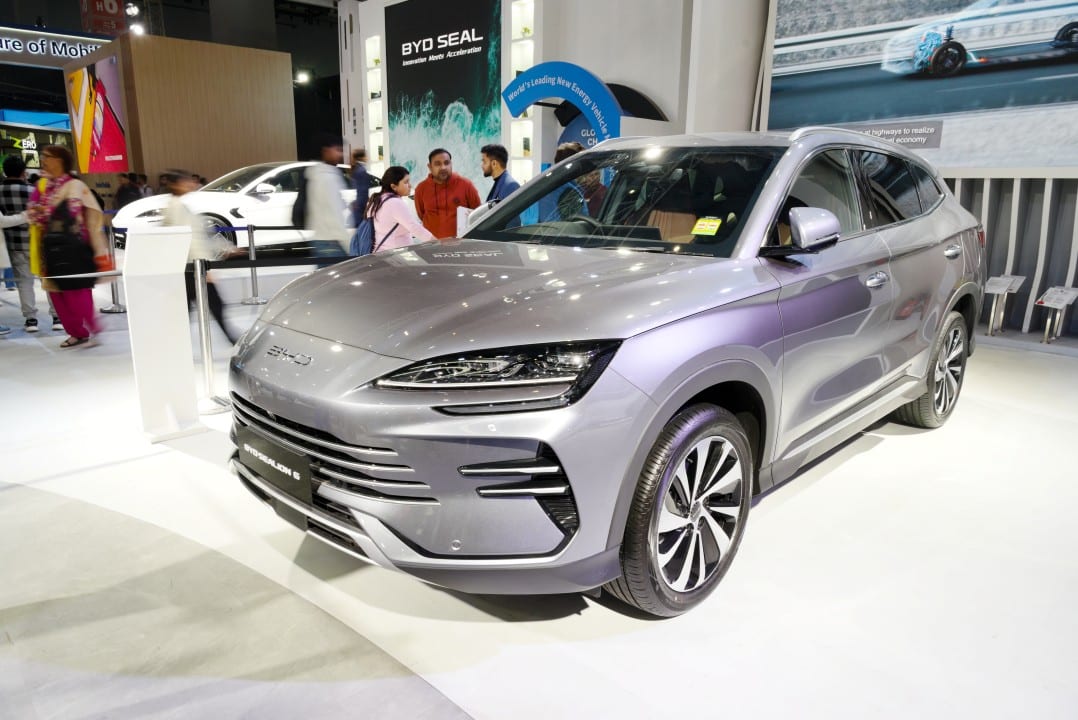
Chinese automaker BYD has officially started sales of the Sealion 6 in the Japão, marking the introduction of its first plug-in hybrid vehicle (PHEV) in the competitive local market. The model, which adopts the advanced fifth generation DM-i technology, arrives to directly challenge the leadership of the Mitsubishi Outlander PHEV, one of the most consolidated SUVs preferred by Japanese consumers.
This launch represents a strategic adjustment by BYD, which since 2023 has operated exclusively with 100% electric vehicles in the country. The inclusion of a plug-in hybrid in the portfolio aims to serve a larger portion of drivers, especially in regions where the charging infrastructure for pure electric vehicles is still under development, offering greater flexibility of use.
Deliveries of the first units are scheduled to begin in a staggered manner. The front-wheel drive (FWD) version is expected to reach customers at the end of January 2026, while the all-wheel drive (AWD) variant is scheduled for delivery in March of the same year, expanding the options available since launch.
Strategy to adapt to the local consumer
To ensure the acceptance of the Sealion 6, BYD invested in specific adaptations for the Japanese market, a public known for its high level of demand. The suspension system was recalibrated to provide a smoother and more comfortable ride, aligned with the conditions of the country’s urban roads and highways. Além In addition, acoustic insulation has been reinforced to minimize external and rolling noise, delivering a quieter and more premium cabin experience.
Other improvements focused on passenger comfort, such as adjustments to the rear seats to optimize space and ergonomics on longer journeys. The brand’s engineering also worked on reducing vibrations coming from the powertrain, a crucial detail for the perception of quality and refinement of the vehicle. Essas modifications demonstrate BYD’s commitment to not just selling a global product, but to carefully adapting it to local expectations.
Design and dimensions comparison
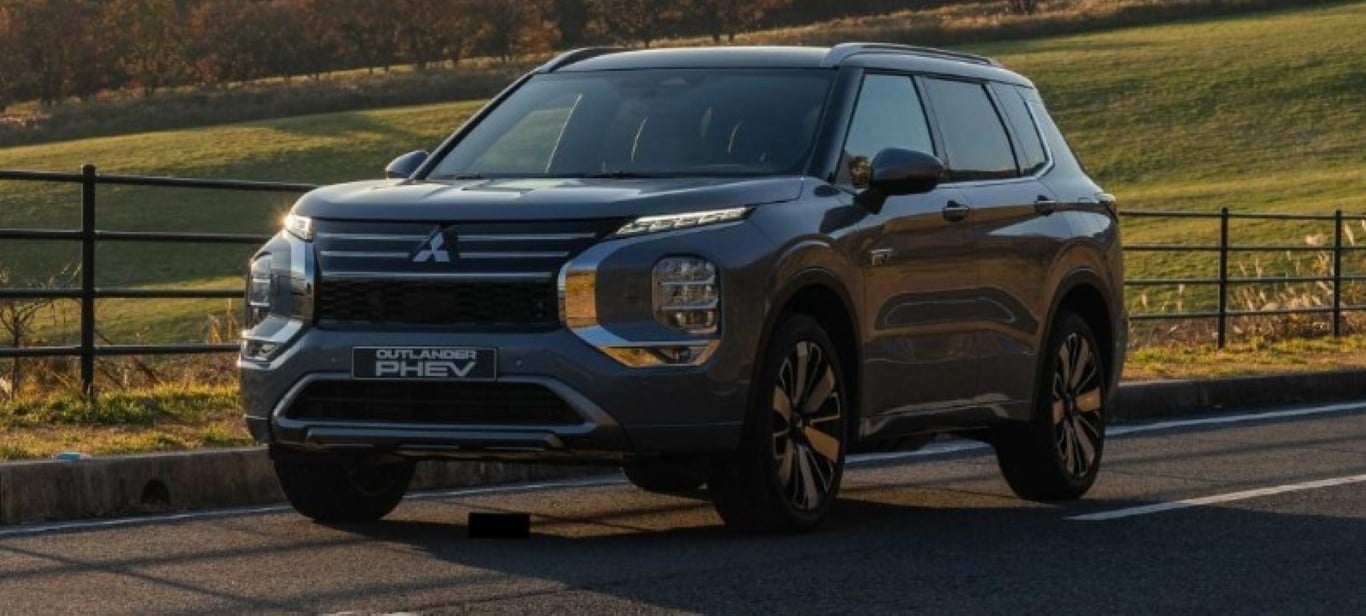
The BYD The design follows the brand’s “Ocean Aesthetics” visual identity, characterized by fluid and smooth lines that evoke the image of waves, resulting in a modern appearance with aerodynamics optimized for energy efficiency. Inside, the highlight is the rotating central screen, a BYD signature, and a finish that seeks to convey sophistication. Já the Mitsubishi Outlander PHEV opts for a more robust and imposing look, with a taller, more rectangular shape. Sua identity is marked by the “Dynamic Shield” front grille, which gives the vehicle a strong and easily recognizable presence. Essa A more traditional, muscular design approach is highly valued in the Japão, where the appearance of ruggedness is often associated with safety and durability. The Outlander also offers the advantage of seven-seat versions, an important differentiator for larger families.
Performance and engine in detail
The entry-level version of the Sealion 6, with front-wheel drive, is equipped with a 145 kW (197 hp) electric motor and 300 Nm of torque, which works together with a 72 kW (98 hp) 1.5-liter gasoline engine. With this configuration, the SUV accelerates from 0 to 100 km/h in 8.5 seconds.
For those looking for more performance, the all-wheel drive (AWD) version increases the combined power to an impressive 270 kW (367 hp) and 550 Nm of torque. The result is acceleration from 0 to 100 km/h in just 5.9 seconds, placing the Sealion 6 at the level of sports SUVs.
In contrast, the Mitsubishi Outlander PHEV uses a 98 kW (133 hp) 2.4-liter gasoline engine combined with two electric motors, one on the front axle (85 kW/116 hp) and the other on the rear (100 kW/136 hp). The model’s biggest difference is its sophisticated S-AWC (Super All-Wheel Control) all-wheel drive system, a technology inherited from the brand’s experience in rallies, which guarantees superior stability and traction in different terrain and weather conditions.
Battery technology and autonomy
One of the Sealion 6’s key strengths is its Blade battery, which utilizes lithium iron phosphate (LFP) chemistry. Essa technology is recognized for its high safety, puncture resistance and increased durability compared to other lithium-ion battery chemistries. The range in purely electric mode is one of its biggest attractions, reaching around 100 km in the local test cycle.
When the two engines are combined, the total autonomy of the Chinese SUV exceeds 1,200 km with a tank of fuel and a full battery, a significant number that eliminates the anxiety of recharging on long journeys. The vehicle also supports direct current (DC) fast charging of up to 18 kW. The Outlander PHEV, in turn, offers an electric range of approximately 80 to 90 km, and is also highly efficient in hybrid mode.
Equipment and price analysis
BYD is betting on an aggressive cost-benefit strategy. The Sealion 6 arrives on the Japanese market packed with standard equipment, even in the entry-level version.
Items such as a panoramic sunroof, heated and ventilated front seats, an advanced infotainment system and a complete package of semi-autonomous driving assistance are included since the FWD model.
The starting price is set at 3,982,000 yen (approximately $26,700) for the FWD version, while the top-of-the-line AWD costs 4,488,000 yen. Esses values are considerably lower than those of the main competitor.
The Mitsubishi Outlander PHEV, in equivalent configurations, has prices starting at values above 5 million yen. Embora more expensive, it benefits from the brand’s reputation for reliability and a vast network of dealerships and after-sales services throughout the Japão.
DM-i hybrid technology
BYD’s DM-i (Dual Motor-intelligent) system prioritizes the use of the electric motor to drive the vehicle most of the time, providing a smooth and silent drive, very similar to a 100% electric car. The combustion engine acts mainly as a generator to recharge the battery, coming into action to move the wheels only in high-speed situations or when maximum power is required, significantly optimizing fuel consumption.
The new competitor in the Japanese market
The arrival of the Sealion 6 intensifies competition in the plug-in hybrid SUV segment on the Japão, offering consumers an alternative with excellent electric range, a complete equipment package and a more affordable entry price.
BYD arrives backed by its global experience, with more than 7.4 million new energy vehicles (NEVs) sold worldwide since 2008. Enquanto This, the Outlander PHEV continues to be a dominant force, backed by brand loyalty and the perception of durability and superior all-wheel drive technology.



