

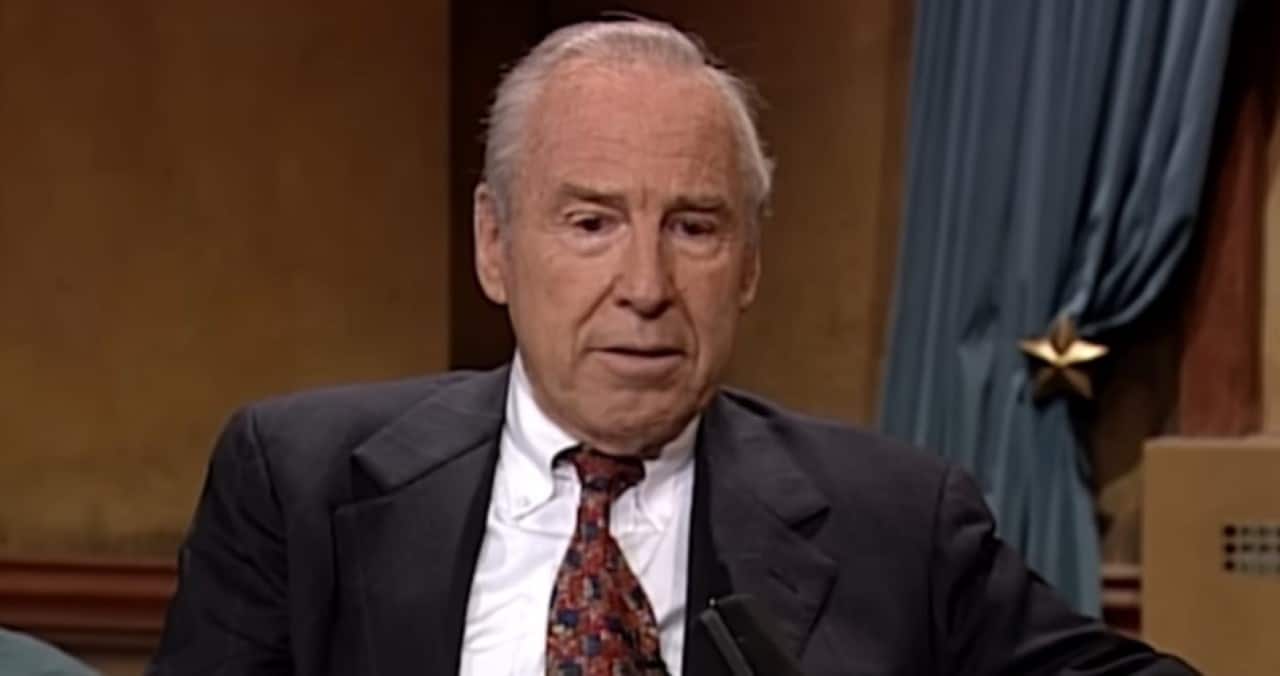
Astronaut James “Jim” Lovell Jr., one of the most iconic figures in space exploration and commander of the dramatic mission The death occurred in Lake Forest, in the state of Illinois, and was confirmed by Nasa, a space agency in which
His career is synonymous with pioneering, having participated in four space missions that were fundamental to the advancement of the North American space program. Lovell was one of the first men to orbit Lua, but he became known worldwide for his calm and precise leadership during the Apollo 13 crisis, an event that turned a potential disaster into one of humanity’s most incredible survival stories.
Lovell’s legacy transcends his technical achievements, representing the human capacity for overcoming and teamwork. Sua story inspired books, films and generations of scientists, engineers and space enthusiasts, cementing his name as a true hero of the space age.
A statement from the family of Apollo astronaut Jim Lovell on his passing:
“We are saddened to announce the passing of our beloved father, USN Captain James A. “Jim” Lovell, a Navy pilot and officer, astronaut, leader, and space explorer.
We are enormously proud of…pic.twitter.com/rz6kbvJ9oa
— NASA (@NASA)August 8, 2025
The journey of a space pioneer
Born Cleveland, Ohio, in 1928, Sua’s space journey began with the mission Gemini 7 in 1965, in which he and astronaut In 1966, he commanded the Gemini 12 mission, the last of the program, alongside Buzz Aldrin, where extravehicular activity (EVA) techniques essential to the success of the Apollo program were improved. Sua experience led him to the historic mission Apollo 8 in 1968, when, together with Borman and
A career of notable achievements
Jim Lovell’s career at Nasa was marked by a series of records and historic milestones that placed him at the forefront of space exploration during Corrida Espacial. Ele was the first man to travel to space four times, accumulating more than 715 hours outside of Terra, a record at the time. Sua participation in crucial missions of the Gemini and Apollo programs demonstrated not only his skill as a pilot and commander, but also his resilience and ability to adapt to extreme environments.
Lovell is one of only three people to have traveled to Lua twice, although, ironically, he has never had the opportunity to walk on its surface. The first trip, with Apollo 8, paved the way for the lunar landing, while the second, with Apollo 13, became an example of crisis management. Sua’s calm under pressure and his leadership were instrumental in guiding the crew safely back to Terra, cementing his reputation as one of the most respected astronauts in history.
The crisis of Apollo 13: “Houston, we’ve had a problem”
In April 1970, the world followed the journey of Apollo 13, which was supposed to make the third human landing on Lua. However, more than 300,000 kilometers from Terra, the explosion of an oxygen tank in the service module drastically changed the course of the mission. The crew, consisting of Lovell, Jack Swigert and Fred Haise, heard a bang followed by critical alerts. Foi it was at this moment that the famous phrase, “Houston, we’ve had a problem”, was communicated to mission control, marking the beginning of a desperate fight for survival.
With the command module rapidly losing power and oxygen, the crew’s only chance was to use the lunar module, named Aquarius, as a “life raft.” The small vehicle, designed to support two men for two days on Lua, had to house three astronauts for almost four days, while they circled the natural satellite to gain the gravitational pull necessary for return. The team faced freezing temperatures, water rationing and a dangerous build-up of carbon dioxide, which required a makeshift solution with parts available on board.
The team’s response on the ground was equally heroic. Engenheiros and flight controllers from Nasa worked tirelessly to create emergency procedures, from conserving energy to manually calculating an accurate reentry trajectory. The safe return of the crew of Apollo 13 on April 17, 1970, was celebrated around the world as a “successful failure” and a testament to human ingenuity.
The cultural legacy of the mission
The saga of Apollo 13 has become a cultural landmark, symbolizing resilience in the face of adversity. The event demonstrated the importance of collaboration and innovation under extreme pressure.
In 1994, Lovell chronicled his experiences in the book “Lost Moon: The Perilous Voyage of Apollo 13”, co-authored with Jeffrey Kluger. The work offered a detailed and personal account of the space crisis.
The book served as the basis for the acclaimed 1995 film “Apollo 13”, directed by Ron Howard and starring Tom Hanks as Lovell. The film popularized the story for a new generation, immortalizing the courage of the Nasa crew and crew.
Tributes and life after Nasa
After his retirement from Nasa and Marinha in 1973, Lovell entered the private sector but remained an influential public figure and an advocate of space exploration. Ele received numerous honors throughout his life, including the Medalha Presidencial from Liberdade, the highest civilian decoration of the Estados Unidos, and the Medalha from Honra Espacial from the Congresso. The news of his passing sparked an outpouring of tributes from space agencies, former colleagues and admirers around the world.
Nasa issued a statement mourning the loss of “one of América’s greatest astronauts”, highlighting his courage and invaluable contribution to science and exploration. Colegas, like Buzz Aldrin, also paid tribute, remembering their friendship and Lovell’s exemplary professionalism. Seu legacy lives on, not only in the historical records of space exploration, but also in the inspiration it continues to provide for future explorers looking to the stars.
The historic mission Apollo 8
Before the Apollo 13 crisis, Jim Lovell participated in another history-changing mission: Apollo 8. In December 1968, he and his crewmates, Frank Borman and Eles orbited the satellite ten times, in a daring mission that served as a crucial test for the future landing of Apollo 11.
During the eve of Natal, the crew held a live broadcast that was watched by millions of people, in which they read the first verses of Livro from Gênesis and shared images of Terra rising over the lunar horizon. The photograph taken by Anders, known as “Earthrise,” became one of the most important records of the 20th century, inspiring the environmental movement and offering humanity a new perspective on its place in the universe.
The bases of the Gemini program
The Gemini missions were fundamental to the development of the technologies and techniques necessary for the lunar voyages of the Apollo program. Jim Lovell played a vital role in two of these preparatory missions. In 1965, on Gemini 7, he and Frank Borman spent 14 days in a confined space, demonstrating that astronauts could withstand long-duration flights. Durante this mission, they carried out the first orbital rendezvous with another manned spacecraft, the Gemini 6A.
The following year, Lovell commanded Gemini 12, with Buzz Aldrin as pilot. The mission was crucial to solving problems with extravehicular activities, or “spacewalks.” Aldrin performed three successful spacewalks using improved techniques and equipment, much of it developed based on previous experience. The success of Gemini 12 ensured that Nasa was ready for the more complex challenges that would be faced on the Apollo missions, paving the way for the conquest of Lua.



