Trump anticipates meeting with Venezuelan opposition leader María Corina Machado next week amid reconstruction plans Por Luís Pereira
6 min de leitura
 |
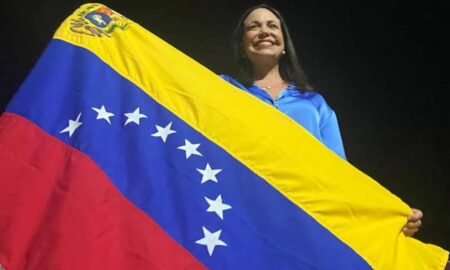
U.S. President Donald Trump indicated on Thursday that he anticipates meeting with Venezuelan opposition leader María Corina Machado in Washington next week. This announcement signals a potential shift in diplomatic engagement concerning the South American nation, preceding Trump’s outlined ambitious plans for Venezuela’s reconstruction, particularly focusing on revitalizing its crucial oil industry with significant American corporate involvement. This planned interaction underscores a renewed strategic interest in the country’s political and economic trajectory.
During an interview on Fox News’s “Hannity” program, Trump was questioned directly about prospective meetings with Machado, especially concerning broader U.S. strategies toward Venezuela. He confirmed her impending visit, stating, “Well, I know she’s coming next week and I look forward to greeting her,” implying a significant high-level engagement.
This prospective encounter marks a pivotal moment, as reports suggest it would be Trump’s first direct meeting with Machado. It also follows prior remarks from the president that had once expressed doubts about Machado’s domestic support, adding a layer of complexity to the anticipated discussions regarding Venezuela’s political future.
Venezuelan Political Landscape
The future of Venezuela’s governance remains highly uncertain amidst persistent internal political divisions and a complex international standing. Despite ongoing calls for democratic transitions, the nation has struggled to achieve a consensus on a viable path forward, complicating efforts to establish a stable and representative government.
President Trump has previously expressed skepticism regarding the immediate feasibility of free elections in Venezuela. He emphasized that the country would require substantial foundational rebuilding before any credible electoral process could be implemented, noting, “They wouldn’t be able to hold elections […] They wouldn’t even know how to hold elections right now.”
Economic Reconstruction Priorities
A central pillar of Trump’s outlined strategy for Venezuela involves a massive overhaul and revitalization of its oil sector, a move designed to stabilize the nation’s economy. Venezuela, a long-standing member of OPEC, possesses some of the world’s largest proven oil reserves, making its energy industry critical to global markets.
Under the proposed plan, U.S. oil companies are expected to play an instrumental role in this reconstruction. High-ranking officials have indicated that crude oil sales to the United States would commence immediately upon a new framework, with an initial shipment estimated at 30 to 50 million barrels, continuing indefinitely. This initiative seeks to rapidly restore critical revenue streams and global supply stability.
Trump announced a forthcoming meeting with oil industry executives at the White House, slated for Friday. He underscored the critical participation of these corporations in rebuilding Venezuela’s extensive oil infrastructure, predicting investments of at least $100 billion. Key components of this rebuilding effort include:
* Modernization of drilling and extraction technologies.
* Repair and expansion of pipeline networks.
* Upgrade of refineries and export terminals.
These investments are crucial for the nation’s recovery and its re-entry into the global energy market.
Diplomatic Engagements and Regional Stakes
The planned discussions with María Corina Machado and the ambitious economic initiatives signal a comprehensive U.S. approach to the Venezuelan crisis. Such high-level engagements are often perceived as a means to consolidate support for opposition movements while preparing for potential transitions in leadership.
Washington’s increased focus on Venezuela’s political and economic future has broader implications for regional stability in Latin America. The country’s ongoing humanitarian and migratory crises have impacted neighboring nations, prompting international calls for a resolution that fosters democratic institutions and economic recovery.
The president’s shifting stance on engaging with Machado, from previous dismissal to an anticipated greeting, highlights a pragmatic adjustment in strategy. This evolution could reflect a recognition of the need for unified opposition support to effectively navigate Venezuela’s intricate political challenges.
Experts suggest any significant U.S.-backed economic intervention would require a robust political framework to succeed, emphasizing the interconnectedness of governance stability and investment security. The commitment of U.S. oil companies hinges on clear legal and operational assurances within Venezuela, underscoring the delicate balance required for success.
Rebuilding Trust Amidst Complex Challenges
The path to a democratic transition in Venezuela is fraught with significant hurdles, despite the optimism surrounding potential U.S. involvement. Years of profound political polarization, institutional decay, and severe economic hardship have deeply entrenched the challenges faced by any reform efforts. Rebuilding trust among a fractured populace and establishing transparent, credible electoral processes will necessitate sustained international pressure alongside robust internal political will from all stakeholders.
The logistical complexities of organizing nationwide elections in a country with severely damaged infrastructure and deeply rooted political factions present a formidable task. Trump’s assessment that Venezuela is not currently equipped to conduct fair and free elections aligns with observations from various international bodies that have monitored the country’s electoral integrity over recent years, underscoring the necessity for comprehensive pre-electoral reforms and substantial preparatory efforts.
Venezuela’s Pivotal Oil Future
Venezuela’s vast oil wealth, while being the source of much of its past economic prosperity, has also been a central point of geopolitical contention and internal conflict. The proposed $100 billion investment from U.S. companies aims not only to restore production volumes but also to modernize an industry that has suffered from years of underinvestment and mismanagement. This revitalization is envisioned as the primary engine for broader national recovery, providing the necessary revenue streams to address social needs, rebuild infrastructure, and support the establishment of stable public services. The quality and sheer quantity of Venezuela’s crude reserves, which Trump described as “incredible, of unbelievable quality and quantity,” make it an attractive target for foreign investment despite significant political risks.
Shifting Diplomatic Trajectory
The anticipated meeting between Trump and Machado signifies a notable diplomatic realignment, particularly after periods of strained relations and limited direct high-level engagement. This move could potentially reshape international perceptions of the Venezuelan opposition’s viability and strengthen its position in ongoing negotiations for political change within the nation.