
The Honda HR-V’s renewed look is pleasing, but technology and space are challenges compared to the competition By Carolina Costa
6 min read
 |
The new generation of the Honda HR-V arrived on the market with the mission of reaffirming its prominent position in the fierce compact SUV segment. With a completely redesigned design, the model relies on more sober and sporty lines to attract consumers, maintaining the Japanese brand’s reputation for reliability and construction quality.
However, Honda’s strategy faces a more complex competitive landscape than ever before. The evolution of traditional competitors and the aggressive arrival of new brands, especially Chinese ones, with portfolios full of technology and hybrid engines, pose significant challenges to the HR-V in terms of interior space, connectivity and cost-benefit.
This new market dynamic forces the consumer to make a more careful analysis, weighing the tradition and high liquidity of an Honda against the innovative and equipment-filled proposals of new rivals. The success of the new HR-V will depend on its ability to convince the public that its attributes outweigh its limitations.
A design that prioritizes aesthetics
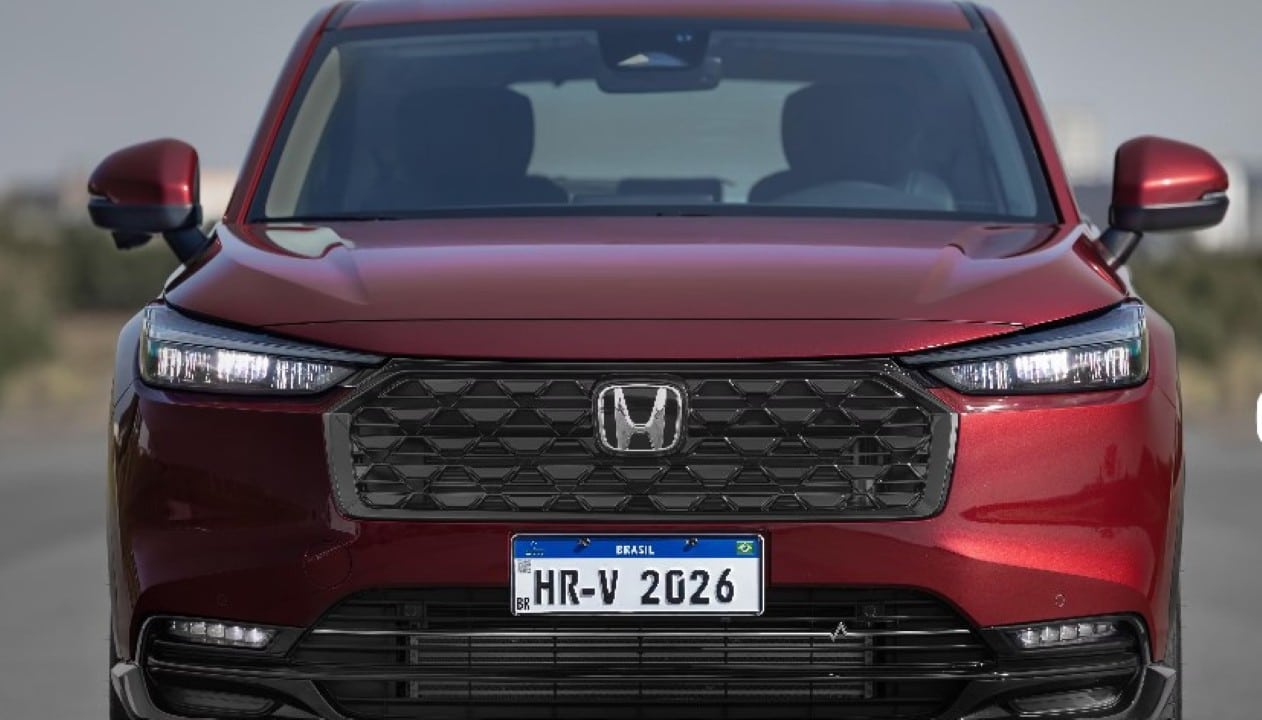
One of the main assets of the new Honda HR-V is, without a doubt, its visual appeal. The brand opted for a cleaner, more minimalist design, with a silhouette reminiscent of coupe SUVs, evidenced by the sharp drop in the roof at the rear and the rear door handles embedded in the column. The front features an imposing grille that integrates with tapered full LED headlights, giving it a modern and sophisticated appearance. At the rear, the headlights interconnected by a light bar follow the current market trend and reinforce the width of the vehicle. Essa clear intention to create a car with strong emotional appeal, however, resulted in practical sacrifices. The choice for a lower roof and a sloping rear directly impacted the head space of the back seat occupants and, mainly, the volume of the trunk, a point that became one of the model’s biggest vulnerabilities compared to its main competitors.
1.5 turbo engine performance
Under the hood of the more expensive versions, the HR-V features the 1.5 DI VTEC Turbo Flex engine, which delivers 177 horsepower and 24.5 kgfm of torque. Estes numbers guarantee agile performance for the SUV, with competent accelerations and restarts both in urban traffic and on highways. The vehicle accelerates from 0 to 100 km/h in around 8.9 seconds, a respectable time for the category, putting it on par with other turbocharged rivals. The performance is enough to provide a safe and, to a certain extent, fun drive, responding well to accelerator commands.

The mechanical set is complemented by the CVT automatic transmission, which simulates seven gears. Sua calibration prioritizes comfort and efficiency, with smooth and almost imperceptible shifts in normal driving. Contudo, in situations of more intense acceleration, the gearbox exhibits the characteristic behavior of CVTs, increasing the engine speed and keeping it at a high speed, which generates a more prominent noise in the cabin. Para drivers looking for a more sporty driving experience, this feature may be a point of dissatisfaction, although it does not compromise the effectiveness of the package.
Fuel consumption and the absence of electrified options
Regarding energy efficiency, the 1.5 turbo engine presents adequate numbers for its power. According to official data, consumption in the city is around 10 km/l and on the highway it reaches 12 km/l with gasoline. São reasonable values, but which do not stand out in a market increasingly dominated by hybrid options.
The main criticism of Honda’s strategy for the HR-V in the market is the lack of a widely available hybrid version. Enquanto direct competitors such as the Toyota Corolla Cross and models from brands such as GWM and BYD offer more efficient hybrid systems and with tax advantages in some states, the HR-V relies almost exclusively on combustion engines, which leaves it at a disadvantage in this regard.
Featured Honda Sensing security package
One of the strengths of the Honda HR-V is the package of safety and driver assistance technologies, known as Honda Sensing. Ele is present in all versions of the model and is one of the most complete in its category, offering a high level of protection for occupants.
Among the main features, the adaptive cruise control (ACC) with stop and start function in traffic jams, the collision mitigation braking system (CMBS), which can automatically apply the brakes to avoid or reduce the impact of a crash, and the lane keeping system (LKAS) stand out.
Other features include the lane avoidance mitigation system (RDM) and automatic high beam adjustment. Embora is a robust package, it is important to note that many of these items have already become common in the segment, and the absence of features such as blind spot warning in all versions is a notable flaw.
Internal space and trunk as critical points
If the design pleases, the same cannot be said about the practicality and interior space, which have become the main weaknesses of the new HR-V. The trunk, with a capacity of just 354 liters, is one of the smallest among compact SUVs, falling significantly behind direct rivals.
For comparison purposes, the Hyundai Creta offers 422 liters, the Chevrolet Tracker 393 liters and the Volkswagen T-Cross 373 liters. Essa difference of almost 25% compared to some competitors is a decisive factor for families who need more luggage space when traveling or in everyday life.
The situation is also critical in the back seat. The elevated central tunnel makes it difficult to accommodate a fifth passenger, and headroom is limited for larger adults due to the curvature of the roof. The big loss, however, was the extinction of the Magic Seat seat folding system, which was an exclusive and highly praised differential in the previous generation.
The absence of this system, which allowed exemplary modularity of the internal space for the transport of tall objects, removed one of its strongest selling points from the HR-V, making it a less versatile and functional vehicle for those who need flexibility in the use of space.
Multimedia center and connectivity
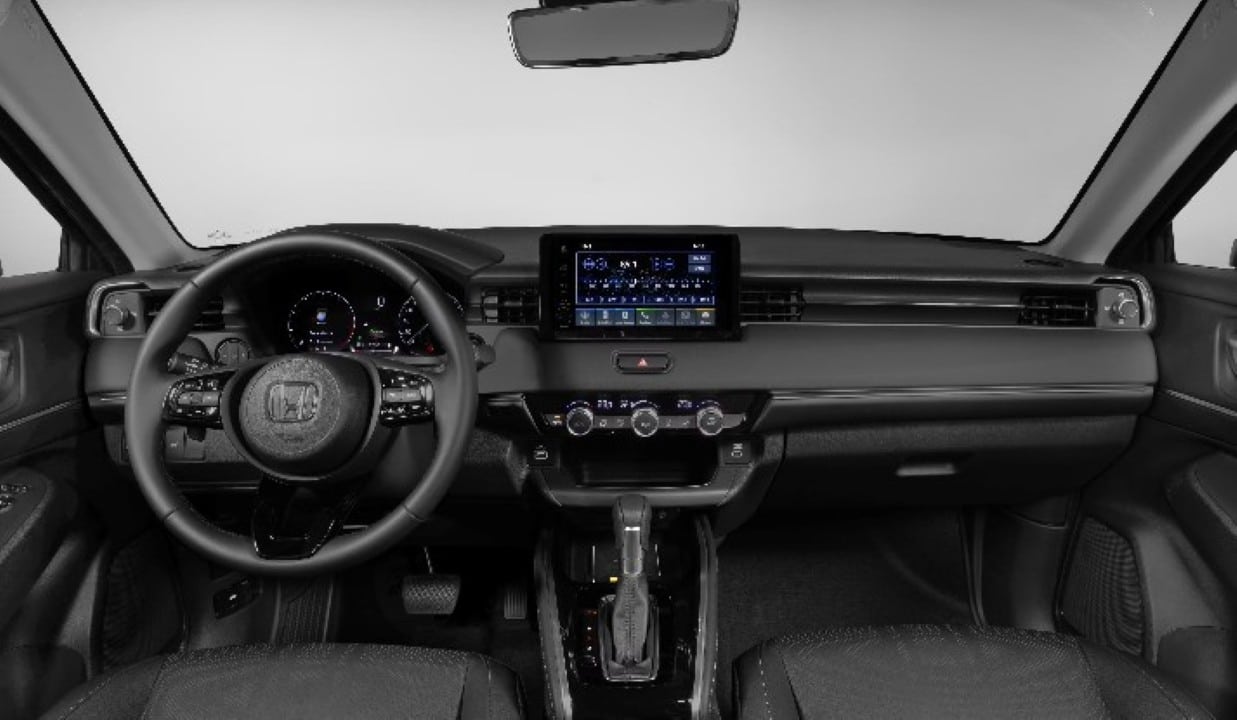
The interior of the HR-V displays a good quality finish, with materials that are pleasant to the touch and careful assembly. However, the infotainment system feels dated compared to the competition. The multimedia center, although compatible with Android Auto and Apple CarPlay, does not offer wireless connection, a feature increasingly present even in lower segments. The screen interface is not the most intuitive and its resolution and processing speed have already been surpassed by more modern systems offered by rivals.
Price analysis and market positioning
The Honda HR-V is positioned in a competitive price range, but that puts it in direct confrontation with a wide range of competitors. The top-of-the-line version, Touring, exceeds R$200,000, a value that allows consumers to consider larger, more powerful SUVs or those with hybrid technology.
At this price level, models such as the Haval H6 and the BYD Song Plus appear as attractive alternatives, offering hybrid engines, more equipment and greater internal space. The purchasing decision therefore becomes a dilemma between the solid after-sales reputation and reliability of the Honda and the more aggressive value package offered by the new brands.











