
Honda HR-V attracts with its sporty look but faces challenges with technology and space against rivals


The Honda HR-V has established itself as one of the most visually appealing compact SUVs on the market, attracting consumers with its modern and bold design. The current generation of the model has improved its lines, giving it a more sophisticated and dynamic appearance, which makes it stand out in an increasingly competitive segment. Essa strategy of focusing on aesthetics has guaranteed the vehicle a loyal base of admirers and a prominent place on the streets.
However, behind the elegant bodywork, the HR-V faces stiff competition that exposes some of its weaknesses. Rivais, including models from traditional brands and new Chinese automakers, have made significant advances in technology, engines and practicality. Essa Market evolution places the Honda SUV in a position where its design alone may not be enough to justify the consumer’s choice.
A detailed analysis of its resources, performance and, most importantly, its value proposition reveals a complex scenario. Pontos such as trunk capacity, the absence of hybrid engine options and certain limitations in its technological package are critical factors that weigh in the purchasing decision, especially when compared with aggressive offers from other manufacturers.
Bold design and visual appeal as strong points
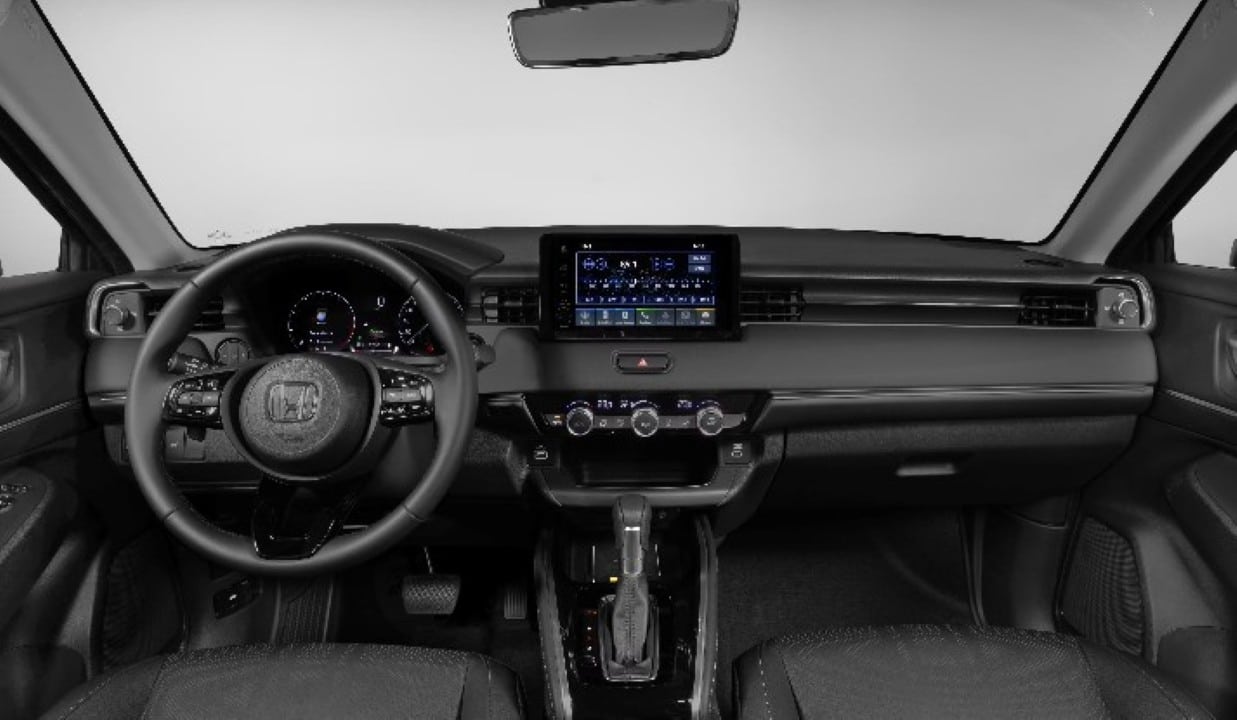
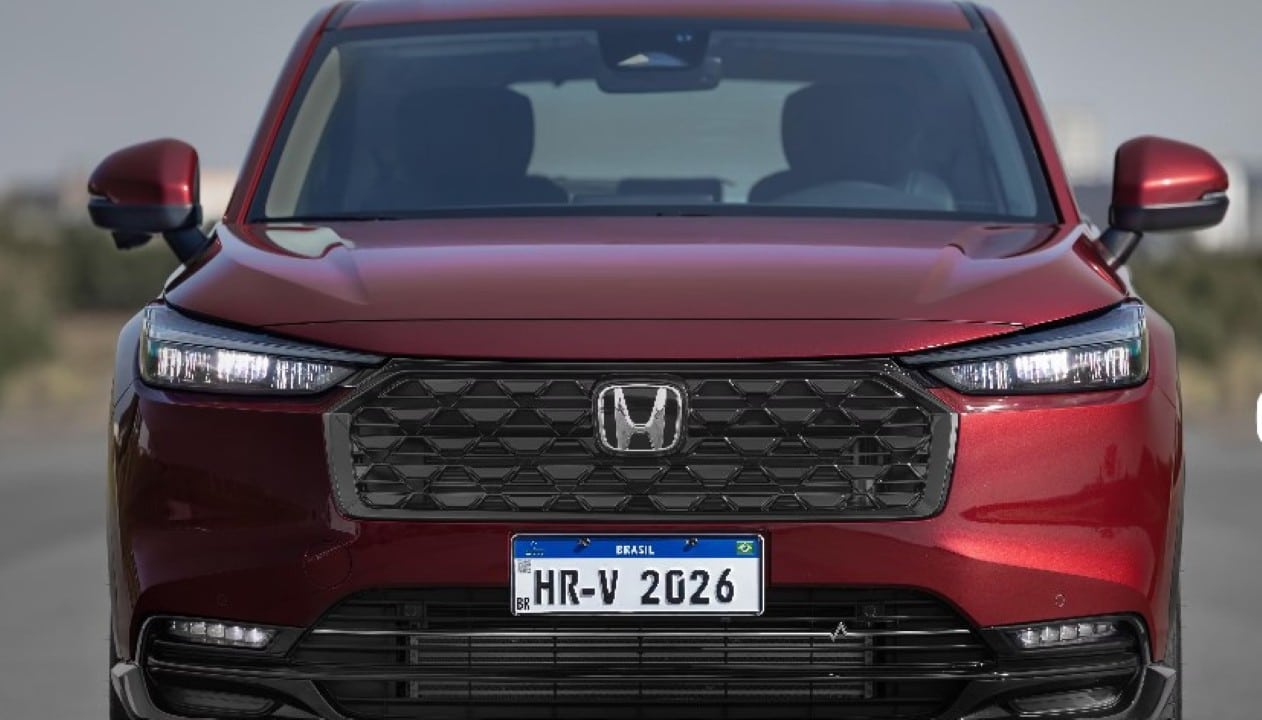
One of the greatest merits of the Honda HR-V lies in its carefully crafted aesthetics, which combine elements of a robust SUV with the fluidity of a coupe. The front is marked by an imposing grille and tapered full LED headlights, which create a modern and aggressive visual identity. The rear, with its soft roofline, reinforces the sporty profile and differentiates it from competitors with more traditional and square lines. Essa concern for design extends to details, such as the rear door handles embedded in the column, a feature inherited from the previous generation that contributes to a cleaner look. Inside, the HR-V also seeks to convey a feeling of superior quality, with a panel with horizontal lines, soft-touch materials and a good fit of the parts. Ergonomics is a positive point, with well-positioned and easily accessible controls, providing a comfortable driving experience. The internal versatility, one of the pillars of the Honda, is highlighted by the seat folding system, which allows the space to be configured in different ways to accommodate loads of different sizes, a practical advantage that many rivals do not offer with the same efficiency.
1.5 turbo engine performance under analysis
The top-of-the-line versions of the HR-V, Advance and Touring, are equipped with a 1.5 turbo engine with direct fuel injection, which delivers 177 horsepower and 24.5 kgfm of torque. Esses numbers guarantee vigorous performance for the SUV, with agile accelerations and safe restarts, making driving a pleasure both in urban traffic and on highways. The vehicle accelerates from 0 to 100 km/h in approximately 8.9 seconds, a competitive time for the category, surpassing many of its direct rivals that use smaller displacement or naturally aspirated engines.

The mechanical set is complemented by a CVT automatic transmission that simulates seven gears. The Honda calibrated this gearbox to offer a smooth and linear response, prioritizing comfort and fuel efficiency. Under normal conditions of use, the transmission operates discreetly and efficiently. Contudo, during stronger accelerations, the characteristic noise of the engines coupled to this type of gearbox becomes more evident in the cabin, which can be a point of discomfort for drivers who prefer a quieter and more refined driving experience. In terms of consumption, the numbers are adequate, but they are already surpassed by competitors who have invested in hybrid technologies.
Honda Sensing: a safety package with limitations
All versions of the HR-V leave the factory with the Honda Sensing safety and driver assistance technology package, which represents an important differentiator. Este feature set includes valuable items for active vehicle safety.
Among the main features are the adaptive cruise control (ACC), the collision mitigation braking system and the lane keeping system. Essas technologies help the driver maintain a safe distance from the vehicle in front and correct the trajectory if the car leaves the lane unintentionally.
Although its presence is a positive point, the operation of some systems reveals limitations. ACC, for example, may behave hesitantly in heavy traffic situations, with braking and acceleration less smooth than those observed in more modern competitor systems.
Furthermore, the lane keeping assistant only works from 72 km/h, which limits its usefulness in urban environments, where inattention can frequently occur. The absence of a blind spot warning in all versions is also a notable flaw, as this is an increasingly common and valued feature in the segment.
The trunk and interior space challenge
Practicality is a fundamental criterion when choosing an SUV, and in this regard, the Honda HR-V falls short. Seu trunk has a capacity of just 354 liters, a considerably smaller volume when compared to its main competitors on the market.
To give you an idea, models like the Volkswagen T-Cross offer 373 liters, the Hyundai Creta reaches 422 liters, and the Toyota Corolla Cross offers 440 liters. Essa difference of almost 25% compared to some direct rivals can be a decisive factor for families or for those who need to transport luggage and bulky objects frequently.
The absence of a hybrid version on the market
While the global and Brazilian automotive market is rapidly moving towards electrification, Honda has chosen not to offer a hybrid version of the HR-V in the country. Essa strategic decision leaves the model at a direct competitive disadvantage.
Strong competitors have already established their credentials with hybrid engines. The Toyota Corolla Cross Hybrid, for example, became a sales success by combining the robustness of an SUV with extremely low fuel consumption, attracting an audience focused on economy and sustainability.
Furthermore, new brands, mainly Chinese ones such as BYD and GWM, entered the market with an aggressive portfolio of hybrid and electric vehicles, offering more technology and energy efficiency at competitive prices, which puts even more pressure on purely combustion models such as the HR-V.
Connectivity and finish: a mix of modern and dated
The interior of the HR-V stands out for its good finish and the quality of the materials used, conveying a feeling of durability and refinement. Contudo, the entertainment system, although functional and compatible with wireless Android Auto and Apple CarPlay, feels like a step behind its more technological rivals. The 8-inch screen is small by current standards in the segment, where competitors, especially those of Chinese origin, already offer larger screens, with faster and more intuitive interfaces.
Price range and cost-benefit in check
The top-of-the-line version of the Honda HR-V, the Touring, has a price that positions it in a highly competitive range of the market. With prices approaching R$200,000, the model starts to compete not only with other compact SUVs, but also with options from higher categories and more advanced technologies.
At this price level, the consumer finds more economical hybrid alternatives full of technology, which puts the HR-V’s cost-benefit ratio in a delicate position. The choice for the Honda model ends up depending largely on the weight that the buyer attributes to the brand’s design, drivability and reputation for reliability, to the detriment of practical aspects such as space and technological innovation.



