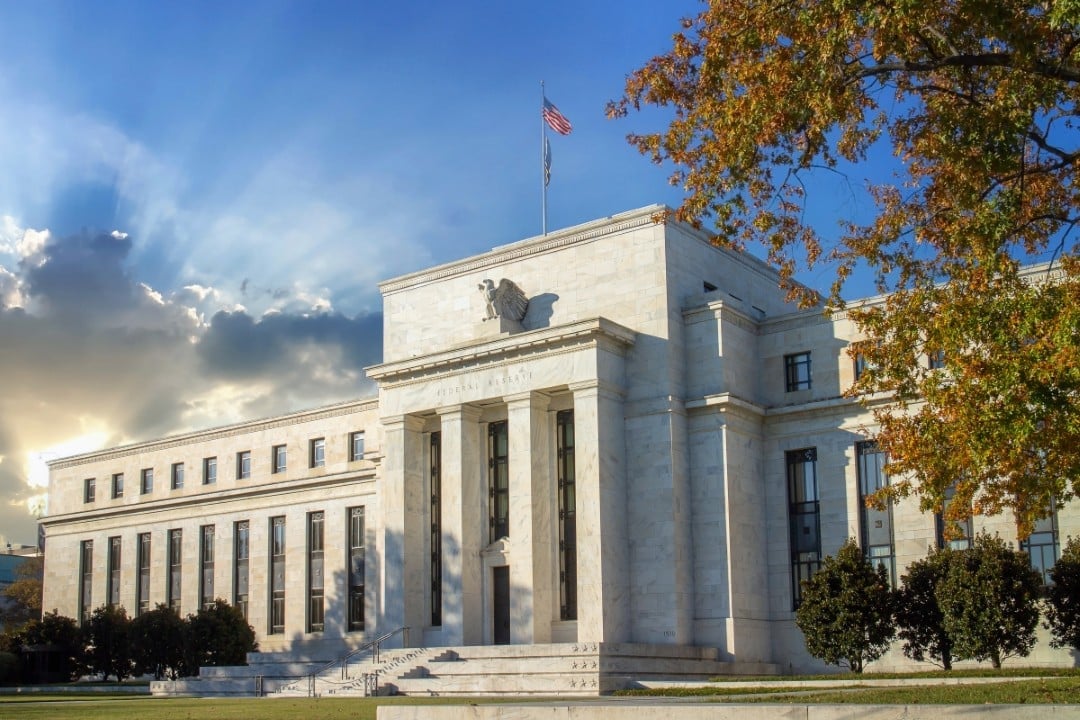
Wall Street opened lower this Monday, January 12, 2025, as investor anxieties escalated over the independence of the Federal Reserve and ongoing federal investigations. Major indices registered declines across the board; the Dow Jones fell 0.52% to 49,248 points, the S&P 500 slipped 0.22% to 6,950 points, and the Nasdaq Composite decreased 0.18% to 23,628 points, signaling broad market apprehension about economic and political stability.
This market reaction follows the revelation of a criminal investigation targeting the central bank, alongside new economic policies announced by President Trump.
The confluence of these events has heightened uncertainty, pushing investors to adopt a cautious stance ahead of critical economic data releases later in the week.
Federal probe challenges central bank autonomy
Federal prosecutors launched a criminal investigation into the $2.5 billion renovation of the Federal Reserve’s Washington headquarters, drawing intense scrutiny to the institution. Adding to the gravity, Chairman Jerome Powell confirmed on Sunday, January 11, 2025, he is under investigation for resisting pressure from the Trump administration to lower interest rates. This development directly undermines perceptions of the central bank’s political neutrality, a cornerstone for investor confidence and the effective implementation of monetary policy.
Trump’s policy directives reshape key sectors
President Trump announced a one-year, 10% cap on credit card interest rates, effective January 20, 2025. This move immediately impacted financial stocks, as markets began to price in reduced profitability for lenders and credit card companies.
Furthermore, Trump declared he might block Exxon Mobil from investing in Venezuela, following CEO Darren Woods’ comments about the country being “unviable for investments.” This highlights the administration’s willingness to use executive power to influence corporate strategy.
Banking and credit firms face immediate downturn
Shares of Citigroup plummeted almost 3% in early trading, reflecting significant investor apprehension.
JPMorgan Chase experienced a fall of more than 1%, while Bank of America also saw its stock decline by nearly 1%.
American Express, a major credit card provider, lost over 4% of its value, indicating broad concern within the sector.
Consumer finance companies like Synchrony Financial, Bread Financial, and Capital One recorded even steeper drops of 6%, 11%, and 6%, respectively.
Energy giant Exxon Mobil hit by political rhetoric
Exxon Mobil’s stock fell nearly 2% following the presidential declaration. The potential ban on Venezuela investments could disrupt the company’s long-term regional strategies.
This incident underscores the increasing sensitivity of global energy markets to political statements and potential government interventions, particularly in resource-rich but unstable regions.
Inflation data poised to influence Fed’s next steps
All eyes now turn to the U.S. consumer price inflation report, slated for release on Tuesday, January 13, 2025. This economic indicator holds immense weight for assessing the Federal Reserve’s future moves.
The report’s findings will be crucial for guiding market expectations on potential interest rate adjustments and the overall direction of monetary policy in the coming months.
Market forecasts reflect complex economic landscape
Amidst the immediate market volatility, long-term economic projections offer a mixed outlook. J.P. Morgan predicts a potential Fed interest rate hike in 2027, signaling expectations of sustained economic growth that could eventually lead to inflationary pressures requiring central bank intervention.
Conversely, market consensus has revised down the inflation projection for the current year to 4.05%, suggesting some moderation in price pressures compared to previous estimates.
These diverse forecasts highlight a complex environment where immediate political pressures and ongoing investigations intersect with evolving monetary policy strategies, demanding careful navigation from investors.
Navigating uncertainty in global financial markets
The combination of federal probes, direct presidential intervention in corporate affairs, and eagerly anticipated economic data creates a challenging environment for investors worldwide, emphasizing the need for strategic vigilance.