

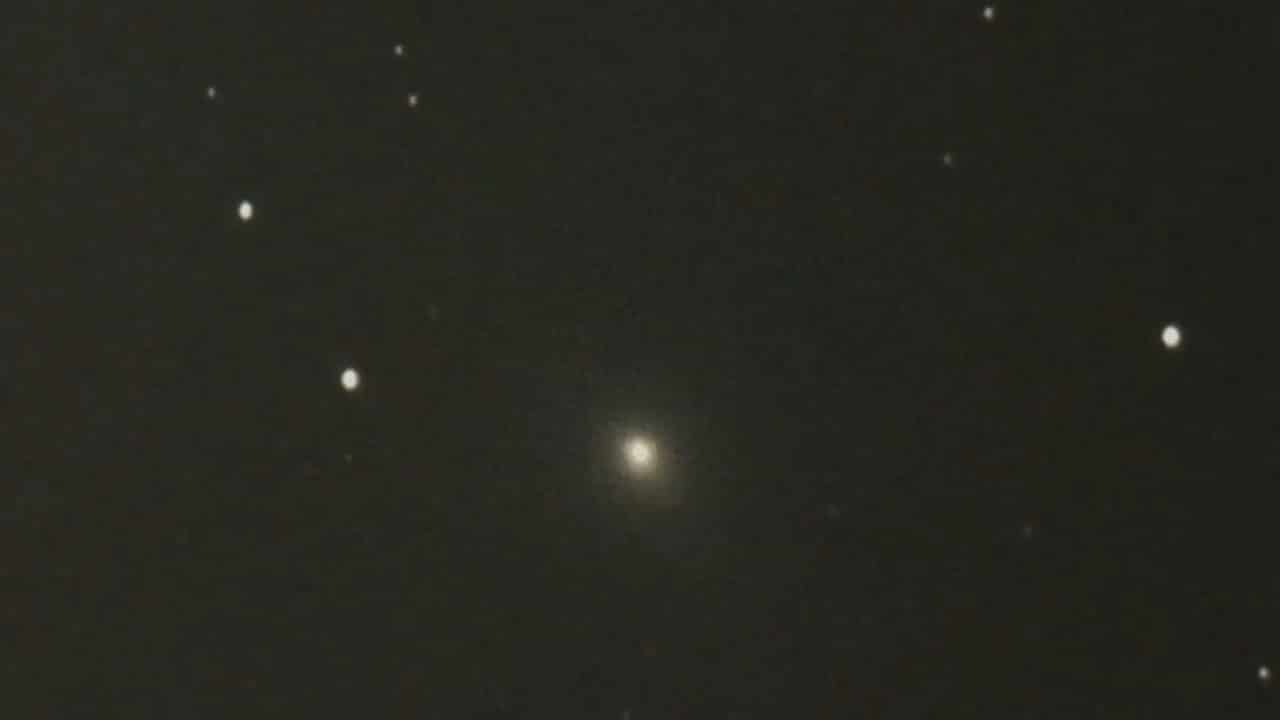
Astronomers conducted a detailed search for technological signals on the interstellar comet 3I/ATLAS and found no evidence of artificial origin. The object continues to be classified as a natural comet, despite its origin outside of Sistema Solar. The investigation used advanced equipment to monitor possible radio emissions, but all records pointed to known sources on Terra.
Comet 3I/ATLAS was discovered in July 2025 by the ATLAS system on Chile. Ele became the third interstellar object confirmed to cross Sistema Solar, after 1I/‘Oumuamua in 2017 and 2I/Borisov in 2019. Sua hyperbolic trajectory and high speed relative to Sol confirmed the external origin. The object passed the closest point to Terra in December 2025, around 270 million kilometers away, without posing any risk.
Advanced radio telescope analysis
The team used Green Bank Telescope, a large radio telescope, to carry out observations during the comet’s closest approach to Terra. Researchers looked for narrow radio signals that could indicate technological transmissions. The sensitivity of the instrument allowed it to detect very weak emissions, equivalent to a fraction of the power of a common cell phone.
Nine initial events were recorded during the search. Todos were attributed to known terrestrial interference. Nenhum signal originating from 3I/ATLAS presented characteristics compatible with technology. The result reinforces previous observations that already indicated the typical behavior of a comet.
Natural features observed on the comet
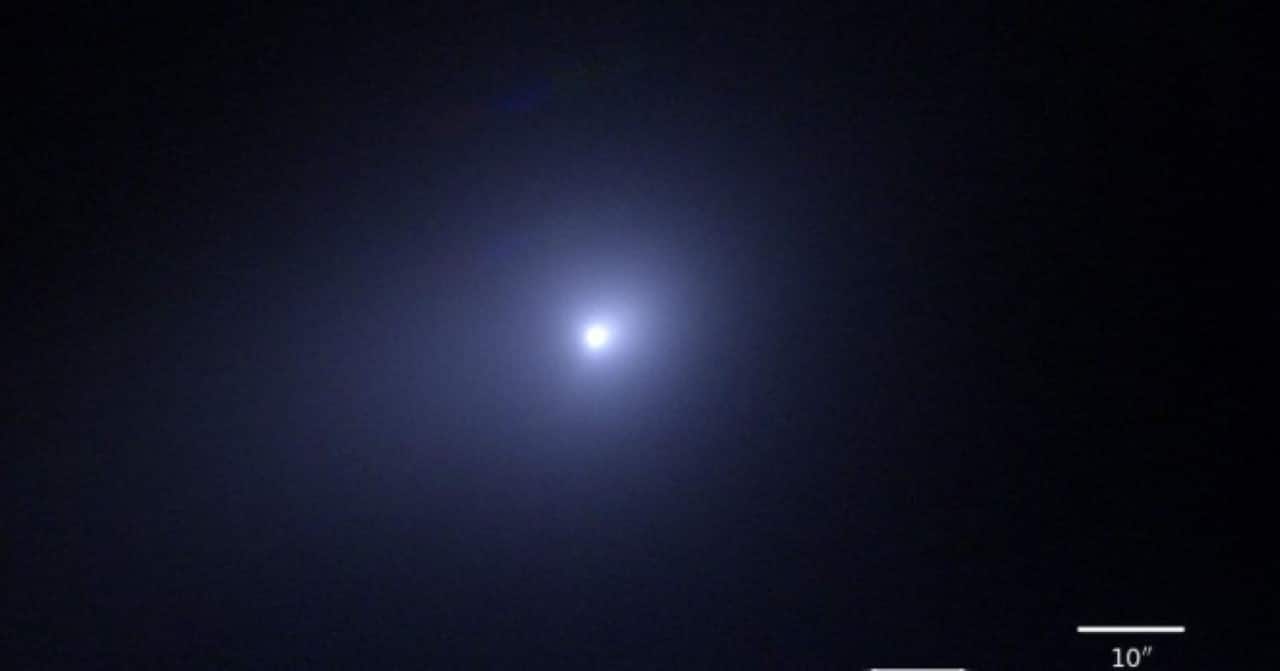
3I/ATLAS exhibited a coma and tail formed by gas and dust released by ice sublimation as it approached Sol. Imagens captured by ground- and space-based telescopes showed structures common to comets, including jets of material and greenish coloring due to fluorescence from compounds such as diatomic carbon. Estudos spectroscopy revealed a composition rich in volatiles, similar to distant icy bodies.
Astronomers estimate that the nucleus has a diameter between hundreds of meters and a few kilometers. Water production was measured at high rates after perihelion, confirming standard cometary activity. Esses data was obtained by instruments such as SOHO/SWAN, which detected luminous hydrogen around the object.
Comparison with previous interstellar visitors
Unlike 1I/’Oumuamua, which did not show clear cometary activity, 3I/ATLAS showed a well-defined coma and tail. Ele most closely resembles 2I/Borisov, which also exhibited characteristics typical of comets. The current pass allowed for more detailed observations thanks to the favorable positioning and involvement of multiple space missions.
Missions such as Hubble, James Webb and probes at Marte captured images of the comet in different phases. Additional Dados from observatories such as Gemini North and Europa Clipper complemented the analyses. Essas information contributes to understanding the diversity of primordial materials ejected from other stellar systems.
Next milestones in the object’s trajectory
The comet continues on a permanent escape path from Sistema Solar. Ele will approach Júpiter in March 2026, about 54 million kilometers away, which may alter its route slightly due to gravitational influence. Após this passage, the object will continue towards interstellar space, becoming undetectable in a few months.
Amateur observations are still possible in January 2026, although the brightness is reduced. Small-sized Telescópios in dark skies can capture the object in the constellation of Câncer. The rarity of the event encourages continued interest in astronomy and the search for similar objects.
Scientific importance of the study
The absence of technosignatures reinforces the need for rigorous criteria in identifying possible artificial signals. The comet offers a unique opportunity to analyze preserved material from another star system. Descobertas future ones should increase with new telescopes and monitoring programs.



