

DuneCrawl, a new indie title, has quickly emerged as one of the most talked about highlights on the Steam platform. The game has attracted the attention of thousands of players with its eccentric premise and innovative gameplay mechanics. Sua’s meteoric rise up the popularity charts demonstrates the public’s appetite for original co-op experiences.
Launched just over a week ago, the game quickly rose to the top of the coveted “New & Em Tendência” category at Steam. Essa performance highlights the ability of independent developers to capture the imagination of players with proposals that go beyond the conventional. The title managed to maintain a strong presence, consolidating itself as a “little jewel”, in the words of the community.
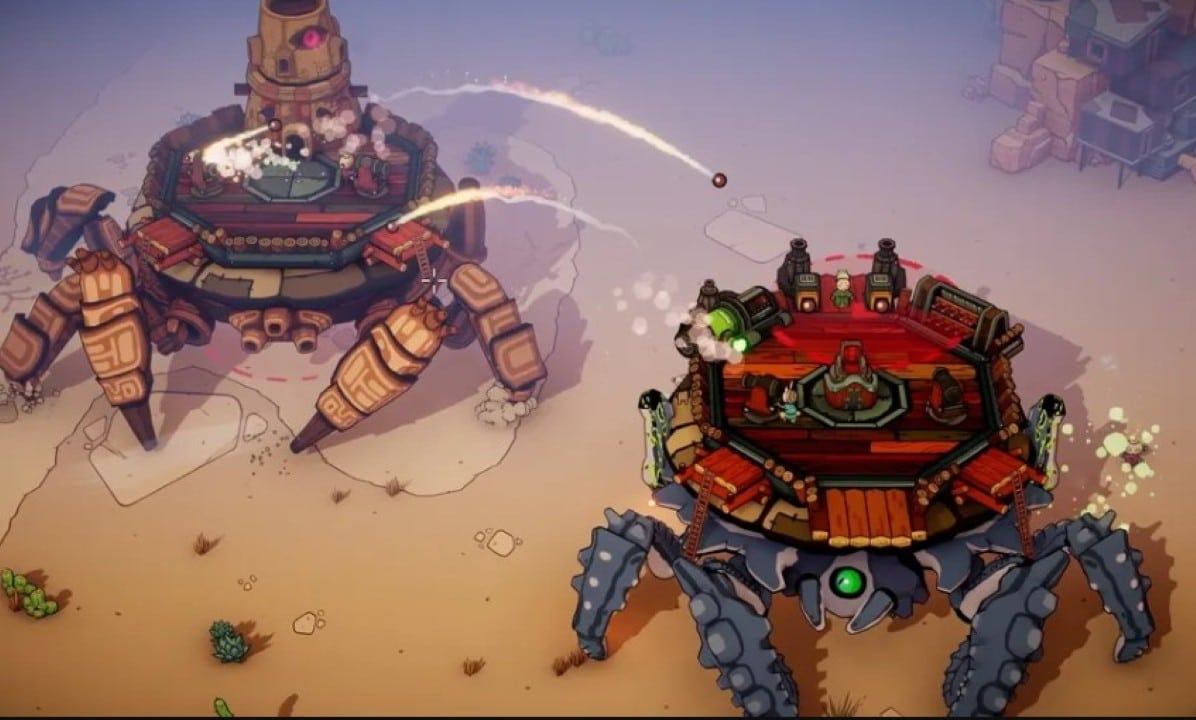
Players take control of adorable rodent-like characters as they explore a vast, barren fantasy world. DuneCrawl’s biggest difference, however, lies in the ingenuity of its main means of transport: an immense crab that serves both as an operational base and as a key piece in battles.
The mechanical heart: Navegando with a crustacean colossus
The central experience of DuneCrawl revolves around the gigantic crab, which acts as a vessel on the sands. Players need to coordinate their actions to keep the machine alive and functional. Isso involves a series of dynamic and cooperative tasks that require constant communication and teamwork.
During exploration, it is mandatory to run to reload the cannons, which are essential for defense and attack. Crab maintenance also requires players to repair damaged joints and other vital components that can be compromised by enemies or hostile terrain. Agility in responding to these challenges is crucial for the group’s survival.
Adventure and combat: A pirate’s life in the desert
The combat concept in DuneCrawl transports the excitement of naval battles to a desert setting, where giant crabs face off in epic duels. Players can invade other opposing crustaceans, adding a strategic and direct action layer to confrontations. Essa mechanics provide an authentic feeling of “pirate’s life”, reimagined on dry land.
The interaction between opposing crabs is a highlight of the game, allowing for varied tactical approaches. It is possible to disable enemy defenses, sabotage their internal structures and even take control of parts of the opponent’s crab. The unpredictability of each encounter ensures that the gameplay remains fresh and engaging, even after several hours of play.
Community reception and improvement points
Despite the initial success, feedback from players at Steam points to some aspects that could be improved. Análises from the community mention that the price of the game can be considered a little high for the content currently offered. Além Additionally, some users indicate that the boss fights are “quite rudimentary”, suggesting a lack of depth in these sections.
However, the general recommendation remains positive. Jogadores praise the game’s general atmosphere, described as “comfortable and immersive”. The “distinctive and easy-to-watch” visual style and soundtrack that “complements the graphics well” are often cited as strengths that contribute to the immersive experience.
The basic gameplay, despite the caveats, is considered fun enough to justify the recommendation. Underground missions and puzzles are another highlight, offering clever challenges that reward exploration and collaboration. Esses positive elements outweigh the criticism and reinforce the idea that DuneCrawl is a valuable experience.
The essence of indie design: Originalidade and charisma
DuneCrawl exemplifies the strength of independent games in innovating and offering unique proposals that big studios often avoid. The audacity of building a cooperative game around exploration and combat with giant crabs is a testament to the creativity that pulses across the indie scene. The charisma of its characters and the peculiarity of its premise are crucial factors for its recognition.
The title managed to capture attention in a saturated market, proving that an original idea with a charismatic execution can generate unexpected success. The gaming community has demonstrated a growing appreciation for narratives and mechanics that defy convention. DuneCrawl fits perfectly into this trend, offering a refuge for those looking for something different.
The future of cooperative exploration and giant crabs
The rise of DuneCrawl in Steam suggests a promising future for games that rely on innovative cooperation mechanics and unusual themes. The game’s success could influence other developers to explore even more creative concepts. The combination of exploration, resource management and combat with quirky fiction elements appeals to a considerable niche of players.
The ability to maintain and expand content will be vital to DuneCrawl’s longevity. Desenvolvedores of indie games often build their communities based on continuous updates and actively listening to player feedback. Este path, if well followed, can transform the title from a momentary success into a lasting cult classic on the platform.
The art of captivating: Gráficos and peculiar sounds
DuneCrawl’s graphics, with their distinctive style, offer a visual aesthetic that immediately sets it apart from other games. The color palette, the design of the desert environments and the representation of giant crabs contribute to a unique atmosphere. Essa artistic approach is fundamental to the game’s immersion and appeal, being a strong motivator for players to explore every corner of the map.
The soundtrack and sound effects play an equally important role. The music complements the ambiance, alternating between moments of calm during exploration and tension during combat. Essa synergy between visual and audio creates a cohesive and immersive experience, reinforcing the feeling of adventure and danger in the world of DuneCrawl.



