


Nissan has officially announced the arrival of a new competitor to the fierce family vehicle segment in the Índia with the confirmation of the name Gravite for its new seven-seater minivan. The model, which shares its platform with the Renault Triber, is part of the Japanese automaker’s ambitious expansion strategy in the country, which sees the launch of three new vehicles by the beginning of 2027. Production will be concentrated at the alliance’s factory in Chennai, with the start of sales scheduled for March 2026. market with high demand and growth potential. The company is betting that design differentiation and competitive price positioning will be crucial to the success of the Gravite, which will face established competitors.
The development of the Gravite represents a significant investment by the Renault-Nissan alliance in the Indian market, seeking to optimize production costs through sharing platforms and components. The strategy allows Nissan to quickly introduce a new product into a popular segment, building on the tried-and-true foundation of the Triber.
The arrival of the vehicle at dealerships will be accompanied by a plan to strengthen the Nissan sales and after-sales network throughout India. The goal is to ensure that new customers have adequate support and that the brand can sustain the projected sales volume for its new product line.
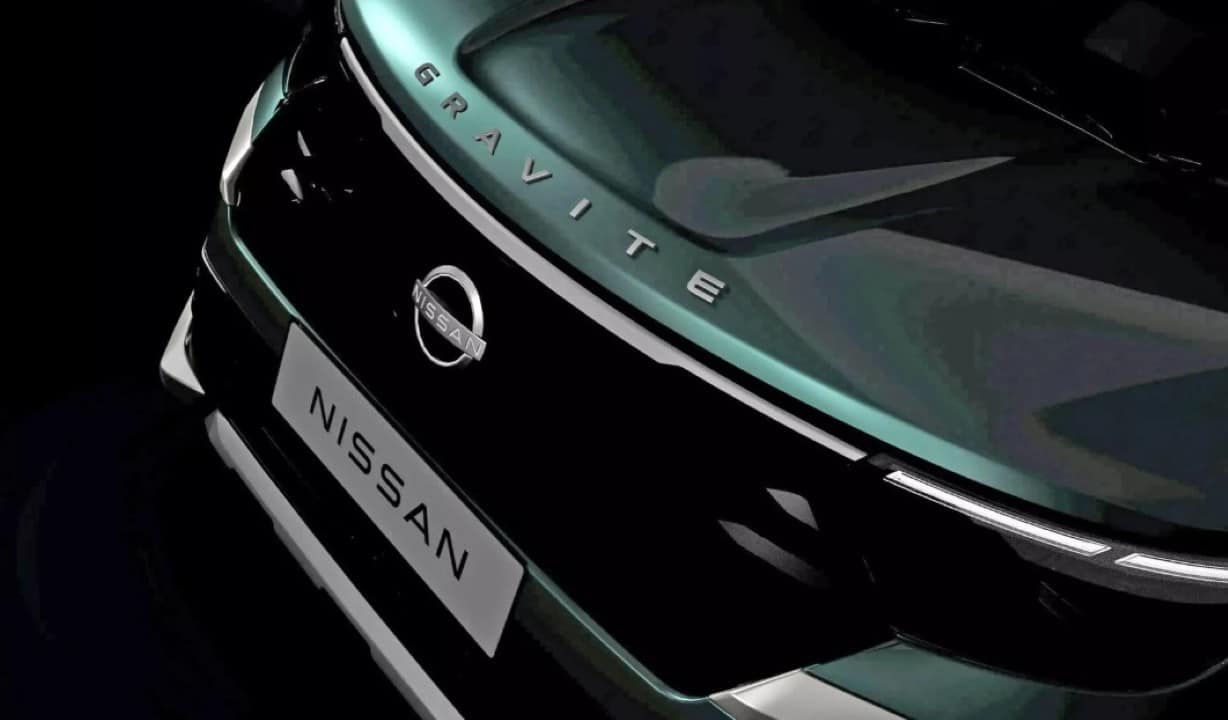
Design with its own identity
To distance Gravite from its Renault counterpart, Nissan invested in a robust and exclusive visual identity. The front of the vehicle is dominated by a prominent hexagonal grille finished in glossy black, bearing the brand’s new emblem in the center. The headlights have been redesigned with new LED signatures, while the bumper incorporates C-shaped daytime running lights, giving it a more aggressive and modern appearance. Essa’s visual approach not only aligns the Gravite with the Nissan’s global design language seen on models such as the
On the side, the profile maintains its compact proportions, measuring less than four meters in length to take advantage of Indian tax benefits, but adds distinct elements such as alloy wheels with an unprecedented design and functional roof rails that reinforce its adventurous appeal. The rear also received special attention, with LED taillights that feature a “J”-shaped light signature, connected by a chrome bar that crosses the trunk lid. The name “Gravite” is prominently displayed, cementing the model’s identity. Esses aesthetic adjustments are key to positioning Gravite as a unique offering and not just a rebranded version of an existing product, strengthening the perceived value of the Nissan brand.
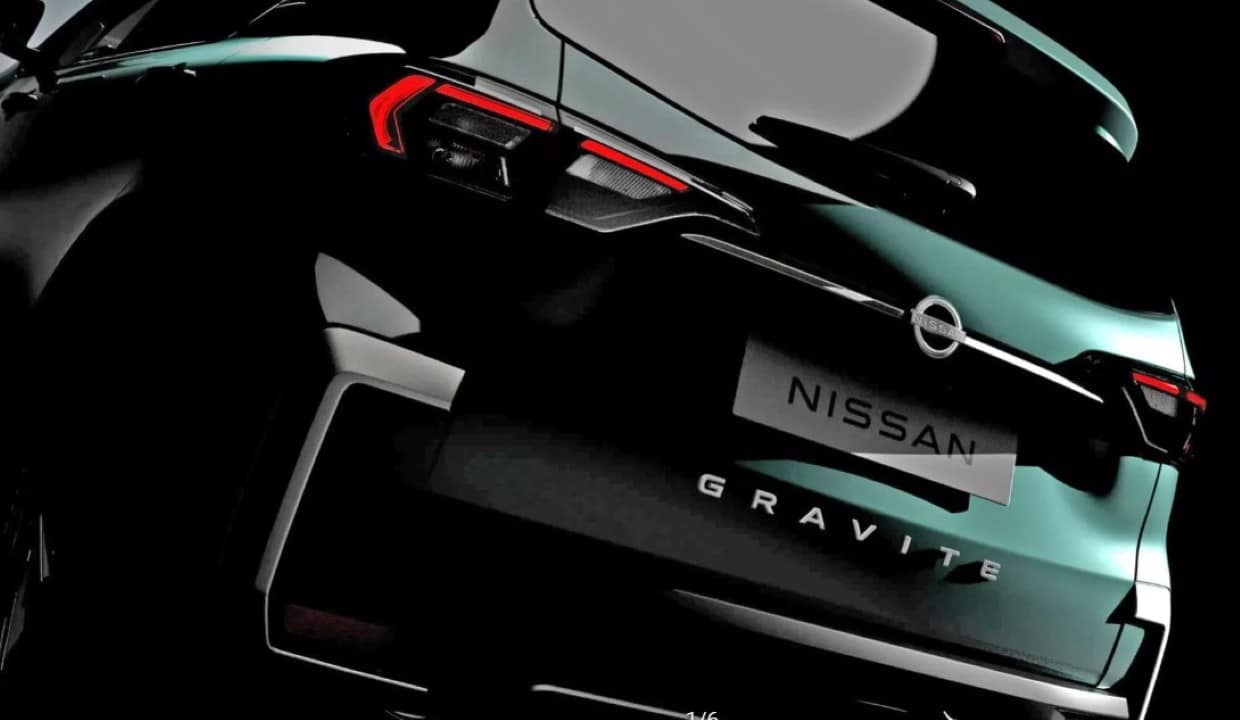
Interior focused on family versatility
The highlight of the Nissan Gravite lies in its interior, designed with maximum focus on modularity and space. The three-row seating configuration allows it to accommodate up to seven occupants, a valuable feature for Indian families. The Nissan promises an “ultramodular” seating system, which includes the ability to completely remove the third row.
This flexibility transforms the minivan into a five-seater vehicle with a trunk of exceptional volume, surpassing many competitors in the category. The solution is ideal for those who need to alternate between transporting passengers and carrying large volumes of cargo, such as luggage for long trips or everyday purchases.
While the overall panel layout should follow the structure of the Renault Triber, the Nissan will apply its own finishes, textures, and color themes to create a unique environment. Espera includes multiple storage compartments and intelligent storage solutions, as well as dedicated air conditioning outlets for rear passengers, ensuring the comfort of everyone on board.
Motorization and performance for urban use
Under the hood, the Nissan Gravite will be powered by a 1.0-liter, three-cylinder, naturally aspirated gasoline engine. Esta power unit is capable of generating 72 horsepower and 96 Nm of torque, numbers suitable for the vehicle’s proposal, which prioritizes fuel efficiency and low maintenance costs.
The engine was calibrated to offer satisfactory performance in intense urban traffic conditions, an environment where the Gravite will spend most of its time. Agility at low speeds and controlled fuel consumption are decisive factors for buyers in this segment.
Transmission options will include a five-speed manual transmission, for those who prefer greater control over the vehicle, and an automated manual transmission (AMT) option, which offers the convenience of an automatic transmission at a more affordable cost. The traction will always be front.
The mechanical assembly, mounted on the CMF-A+ platform, was designed to be robust and reliable, meeting the demands of the often severe driving conditions found on the Índia, while keeping operating costs at a competitive level.
Nissan’s strategic offensive in the Indian market
The launch of the Gravite is just the first step in a carefully planned product offensive by Nissan to revitalize its presence in the Índia. Atualmente, the brand relies almost exclusively on the success of the Magnite compact SUV, and the new strategy aims to diversify the portfolio to compete in multiple volume segments. Logo after the arrival of the minivan, Nissan plans to launch the Tekton, a compact-mid-size SUV based on the new generation of the Renault Duster, scheduled to hit the market in mid-2026. Completando the trio of launches, a larger SUV, also with the option of seven seats and built on a superior platform, is scheduled for the beginning of 2027, positioning the Nissan in a higher price range and targeting families looking for more space and sophistication. Essa portfolio expansion will be supported by an increase in production capacity at the Chennai factory and a significant expansion of the dealer and service center network, ensuring the brand can meet growing demand and deliver an enhanced customer experience across the country.
Positioning in the Indian market
The Nissan Gravite will be positioned as a smart and affordable mobility solution for families who need space and versatility without compromising on budget. Seu’s main direct competitor will be Renault Triber itself, with which it will compete with customers looking for the best cost-benefit ratio. The expectation is that prices will be very close, with Nissan betting on its distinctive design and the strength of its brand to attract buyers. Além of the Triber, the Gravite will also compete indirectly with the entry-level versions of other family vehicles such as the Maruti Suzuki Ertiga.
Local production at the Chennai factory is a key factor in ensuring a competitive price, allowing Nissan to benefit from an established supply chain and optimized labor costs. The platform sharing strategy with Renault drastically reduces development and production costs, a benefit that will be passed on to the end consumer. With a focus on practicality, fuel economy and a modular interior, the Gravite seeks to conquer a market niche that values functionality above all else, reinforcing the strategic partnership between Renault and Nissan in the Indian subcontinent.
Release and availability details
The official presentation of the Nissan Gravite, with the complete revelation of all its versions, list of equipment and prices, is scheduled for January 2026. The launch event will generate great expectation in the market, detailing the model’s differences in relation to the competition.
Soon after, sales are scheduled to begin in March 2026. Distribution will begin in the main Indian cities and will gradually expand to the rest of the country, following the brand’s dealership network expansion plan.



