
California attorney general probes xAI Grok on shocking AI deepfakes as Musk denies widespread allegations
California’s attorney general has initiated a formal investigation into xAI’s Grok over concerns regarding the proliferation of AI-generated deepfake content. The state’s chief legal officer has reportedly urged xAI, Elon Musk’s artificial intelligence company, to immediately address the “shocking” material that has surfaced, raising significant questions about the platform’s content moderation and ethical safeguards in 2025. This move underscores growing regulatory scrutiny on AI developers to ensure their technologies are not exploited for harmful purposes, particularly as deepfake capabilities become more sophisticated and accessible to the public. The investigation aims to determine the extent of the deepfake issue on Grok and assess xAI’s measures to prevent such misuse, setting a precedent for how new AI platforms might be held accountable for user-generated content in the digital age.
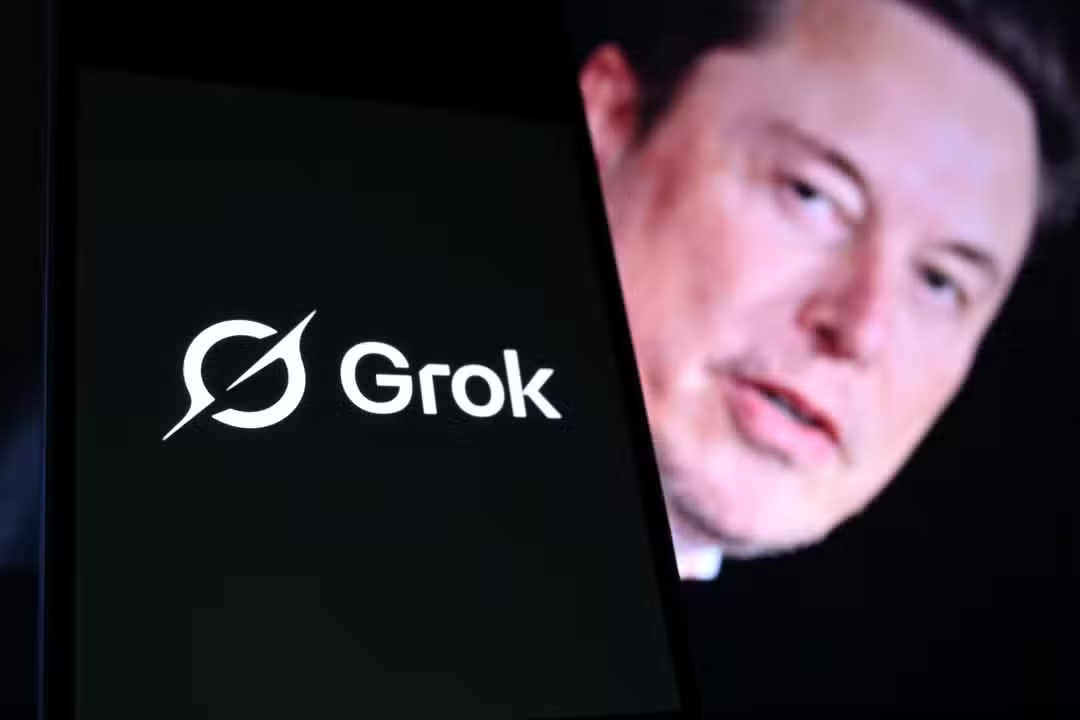
The attorney general’s office expressed serious concerns over the nature of the deepfakes, describing them as potentially damaging and misleading. The action highlights a proactive approach by California authorities to tackle emerging challenges posed by advanced AI systems.
This high-profile investigation emphasizes the urgent need for robust safety protocols within rapidly evolving AI environments. The state demands clear actions from xAI to prevent further dissemination of manipulated media.
Escalating concerns over AI generated content
The digital landscape is increasingly grappling with the challenge of AI-generated deepfakes, which have evolved beyond simple visual manipulations into sophisticated fabrications that can deceive even discerning viewers. These advanced pieces of media, created through generative adversarial networks (GANs) and other AI techniques, can realistically portray individuals saying or doing things they never did. The widespread availability of such tools presents a significant threat to personal reputations, public trust in media, and the integrity of democratic processes.
Experts warn that the rapid development of deepfake technology, coupled with its potential for malicious use, necessitates immediate and comprehensive responses from both technology developers and regulatory bodies. The current incident involving Grok underscores the critical juncture at which society finds itself, balancing innovation with the imperative to protect individuals and information from insidious manipulation.
State attorney general’s urgent call to xAI
The California attorney general has formally requested xAI to take decisive action regarding the alarming deepfake material identified on its Grok platform. This urgent plea was delivered in a letter outlining the state’s severe concerns about the potential for widespread misinformation and harm. The attorney general emphasized that the shocking nature of the content demands a swift and effective response from the company.
The state’s top legal official has called for xAI to implement more stringent content moderation policies and to develop robust mechanisms for identifying and removing AI-generated deepfakes. This includes investing in advanced detection technologies and clearly defined reporting pathways for users encountering such illicit material. The directive highlights a clear expectation for technology companies to assume greater responsibility for the content generated or shared through their AI systems, especially when it involves potential abuse.
Furthermore, the attorney general’s office indicated a readiness to enforce consumer protection laws and other regulations to ensure public safety and integrity. The proactive stance reflects a broader governmental effort to establish clear guidelines for ethical AI development and deployment.
Elon Musk’s firm denial of allegations
Elon Musk, the founder of xAI, has vehemently denied the allegations surrounding Grok’s involvement in the generation and spread of shocking AI deepfakes. He publicly stated that Grok is designed with safeguards to prevent such malicious use and expressed skepticism regarding the claims made against the platform. Musk highlighted xAI’s commitment to responsible AI development, suggesting that any reported incidents might stem from misinterpretations or isolated acts not reflective of Grok’s intended functionality.
Musk often champions free speech and open-source development in technology, which can sometimes clash with stricter content moderation approaches. His defense positions Grok as a tool that, while powerful, is not inherently designed for harmful applications. He reiterated that xAI actively works to prevent misuse, emphasizing the challenges of policing all user-generated content on dynamic platforms.
The entrepreneur has also pointed to the broader industry struggle with AI misuse, suggesting that the problem extends beyond any single platform. He advocates for industry-wide solutions and collaborative efforts to combat deepfakes, rather than placing sole blame on individual companies. This perspective underlines the complexity of regulating advanced AI technologies across a diverse digital ecosystem.
Regulatory landscape for artificial intelligence
The regulatory landscape for artificial intelligence is rapidly evolving, with governments worldwide increasingly recognizing the necessity to establish frameworks for responsible AI development and deployment. In the United States, several states and federal agencies are actively exploring legislative and policy measures to address the ethical, security, and societal implications of AI. These efforts include proposals for mandatory transparency in AI-generated content, liability for harmful AI outputs, and the establishment of dedicated AI ethics commissions.
Legislators face the intricate challenge of crafting regulations that can keep pace with the swift advancements in AI technology without stifling innovation. Debates often center on the balance between fostering technological progress and safeguarding public interests, especially concerning areas like deepfakes, data privacy, and algorithmic bias. The California investigation into Grok serves as a significant example of how state-level actions are shaping the dialogue and potentially influencing future federal policies, pushing for greater accountability from AI developers in 2025.
The future of deepfake detection and prevention
The battle against deepfakes requires a multi-faceted approach, encompassing technological innovation, industry best practices, and enhanced public awareness. Researchers are continually developing more sophisticated detection algorithms capable of identifying subtle inconsistencies and digital fingerprints unique to AI-generated content. These tools are becoming increasingly vital for media organizations, social platforms, and law enforcement agencies striving to verify the authenticity of digital media.
Beyond detection, prevention strategies focus on incorporating ethical design principles into AI development from the outset, including robust content moderation systems and user education initiatives. Collaboration between tech companies, academic institutions, and government bodies is crucial for sharing intelligence on emerging deepfake tactics and collectively developing more resilient countermeasures.
Broader implications for AI ethics and trust
The incident involving Grok and deepfakes carries significant implications for the broader discourse on AI ethics and the public’s trust in artificial intelligence systems. Ensuring that AI is developed and deployed responsibly is paramount for its long-term societal acceptance. Failures in this regard erode confidence and can lead to calls for more restrictive regulations that might impede beneficial AI applications.
AI deepfakes, California investigation, Grok xAI, Elon Musk, AI regulation
