
Risk of battery fire leads BYD to recall almost 90,000 Qin Plus DM-i sedans in China


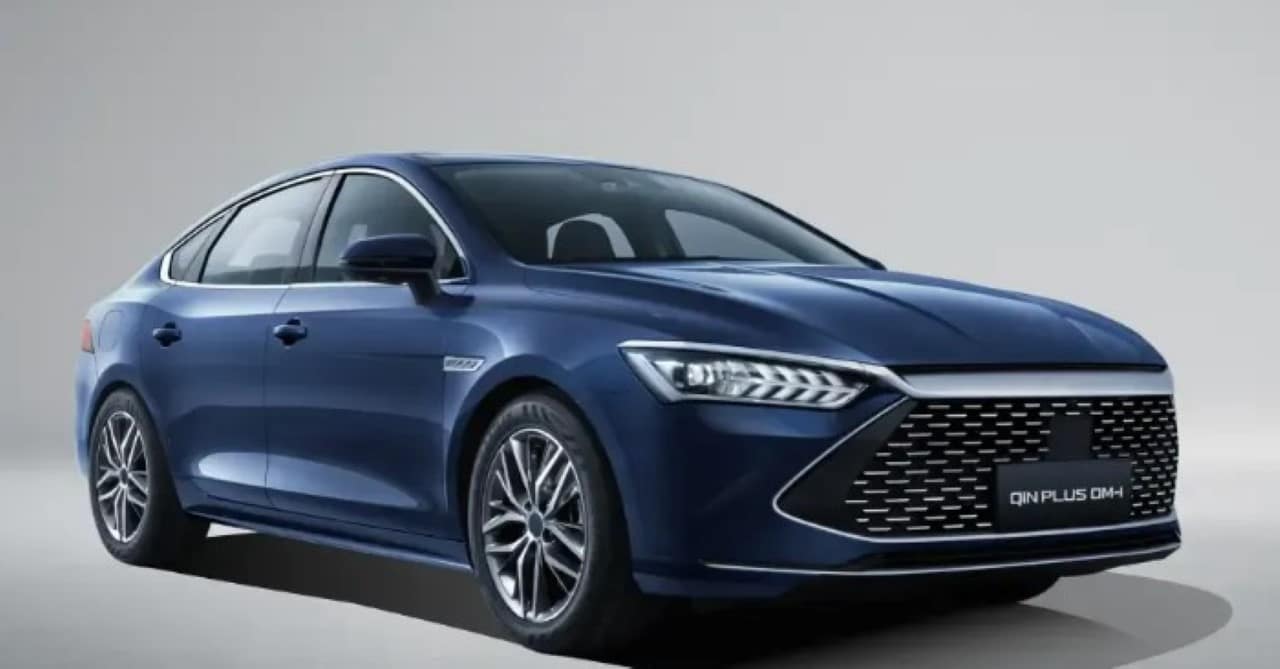
BYD, one of the world’s largest electric vehicle manufacturers, announced a large-scale recall in China, affecting 88,981 units of its popular plug-in hybrid sedan, the Qin Plus DM-i. The measure was motivated by a manufacturing flaw detected in the high-voltage battery pack, which represents a serious risk to the safety of occupants and the integrity of the cars.
The call was made official with Administração Estatal for Regulação of Mercado of China (SAMR), the body responsible for monitoring the quality and safety of products in the country. The call covers vehicles produced over an interval of almost three years, specifically between January 2021 and September 2023, a period of great expansion in the model’s production.
According to the automaker’s statement, the internal investigation identified that the problem lies in an inconsistency in the manufacturing of the battery pack sampling harness. Essa failure can compromise the acquisition of essential data for the vehicle management system, increasing the risk of electrical failures and, in extreme cases, a thermal runaway event that can result in fire.
The technical origin of the problem and the risk of thermal runaway
BYD’s investigation found the root of the defect to be in the high-voltage battery pack’s sampling harness, an essential component for continuous monitoring of the health and performance of lithium-ion cells. An inconsistency in the manufacturing process can lead to abnormal functioning of this harness, compromising communication with the Sistema of Gerenciamento of the Bateria (BMS). Sem receive accurate information about cell voltage, current and temperature, the BMS becomes unable to operate correctly. Isso can cause the vehicle to stop abruptly, even at high speed, increasing the risk of accidents. The biggest danger, however, is the possibility of thermal runaway, a process in which the battery temperature increases uncontrollably and exponentially. Sem the correct data, the BMS is unable to activate safety mechanisms in time, such as cooling or interrupting the power flow, allowing overheating to develop into an internal short circuit and, potentially, a fire that is difficult to contain.
BYD action plan to correct the defect
To resolve the issue and restore vehicle safety, BYD has outlined a comprehensive action plan, which will be implemented at no cost to owners. The first phase involves an over-the-air software update, known as Over-the-Air (OTA). Este new firmware improves the BMS algorithms, making it more sensitive to any anomalies in the data received from the harness. With this update, the system will be able to identify minimal deviations and issue preventive alerts to the driver earlier, offering an additional layer of protection before physical intervention.
The second and most crucial step requires owners to take their vehicles to an authorized dealership. On site, specialized technicians will perform a detailed inspection of the sampling harness and the entire battery pack. If any irregularity is found or if the component belongs to a production batch identified as problematic, the complete set of batteries will be replaced. Esta replacement is the definitive guarantee that the manufacturing fault will be permanently eliminated, ensuring the integrity of the high voltage system.
Specific models and how to check for inclusion in the recall
The recall is exclusive to the Qin Plus DM-i model, one of BYD’s most successful cars in the competitive Chinese market, known for its efficiency and hybrid technology.
The manufacturing period for the affected vehicles was defined as between January 1, 2021 and September 30, 2023. Unidades produced outside this range are not included in the safety campaign.
The company advises owners to check the Número of Identificação of
A recent history of summons from the automaker
This recall of the Qin Plus DM-i is not an isolated event in BYD’s recent trajectory. The company has faced quality control challenges amid its accelerated expansion to become a global leader in the electrified vehicle sector.
In October of the previous year, the manufacturer recalled more than 115 thousand units of the Tang DM-i and Yuan Pro models, also due to a potential fire risk associated with high-voltage batteries, indicating a recurring challenge with this component.
At the beginning of the same year, a defect in the power control module of the Dolphin and Yuan Plus models resulted in the recall of almost 100,000 vehicles, highlighting problems in the supply chain of electronic components critical to the cars’ operation.
These consecutive episodes demonstrate increased vigilance on the part of Chinese regulatory agencies and the increasing pressure on BYD to improve its manufacturing and quality inspection processes, especially as it solidifies its presence in international markets.
The role of supervision in the Chinese market
The performance of Administração Estatal to Regulação from
Inspection now ranges from the quality of critical components, such as battery cells and semiconductors, to the integrity of final assembly processes. Essa stricter stance forces automakers to adopt higher quality standards and be more transparent about possible failures.
Guidance for affected owners
BYD said it will begin formally notifying owners in the coming weeks, using its main communication channels such as mobile apps and direct mail. The automaker emphasizes the importance of scheduling the inspection at the authorized dealer network as soon as contact is established to ensure the repair is carried out.
While the definitive service is not carried out, the official recommendation is that drivers remain alert to any alerts displayed on the vehicle’s dashboard, especially those related to the battery management system. The OTA software update will serve as an initial risk mitigation measure and will be sent automatically.
Brand positioning and global implications
In an official statement, BYD reinforced its commitment to safety and classified the recall as a preventive measure to ensure the reliability of its products. The company stated that it is mobilizing its network so that the process is agile and causes minimal disruption to customers. The Este event occurs at a strategic time, with the brand vying for global leadership in electric vehicle sales and expanding its operations to Europa and América Latina, where consumer trust is a fundamental asset for long-term success.



