
Analysis of the Honda HR-V reveals disadvantages in technology and space compared to new competitors


The Honda HR-V, one of the most recognized SUVs on the market, has consolidated its position over the years with an attractive design and the brand’s reputation for reliability. However, the current scenario in the compact sports utility vehicle segment is more competitive than ever, with launches that directly challenge the strengths and expose the weaknesses of the Honda model.
The new generation of the vehicle brought a more sophisticated and modern look, inspired by coupe models, which appeals to a significant portion of the public. Contudo, a more in-depth analysis reveals that, in addition to aesthetics, the HR-V faces an uphill battle against rivals that offer more complete packages in terms of technology, internal space and efficient engines.
Crucial points such as trunk capacity, the absence of hybrid engine options and certain limitations in the technology package put the SUV in a delicate position. The question that emerges is whether the design and strength of the brand alone are enough to justify its choice over more modern and, in many cases, better cost-benefit projects.
Attractive design versus limited functionality
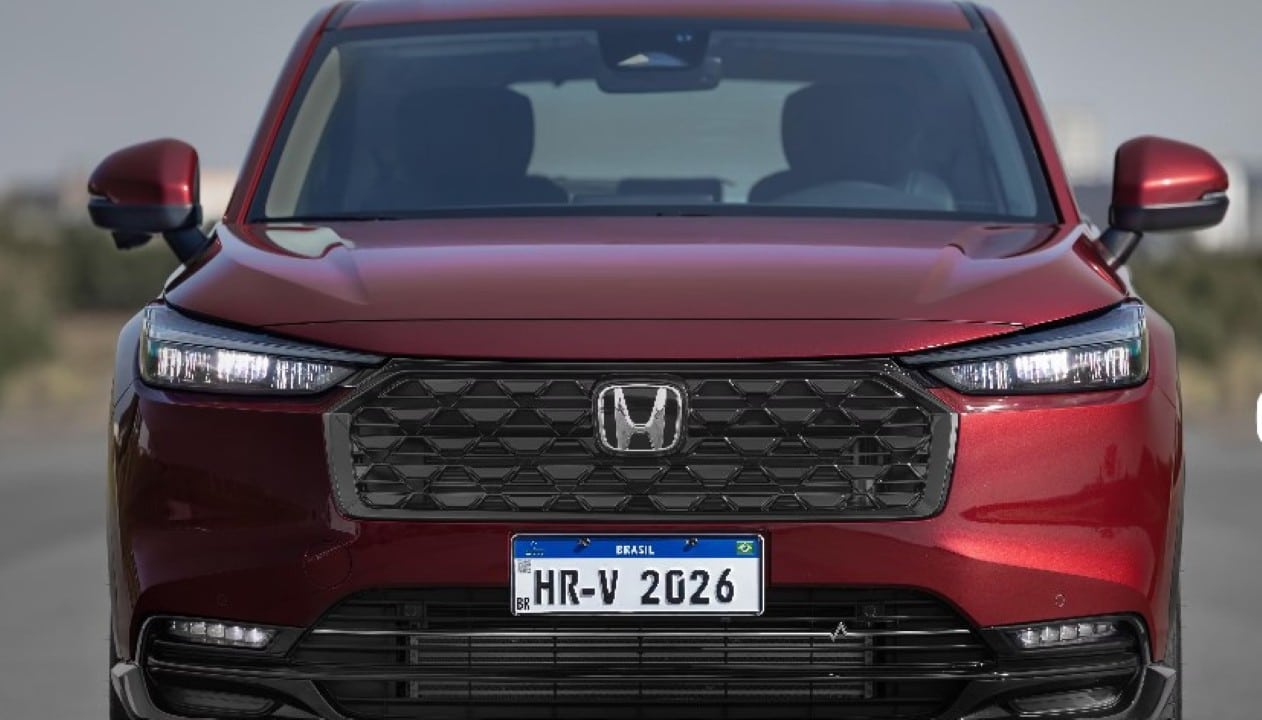
One of the biggest assets of the Honda HR-V is, without a doubt, its design. With fluid lines, an imposing front grille and tapered full LED headlights, the SUV conveys an image of sophistication and modernity. The rear with the integrated flashlight that crosses the trunk lid reinforces this premium perception, attracting consumers who value aesthetics.
This choice for a roof with a steeper drop, however, takes its toll on functionality. The bold look directly impacts interior space, especially for backseat passengers, and, more critically, trunk load capacity, a deciding factor for many SUV buyers.

Interior space and trunk capacity
Practicality is one of the pillars for anyone looking for an SUV, and in this regard, the HR-V lags behind its main direct competitors. The model’s trunk offers just 354 liters of capacity, a modest number for the category and which represents a significant disadvantage.
For comparison purposes, direct competitors easily surpass this brand. The Volkswagen T-Cross offers 373 liters, the Hyundai Creta reaches 422 liters and the Nissan Kicks offers 432 liters. Essa difference, which can reach almost 25%, is felt on a daily basis, especially by families who need space for luggage when traveling or to transport larger objects.
The Honda tries to compensate for this limitation with the versatile “Magic Seat” seat folding system, which allows different configurations for transporting loads. Although the Embora is an intelligent and exclusive solution, it does not negate the need for a larger gross volume in the main compartment, making the model less attractive for those who prioritize cargo space.
Embedded technology and the Honda Sensing package
Technology is another field where the HR-V shows signs of lagging behind the market. Embora comes equipped with the Honda Sensing safety package, which includes features such as emergency braking and lane keeping assist, some of its features are more limited than those offered by the competition.
The adaptive cruise control (ACC), for example, does not have the “Stop & Go” function, which allows the vehicle to stop and resume acceleration autonomously in traffic jams. Esse feature is already present in several rivals, making driving in heavy urban traffic more comfortable and safer.
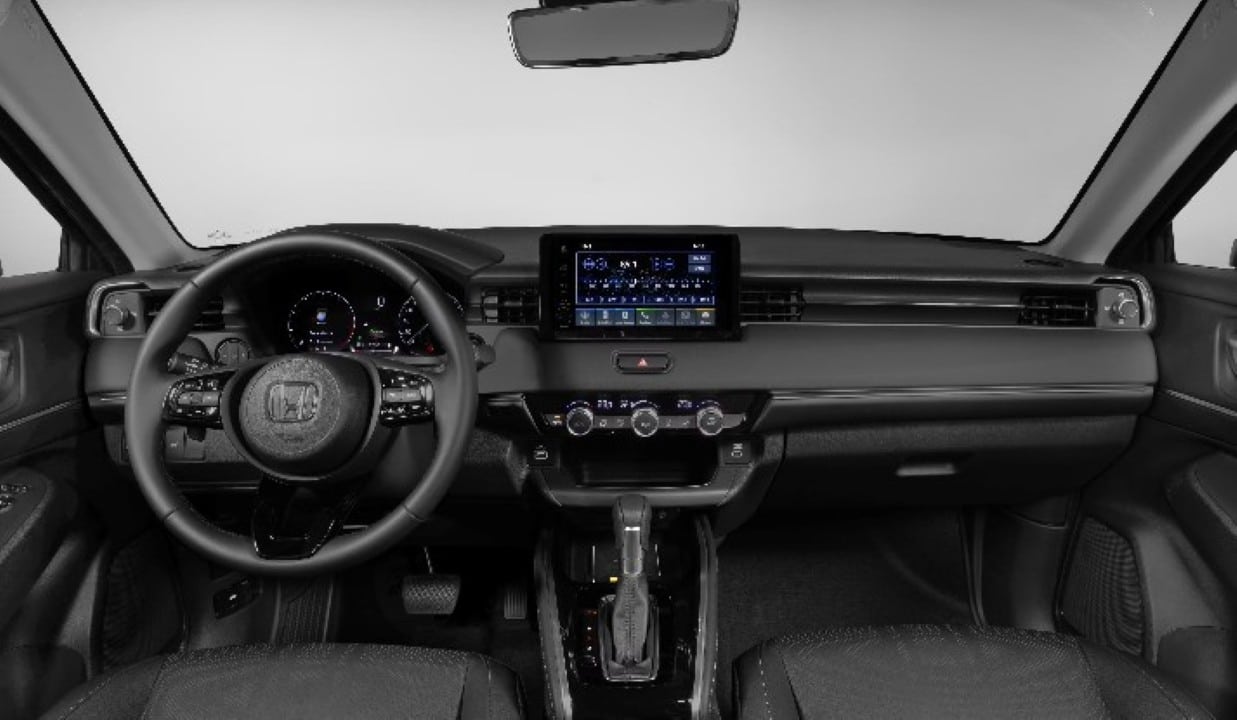
The multimedia center also reflects this condition. With an 8-inch screen, it looks small next to the 10-inch or larger screens that have become standard in the segment. Além Furthermore, the absence of wireless mirroring for Android Auto and Apple CarPlay on all versions is a notable flaw, forcing the use of cables in an era where wireless connectivity is increasingly valued by consumers.
Other items, such as a fully digital instrument panel or 360-degree cameras, are also absent or restricted to more expensive versions, while competitors offer them more widely in their lines, reinforcing the perception that the HR-V’s technology package could be more generous.
Turbo engine performance and the absence of hybrid options
In the top-of-the-line versions, the Honda HR-V is equipped with a 1.5 turbo engine with 177 horsepower and 24.5 kgfm of torque. Este engine, coupled to a CVT transmission that simulates seven gears, guarantees agile and satisfactory performance for the SUV, providing vigorous acceleration and safe overtaking, being one of the vehicle’s highlights.
However, the big gap in the HR-V’s engine range in the Brazilian market is the lack of a hybrid version. At a time when electrification is gaining momentum and fuel efficiency is becoming an increasingly important purchasing criterion, Honda’s decision not to offer the e:HEV engine, available in other markets, proves to be a strategic disadvantage. The Concorrentes and the Toyota Corolla Cross have already consolidated their hybrid versions, while new brands, especially Chinese ones such as BYD and GWM, arrive with full force offering plug-in hybrid (PHEV) and electric SUVs with aggressive prices.
Price analysis in the competitive segment
The price positioning of the Honda HR-V places it in a fierce market range, where every detail can influence the purchasing decision. With values that in the most complete versions approach and even exceed R$ 200 thousand, the consumer now has a very wide range of options, many of them offering a value for money perceived as superior. Competition is not limited to traditional compact SUVs; In this price range, the HR-V competes with customers with higher category models with very different proposals. Veículos like the Jeep Compass, for example, offer more space, refined finishing and a more powerful turbo engine, while the Toyota Corolla Cross attracts with its renowned hybrid package. Modelos and Volkswagen, like the T-Cross Highline, deliver a robust technological package and refined drivability at a competitive price. The Honda strategy seems to be based on brand loyalty and design appeal, but for many consumers, the cold analysis of numbers and equipment can lead the choice to a competitor that delivers more for a similar or even lower value, making the HR-V sales journey a constant challenge to justify its added value.
Honda’s positioning in the current market
In short, the Honda HR-V remains a quality product, with a striking design and the mechanical reliability that characterizes the brand. However, he is no longer in a position of comfort. The rapid evolution of the SUV segment requires constant updates and equipment and engine packages aligned with new consumer demands, areas where the model currently presents important gaps.



