
New electric SUVs from Kia, Mazda and Volvo hit the market with a focus on autonomy and technology By Luís Henrique Costa
6 min read
 |
The European automotive market is experiencing an accelerated transformation with the arrival of a new crop of electric vehicles. Diversas automakers, including established names and new competitors, presented their launches, with emphasis on the SUV segment, which continues to be consumers’ favorite. The main trend points towards batteries with greater capacity, extended autonomy and increasingly complete and technological standard equipment packages.
Competition intensifies notably with the aggressive entry of Chinese manufacturers, who combine competitive prices with cutting-edge technology, challenging traditional brands to innovate. Recent launches meet a growing demand for compact and medium-sized SUVs, offering fully electric propulsion options or advanced hybrid systems for different consumer profiles.
The main focus of the new specifications is on real autonomy, which, although it may vary depending on the conditions of use, demonstrates significant advances. Official figures released by automakers indicate an important leap in battery capacity and powertrain efficiency, making electric cars an increasingly viable option for long journeys.
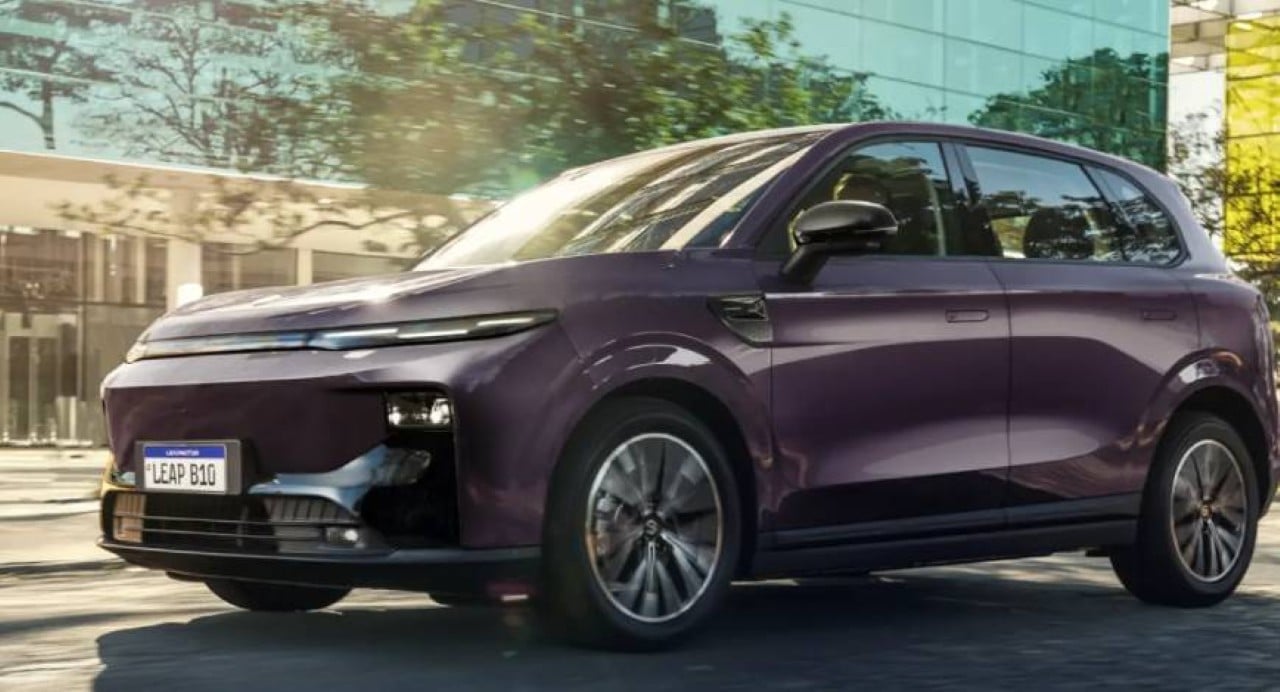
The Chinese offensive with the Leapmotor B03X
Leapmotor, one of the rising Chinese brands, consolidates its presence in Europa with the launch of B03X. Trata is a compact SUV with an urban profile, measuring 4.2 meters long and 1.6 meters high, ideal dimensions for traffic in European cities. The model is equipped with a 67.1 kWh battery, which gives it a declared range of up to 460 kilometers in the WLTP test cycle, a very competitive number for its category.
The B03X’s biggest differentiator is its extensive list of safety and comfort equipment offered as standard, which reinforces the brand’s strategy of delivering high added value at an affordable price. The model is scheduled to arrive in the second half of the year, with distribution in several countries on the continent, taking advantage of the infrastructure of strategic partners to guarantee capillarity and efficient after-sales support.
The partnership signed with the Stellantis group is a crucial factor for this expansion, as it not only facilitates distribution, but also opens doors for future expansion to other global markets, including América Latina. Leapmotor is already studying the possibility of local production in some strategic regions, aiming to reduce logistics costs and delivery times to end customers, making its products even more competitive.
Aesthetic and technical update of the Peugeot 408
The Peugeot 408, known for its bold fastback crossover design, receives an important update to stay relevant in the competitive market. The changes focus on both the exterior and interior, with the aim of modernizing the look and experience on board. The model gains new LED headlights with a renewed light signature, a redesigned front grille, a front bumper with more aggressive lines and updated rear lighting, which now displays the “Peugeot” name in an illuminated way.
In terms of motorization, the range of options has been expanded to meet different electrification needs. The new 408 will be available in a fully electric version, a plug-in hybrid with greater range in electric mode and a mild hybrid, which serves as a gateway. The 100% electric variant, called e-408, uses a battery with 58.2 kWh capacity, achieving a declared range of 456 kilometers, ideal for mixed use.
Internally, the acclaimed i-Cockpit of the Peugeot receives improvements, with screens that feature more modern graphics and a more intuitive interface. The 408’s bold design remains one of its main attractions, maintaining a unique visual appeal that sets it apart from other models in the segment. Vehicle production remains integrated into the structure of the Stellantis group, which interestingly also has a strategic stake in Leapmotor, showing the complex network of alliances that shape the current automotive industry.
These cosmetic and, mainly, technological changes are essential for the Peugeot 408 to maintain its competitiveness. The model faces fierce competition not only from traditional European rivals, but also from a new wave of Asian vehicles that are arriving in full force in more mature markets, demanding constant evolution in design, efficiency and onboard technology.
Mazda bets on the midsize segment with the CX-6e
The Mazda enters the fully electric medium SUV segment with the launch of the CX-6e. The model is equipped with a 78 kWh battery, one of the largest in its category, which allows for an announced range of up to 484 kilometers. With a generous wheelbase of 2.9 meters, the CX-6e promises ample and comfortable interior space for all occupants, a feature valued by families.
To optimize recharging time, the vehicle requires the use of high-power fast chargers, capable of taking the battery from 10% to 80% in a short time. The Japanese brand follows its Kodo design philosophy, which gives the CX-6e fluid and elegant lines, positioning it as a direct rival to models already consolidated in the premium segment, such as the Tesla Model Y and the Ford Mustang Mach-E.
Kia expands its electric range with new model
The Kia continues to expand its electric vehicle portfolio and develops a new model that will position itself above the compact Inster, both in dimensions and price. Este new SUV will offer two battery options for the consumer: a 42.2 kWh battery, with a range of 317 kilometers, aimed at predominantly urban use, and a 61 kWh battery, which increases the range to 448 kilometers, suitable for those on longer trips. Essa strategy allows the brand to meet different price ranges and usage needs.
The interior of the new Kia adopts a technological and modern configuration, with a panel made up of three digital screens. Além of the 12.3-inch instrument cluster and the same-sized multimedia center, there is a third 5.3-inch screen dedicated exclusively to the climate system controls. In terms of practicality, the trunk offers a capacity of 403 liters. With an estimated price in the range of 30 thousand euros at Europa, the model will enter into direct competition with vehicles such as the future Renault 4 E-Tech Electric, seeking a strategic positioning to avoid overlap with the Hyundai Inster, its cousin within the South Korean automotive group.
Volvo XC90 redefines the concept of autonomy
Volvo is finalizing details for the full release of the updated version of its flagship SUV, the XC90, which promises to set a new standard for autonomy in the luxury segment. In a specific test carried out under controlled conditions, the model recorded an impressive range of over 800 kilometers on a single battery charge. Este not only highlights the efficiency of the powertrain developed by Swedish engineering, but also positions the XC90 as a reference for long-distance travel without the worry of frequent recharging. The model maintains its prominent position in the brand’s line of large SUVs, combining luxury, generous space for up to seven occupants and the most advanced driver assistance technologies. The Swedish brand, synonymous with safety, reinforces with this update its commitment to offering not only protection, but also comfort and convenience in a sophisticated package, ideal for families who do not give up space, technology and, now, exceptional autonomy.
Security and connectivity equipment
Most new electric launches prioritize complete driver assistance packages (ADAS) and advanced connectivity systems. Itens such as automatic emergency braking, adaptive cruise control, lane keeping assistants and blind spot monitors are becoming standard even in entry-level segments. Multimedia centers with large screens and integration with smartphones are essential, raising the standard of convenience and security for all consumers.











