Recent discoveries in paleomagnetism call into question the theory of the Pannotia supercontinent
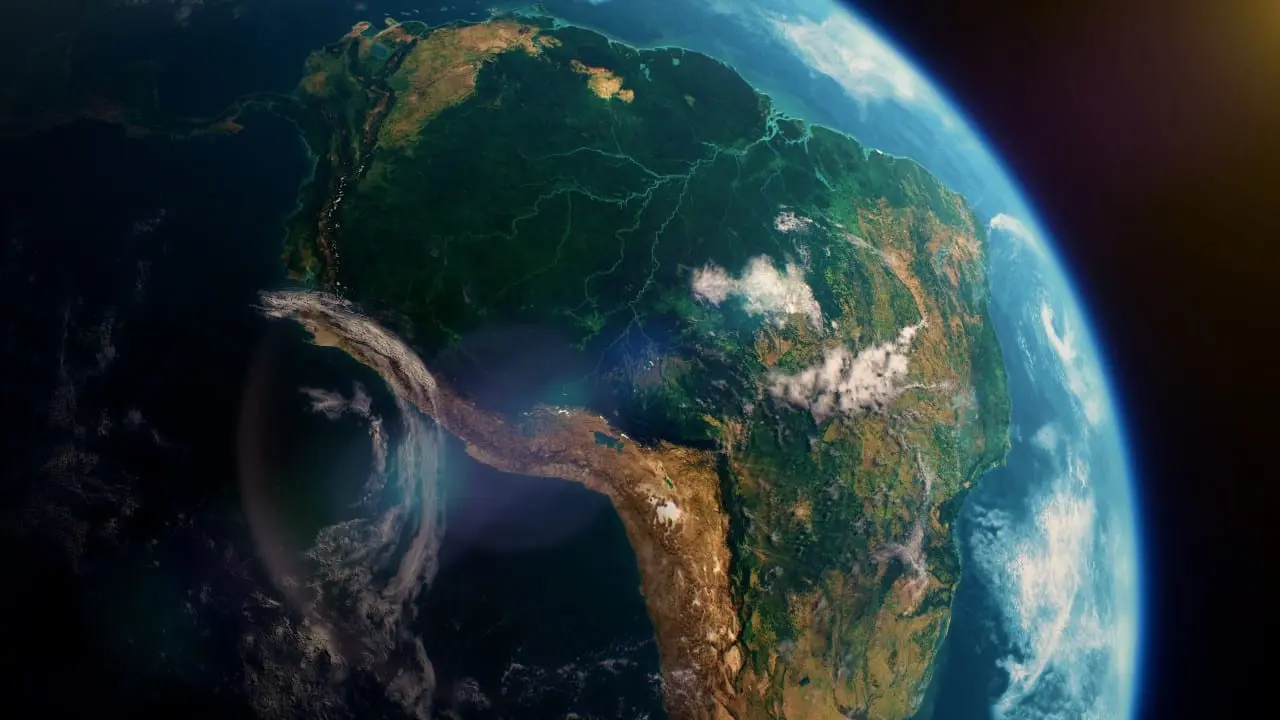
The international geological community is reevaluating one of the most consolidated theories about the ancient history of Terra. Novas analyzes based on technological advances in the field of paleomagnetism have cast serious doubts on the existence of the supercontinent Panótia, a land mass that, according to the traditional hypothesis, would have formed around 600 million years ago. The findings indicate that the continental pieces that supposedly made up this structure may not have been united in the way previously believed, forcing a profound review of the events that shaped the planet at the end of the Neoproterozoico period.
The Panótia hypothesis has been proposed to explain a number of geological and climatic phenomena, including global glaciations and the subsequent explosion of life in the Cambriano period. The theory suggested an agglomeration of almost all of the planet’s landmasses around Polo Sul, forming a cohesive entity that lasted a few tens of millions of years before fragmenting again. However, more precise dating and more sophisticated paleogeographic reconstructions are revealing a much more complex and fragmented scenario.
This new evidence not only calls into question the existence of Panótia as a unified supercontinent, but also impacts understanding of the cycle of joining and pulling apart of tectonic plates, known as Ciclo of Wilson. The absence of Panótia in the geological puzzle could mean that the interval between the breakup of the earlier supercontinent, Rodínia, and the formation of the later one,
Origin of the Panótia hypothesis
The theory about Panótia began to gain traction in the late 20th century, based on geological evidence that seemed to indicate a massive continental collision at the end of the Proterozoico eon. The name, which means “all the south” in Greek, was chosen to reflect its hypothetical location around the Polo Sul. Geologists at the time used data from mountain ranges, such as the Pan-African orogenic belts, as evidence that continents such as África, América, Sul, Austrália, and
On the same topic: Paleomagnetism studies challenge the existence of the supercontinent Pannotia, changing geology
This continental unification was associated with drastic climate changes, such as the events known as “Earth Bola of Neve”, periods of extreme glaciation that covered almost the entire planet. The subsequent fragmentation of Panótia, in turn, was linked to the release of nutrients into the oceans, which would have fueled the rapid diversification of complex multicellular life during Explosão Cambriana. For decades, this narrative has offered a cohesive model to explain some of the most transformative events in Earth’s history.
Traditional evidence that supported the existence
For years, the Panótia hypothesis was supported by a series of evidence considered robust. The main one was the correlation between rock formations and mountain ranges found on continents today separated by vast oceans. Analysis of orogenic belts, such as those that cross África, América, Sul and
Follow: all about geology
In addition to structural evidence, geochemical and isotopic data from ancient marine sediments also appeared to corroborate the theory. Variações in carbon and strontium isotopes indicated significant changes in global ocean chemistry, which could be explained by the formation and subsequent erosion of an immense land mass. Paleontological Registros, although scarce for this period, showed similarities in fossils of microorganisms on different continents, suggesting that they were connected. Essas lines of evidence, combined, created a strong argument in favor of Panótia, which has been widely accepted by the scientific community for a long time.
Inconsistencies revealed by modern methods
The advent of more advanced technologies, especially in the field of paleomagnetism, began to reveal cracks in the Panótia hypothesis. Paleomagnetism studies the record of the Terra magnetic field preserved in ancient rocks. By analyzing the orientation of magnetic minerals, scientists can determine the latitude at which a rock formed, allowing them to reconstruct the position of continents in the past with unprecedented precision. New paleomagnetic analyzes of rocks from the period Neoproterozoico have shown that many of the continental blocks that should have come together to form Panótia were actually thousands of kilometers away from each other.
Another blow came from high-precision radiometric dating techniques, such as uranium-lead dating of zircons. Esses methods allowed us to establish much more rigorous chronologies for continental collision events. The new dating revealed that mountain-building events, such as the Pan-African orogenies, did not all occur at the same time. Instead of a single massive collision event, what is observed is a series of smaller, diachronic collisions, extending over more than 100 million years. Essa’s lack of synchrony makes the formation of a cohesive, short-lived supercontinent like Panótia geologically unlikely.
Implications for the global tectonic cycle
The possible nonexistence of Panótia as a unified supercontinent forces scientists to rethink the rhythm and nature of the global tectonic cycle. Classical models predicted a relatively regular cycle, with the formation of a supercontinent every 300 to 500 million years. Panótia fit this timeline, filling the gap between Rodínia (formed about 1 billion years ago) and Pangeia (formed about 300 million years ago). Sem Panótia, this long time interval may have been dominated by a multipolar configuration, with several large, independent continents roaming the oceans.
See Also



More on this story: High-resolution method indicates the need for new searches for reversal events in the Earth’s magnetic field
This suggests that the Ciclo of Wilson may be more irregular than previously thought, with some cycles resulting in complete supercontinents and others in only partial clumps. Essa new perspective also affects understanding of climatic and biological events. The glaciations of “Earth Bola of
Likewise, Explosão Cambriana, which marks the rapid emergence of most animal phyla, remains an event linked to environmental change, but its direct connection to the breakup of a specific supercontinent becomes less clear. The new view points to more gradual processes, such as rising sea levels and the creation of shallow-water habitats on scattered continental margins, as possible triggers for this extraordinary evolutionary radiation.
The review of the tectonic history of Neoproterozoico is in full swing, with researchers around the world collecting new paleomagnetic and geochronological data in key regions such as Antártida, Sibéria and Austrália. The goal is to build a more accurate and dynamic model of how our planet functioned during one of its most enigmatic and transformative periods.
Proposed alternative configurations
With the Panótia hypothesis weakened, geologists are exploring alternative models for the configuration of continents at the end of Neoproterozoico. One of the views that is gaining more strength is that, instead of a single supercontinent, what existed was a large agglomeration of land in Hemisfério Sul, which would become the nucleus of Gondwana (uniting América of Sul, África, Laurentia (core of América of Norte), Báltica (north of Europa) and Sibéria, remained isolated and at different latitudes.
In this scenario, orogenic events, such as the African Pan, would not be the result of the formation of Panótia, but rather the final stages of the assembly of Gondwana. Essa configuration, with a large continent to the south and smaller ones scattered around, manages to explain much of the geological and climatic evidence of the period without the need to invoke a global and ephemeral supercontinent. Essa vision of a more fragmented world also offers a more plausible scenario for the evolution of life, with the existence of multiple isolated marine environments that could have promoted biological diversification.
Technological advances in paleomagnetism
The revolution in understanding the tectonic history of Terra owes much to technological advances in the field of paleomagnetism. Instrumentos Modern superconducting magnetometers allow extremely sensitive measurements of the weak magnetism remaining in rocks that are billions of years old. Isso allows for more reliable reconstructions of the latitudinal position of the continents. Além Additionally, combining paleomagnetic data with high-precision radiometric dating allows scientists to not only know where a continent was, but also when it was there, creating “movies” of continental drift with ever-increasing temporal resolution.
Full coverage: News (EN)
Perspectives for future research
The debate about Panótia is far from over and perfectly exemplifies how science advances: hypotheses are proposed, tested with new evidence and, if necessary, revised or discarded. The current controversy is stimulating a new wave of research focused on the Neoproterozoico period. Geólogos are planning expeditions to remote areas of Antártida and Sibéria to collect rock samples that may contain magnetic and geochronological records crucial to solving the puzzle.
In addition to field work, the development of more sophisticated computational models of mantle dynamics and plate tectonics will be essential. Esses models, fed with the most recent geological and paleomagnetic data, will help test the physical feasibility of the different proposed continental configurations. What is certain is that regardless of whether Panótia existed or not, the search for an answer will continue to deepen our understanding of the long and complex history of the planet Terra.