
Supreme Court justice refers Bolsonaro house arrest plea to colleague amidst ongoing legal battles in 2025

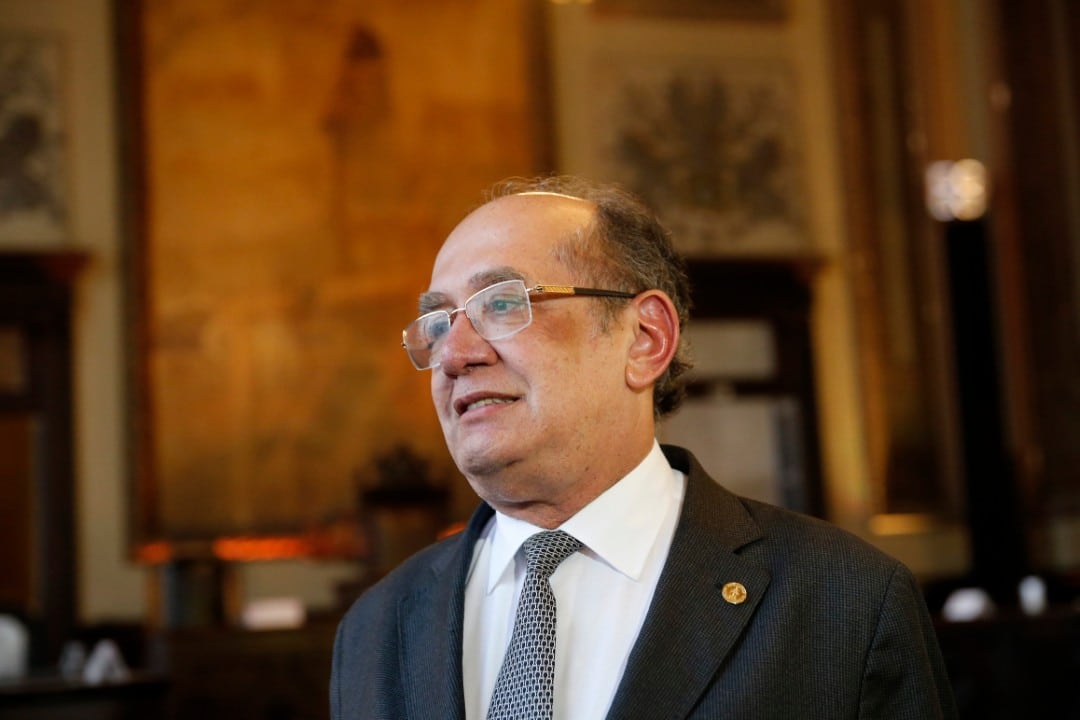
Amidst persistent legal challenges concerning the detention of former President Jair Bolsonaro, Supreme Court Justice Alexandre de Moraes forwarded a request for the former leader’s house arrest to Justice Gilmar Mendes for a definitive ruling in 2025. This procedural move highlights the complex legal landscape surrounding Bolsonaro, who remains incarcerated on charges related to an attempted coup d’état. The transfer of the case occurred after Justice Moraes, initially tasked with urgent matters during the judiciary’s recess, declared himself unable to rule on the matter due to his direct involvement as the “coatora” party, whose decisions were being challenged by the habeas corpus.
The intricate legal petition was not initiated by Bolsonaro’s official defense team but by an independent lawyer, Paulo Emendabili Sousa Barros de Carvalhosa. Carvalhosa’s filing represents a distinct effort to alter the former president’s detention terms, adding another layer to the already multifaceted legal proceedings. This separate initiative underscores the broad legal scrutiny and diverse strategies employed in response to Bolsonaro’s imprisonment.
Key legal maneuver at the Supreme Court
Carvalhosa’s request not only sought house arrest for Bolsonaro but also included a critical demand for the Federal Council of Medicine (CFM) to conduct a thorough evaluation of the detention facility. This assessment aims to ascertain whether the current conditions at the Papuda Complex adequately meet the former president’s specific health requirements. The comprehensive nature of this appeal suggests a focus on the humanitarian aspects of Bolsonaro’s incarceration, drawing attention to his well-being.
This particular petition stands in contrast to several prior attempts by Bolsonaro’s official legal team, all of which had been consistently rejected by Justice Moraes. The pattern of previous denials underscores the high bar for such requests within the Supreme Court, particularly given the gravity of the charges involved. The continuous legal efforts reflect a determined strategy to explore every available avenue for modifying the terms of the former president’s confinement.
Renewed focus on health and detention conditions
In a separate but related development, Bolsonaro’s official legal representatives submitted a new request for humanitarian house arrest early in 2025, emphasizing a recent incident where the former president suffered a fall on December 6th of the preceding year. This injury has become a central point in their updated argument, suggesting a decline in health that, according to the defense, necessitates a change in his custodial status. The renewed focus on health concerns aims to leverage compassionate grounds for a transfer to home confinement.
Further indications of high-level efforts to influence the detention regime emerged from a private conversation between former First Lady Michelle Bolsonaro and Justice Gilmar Mendes, the Supreme Court’s senior member. This discussion reportedly revolved around the potential for a change in the former president’s regime of confinement, highlighting the ongoing political and judicial efforts from various quarters. Such interactions underscore the high-stakes nature of Bolsonaro’s legal predicament and the broad interest it continues to generate across Brazil’s political spectrum.
Bolsonaro currently remains imprisoned at the Complexo da Papuda in Brasília, where he is serving his sentence for his alleged involvement in attempts to subvert the democratic process and overthrow the established government. His continued detention maintains a spotlight on the legal ramifications of actions perceived as threatening democratic institutions. The legal battles surrounding his confinement are closely watched, reflecting their significant implications for both political stability and judicial authority within the nation.
Judicial recusal and procedural intricacies
The initial distribution of Carvalhosa’s habeas corpus petition saw the case assigned to Justice Cármen Lúcia, following standard Supreme Court protocol. However, due to the judiciary’s scheduled recess, Justice Moraes, then serving as the acting president of the Supreme Court, was responsible for adjudicating urgent matters. This temporary shift in responsibility placed the controversial petition directly on his desk, setting the stage for his subsequent recusal.
Justice Moraes’s decision to recuse himself was rooted in the foundational principle of judicial impartiality, acknowledging that the habeas corpus directly challenged rulings he himself had made. This scenario presented a clear conflict of interest, as he would effectively be asked to rule on the legality of his own prior judgments. Such recusals are critical for upholding the integrity and perceived fairness of the judicial process, ensuring that decisions are made without any potential for bias.
The legal precedent for a justice stepping aside in such circumstances is well-established, emphasizing the importance of objective adjudication. When a judge’s prior actions or decisions are the subject of the very litigation before them, ethical guidelines and procedural rules mandate their withdrawal from the case. This mechanism serves to protect both the rights of the litigants and the public’s trust in the judiciary as an impartial arbiter of justice.
Consequently, the referral of the case to Justice Gilmar Mendes carries significant weight, as he now assumes the responsibility for a decision with profound implications. His role as the new rapporteur places him at the forefront of this highly scrutinized legal matter, highlighting the procedural carefulness required in cases involving high-profile political figures and sensitive charges. The judiciary’s meticulous adherence to such protocols aims to maintain judicial credibility.
Precedents in previous house arrest denials
Justice Moraes had previously rejected all preceding requests for Bolsonaro’s transfer to a house arrest regime, establishing a consistent judicial stance on the matter. These repeated denials, occurring throughout the earlier phases of the legal process up to 2025, underscore the Supreme Court’s firm position regarding the former president’s detention conditions. Each rejection reinforced the court’s view that the circumstances did not warrant a change from his current imprisonment.
The consistent rejections were typically underpinned by strong legal arguments from the prosecution, emphasizing the severity of the charges, including alleged attempts to undermine democratic institutions. Prosecutors have maintained that the nature of these offenses, coupled with potential risks such as flight or interference with investigations, necessitates continued institutional confinement. This legal posture has been critical in countering the defense’s petitions for more lenient detention conditions.
Public and political reactions
The ongoing legal proceedings surrounding Jair Bolsonaro’s detention and the continuous appeals for house arrest have ignited considerable public and political debate throughout 2025. Supporters frequently voice concerns about his health and perceived political persecution, advocating for his immediate release or transfer to home confinement on humanitarian grounds. These sentiments often manifest in social media campaigns and public demonstrations, drawing significant attention to the case.
Conversely, opponents and critics of the former president consistently emphasize the gravity of the charges against him, advocating for the full application of the law without exception. They argue that any leniency could undermine the rule of law and the accountability of public officials, particularly in cases involving threats to democratic stability. This stark division in public opinion reflects the deep political polarization that continues to characterize Brazil’s landscape.
Ongoing health evaluations requested
The request for the Federal Council of Medicine (CFM) to assess Bolsonaro’s health needs and the suitability of his current detention facility remains a crucial aspect of the ongoing legal strategy. This evaluation seeks an independent medical opinion on whether the Papuda Complex provides an environment conducive to managing any existing health conditions, or if a transfer to a more appropriate setting, such as house arrest, is medically necessary. This step aims to provide objective medical evidence to support the humanitarian aspect of the appeal.


