
New electric SUVs from Leapmotor, Peugeot, Mazda, Kia and Volvo arrive with a focus on greater autonomy By Carolina Costa
7 min read
 |
The European automotive market is experiencing a busy start to the year, marked by a wave of launches in the electric and hybrid vehicle segment. Grandes manufacturers such as Leapmotor, Peugeot, Mazda,
This movement is intensified by the growing and aggressive competition coming from Chinese manufacturers, who continue to expand their presence on the continent. Marcas like Leapmotor are gaining ground by offering technology-advanced vehicles at highly competitive prices, putting pressure on traditional automakers to accelerate their own electrification timelines and innovate in design, efficiency and cost-effectiveness.
The main trend observed in these launches is the focus on SUVs in the compact and medium segments, which meet a growing demand for versatile, family-friendly vehicles with more sustainable propulsion. Technological advancement is evident in the official autonomy specifications, which, although they vary in real conditions of use, indicate significant progress in battery capacity and efficiency, one of the most critical points for the mass adoption of electric cars.
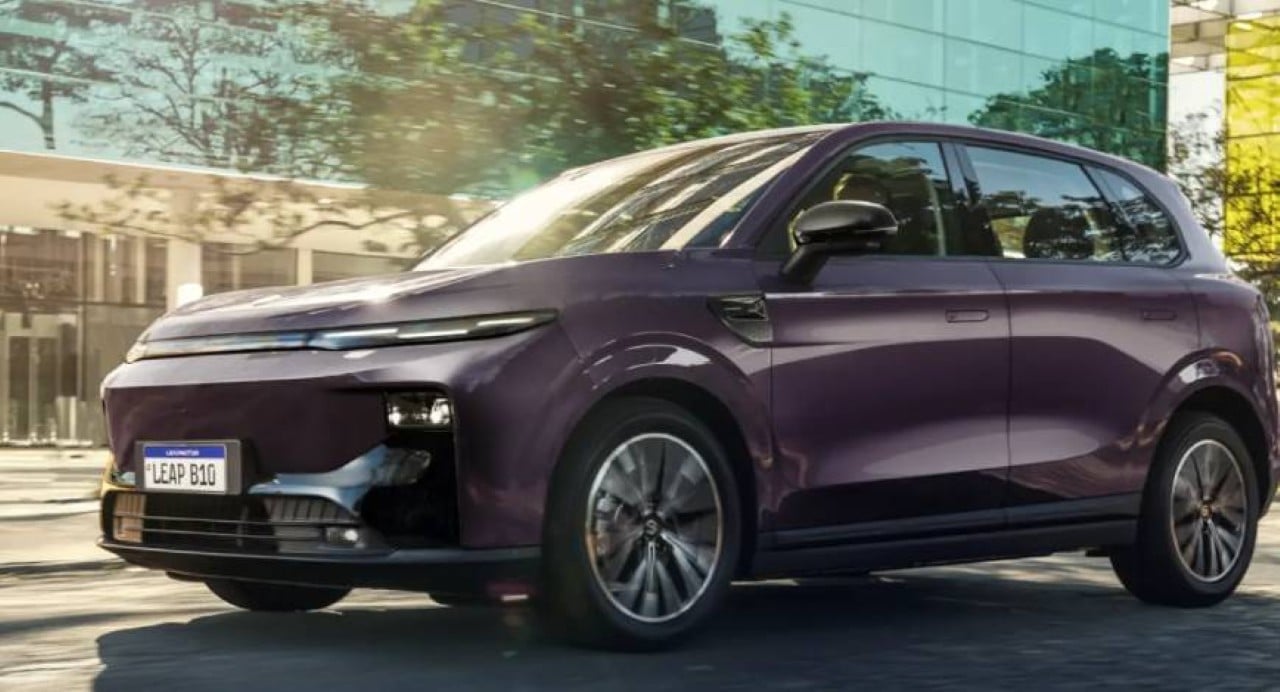
Expansion of Leapmotor in the European market
The Chinese company Leapmotor consolidates its expansion strategy in the Europa with the arrival of the B03X, a compact SUV with an urban profile measuring 4.2 meters long and 1.6 meters high, ideal dimensions for mobility in cities on the continent. The model arrives equipped with a robust 67.1 kWh battery, which, according to the manufacturer, guarantees a range of up to 460 kilometers in the WLTP combined cycle. Esta brand positions it competitively, offering a range that suits both daily use and longer journeys, easing recharging anxiety for many drivers. Sales are scheduled to begin in the second half of the year, covering several European countries simultaneously.
In addition to its energy performance, the B03X stands out for its extensive list of standard equipment, which includes advanced safety and comfort technologies, reinforcing the brand’s value proposition. The strategic partnership signed with the Stellantis group is a fundamental pillar for this advancement, facilitating not only the distribution and after-sales network, but also opening doors for future expansion into other global markets, such as América Latina. Especula It is expected that Leapmotor may even use Stellantis production plants in some regions to optimize logistics, reduce import costs and speed up delivery times to end customers.
Aesthetic and technical update of the Peugeot 408
The Peugeot 408, known for its bold fastback design, receives a facelift that refines its aesthetics and improves its technology. The external changes are subtle but impactful, focusing on elements such as new headlights with LED technology, a redesigned front grille for a more modern look, a front bumper with new lines and updated rear lighting, which now displays the “Peugeot” name in an illuminated way, giving a distinct visual signature.
In the field of motorization, the model expands its range of options to meet different consumer profiles. The portfolio now includes a fully electric version, a plug-in hybrid with greater autonomy in electric mode and a mild hybrid, which optimizes fuel consumption and reduces emissions. The 100% electric variant, called e-408, uses a 58.2 kWh battery and promises a declared range of 456 kilometers, an impressive mark for its segment.
Internally, Peugeot improved the already acclaimed i-Cockpit. The digital screens on the instrument panel and entertainment system received new, clearer graphics and a more intuitive interface, improving the user experience. The 408’s bold design continues to be one of its biggest attractions, maintaining its unique visual appeal in the competitive crossover market.
The production of the model remains integrated into the structure of the Stellantis group, which, interestingly, also has a strategic stake in Leapmotor, highlighting the synergies and complex movements of the global automotive industry. Essas updates aim to keep the 408 competitive against direct rivals, both European and Asian, in increasingly demanding markets.
New electric SUV from Mazda arrives in the medium segment
Mazda takes an important step in its electrification journey with the launch of the CX-6e, an all-electric midsize SUV. Equipado with a 78 kWh battery, the model promises a range of up to 484 kilometers, making it a viable option for families looking for a spacious vehicle capable of traveling long distances. Seu generous wheelbase of 2.9 meters ensures excellent internal space, benefiting rear seat passenger comfort and cargo capacity.
A relevant technical point is that, to optimize the recharging time of its large battery, the CX-6e requires the use of high-power fast chargers. The manufacturer informs that, under ideal conditions, it is possible to charge from 10% to 80% of capacity in a competitive time. However, Mazda recognizes that ultra-fast charging infrastructure is still developing in many regions, which may be a limiting factor for some users.
Visually, the CX-6e adopts the brand’s acclaimed Kodo design philosophy, which translates into fluid, elegant lines and a sophisticated appearance. With this launch, Mazda positions the model as a direct competitor to electric SUVs already consolidated on the market, betting on the combination of design, construction quality and a dynamic driving experience to conquer its space.
Kia prepares electric model bigger than the Inster
Kia is developing a new electric vehicle that will position itself above the recently launched Inster, both in dimensions and price. Este new model will be offered with two battery options: a 42.2 kWh battery, which will provide a range of around 317 kilometers, and a long-range version with 61 kWh, capable of traveling up to 448 kilometers on a single charge. Essa flexibility allows the consumer to choose the configuration that best suits their needs and budget.
The interior of the vehicle promises to be one of its greatest highlights, adopting a configuration of three screens on the dashboard. Esta layout includes a 12.3-inch digital instrument cluster, a 12.3-inch central multimedia screen and a third, smaller 5.3-inch screen dedicated to climate control system controls. In terms of practicality, the trunk will offer a capacity of 403 liters. With an estimated price for the Europa of around 30 thousand euros, the new Kia will enter a competitive market range, competing for customers with models such as the future Renault 4 EV.
Details of the renewed Volvo XC90
Volvo is finalizing preparations for the full release of the update of its top-of-the-line SUV, the XC90. Preliminary Informações are already generating great expectations, especially after a specific test under controlled conditions, in which the vehicle recorded an impressive range of over 800 kilometers on a single charge. Este number, if confirmed in real-use conditions, would set a new standard for large electric SUVs.
The renewed model will maintain its position as the Swedish brand’s flagship, combining luxury, a spacious interior with capacity for up to seven occupants and the most advanced driver assistance and safety technologies. The Volvo continues to emphasize its core values of occupant protection and long-distance comfort, making the XC90 a benchmark in the premium family vehicle segment.
Comparison of autonomy and batteries
The new crop of electric vehicles highlights a clear evolution in battery technology and energy efficiency, although official numbers must be analyzed carefully. The Leapmotor B03X offers 460 km with a 67.1 kWh battery, while the Peugeot e-408 reaches 456 km with 58.2 kWh, suggesting remarkable efficiency. The Mazda, with the CX-6e, relies on a larger battery, 78 kWh, to reach 484 km of autonomy. The Kia, in turn, offers flexibility with two options, reaching 448 km with its 61 kWh battery. The highlight is the Volvo XC90, which in tests surpassed the 800 km mark, a number that, although obtained in ideal conditions, signals the potential of future propulsion systems. Todos these values are based on the WLTP cycle (Worldwide
Impact of Chinese brands in the segment
The rapid rise of Chinese manufacturers such as Leapmotor is redefining the European automotive landscape. The strategy of offering well-equipped vehicles, with cutting-edge technology and aggressive prices, has proven to be effective in quickly gaining market share. Essa trend forces traditional European brands to not only accelerate their electrification plans, but also to rethink their cost structures and value propositions to remain competitive. The collaboration between Stellantis and Leapmotor is a clear example of how the industry is adapting, with Western giants seeking partnerships to access technology and speed development, while Asian companies gain access to established distribution networks.
Standard equipment on new models
A common denominator among all these releases is the prioritization of very complete equipment packages from the entry-level versions. Itens that were previously optional or restricted to luxury segments now become standard, including advanced driver assistance systems (ADAS) such as automatic emergency braking, adaptive cruise control, lane keep assist and blind spot monitoring. Connectivity is also a mainstay, with large multimedia screens that offer full integration with smartphones via Apple CarPlay and Android Auto, significantly raising the standard of safety and convenience for a wider audience.











