


Toyota officially presented the sixth generation of the RAV4, one of its most successful SUVs globally. The initial launch took place on the Japão in December 2025, with arrival in other markets scheduled for the following months. The main novelty is the automaker’s decision to completely abandon gasoline-only versions, adopting a hybrid propulsion system in all configurations, including those equipped with E-Four all-wheel drive.
The new RAV4 maintains its position as the brand’s best-selling compact SUV, but now with significant improvements in efficiency, power and connectivity. The changes range from the exterior design to the embedded software, which now allows remote updates. With this renovation, the Japanese manufacturer reinforces its focus on sustainability without compromising the performance and practicality required for daily use.
Initial sales in the Japanese market place the model at prices between 4.5 million and 4.9 million yen, distributed between the Adventure and Z versions.
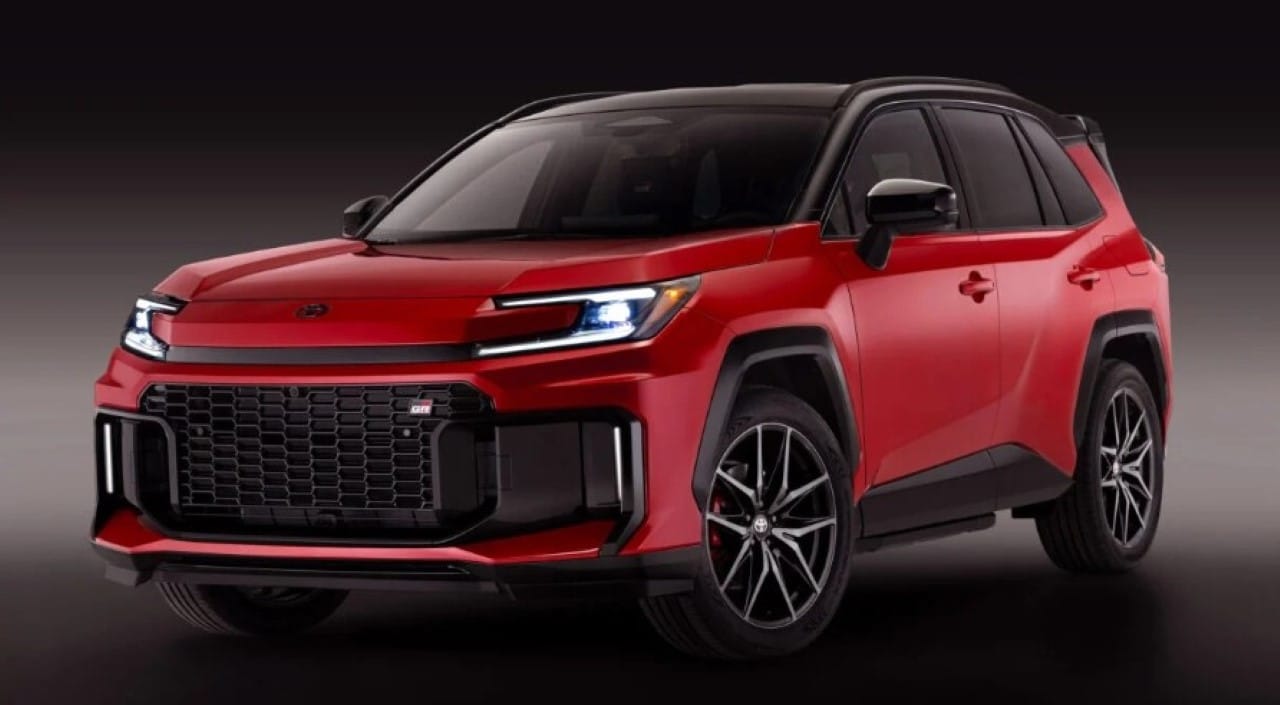
Completely renovated exterior design
The most impactful change in the new generation of RAV4 is the adoption of the visual language known as “hammerhead”. Essa identity is characterized by tapered LED headlights and a front grille integrated into the bumper, giving it a more modern and robust appearance. The Essa configuration replaces the more angular style of the previous generation, bringing more fluid and contemporary lines that align the SUV with the brand’s other recent launches, such as the Prius and the Corolla Cross.
The sides of the vehicle received softer creases and pronounced fenders, reinforcing its visual presence. At the rear, the headlights adopt a horizontal and connected light signature, a feature increasingly common in Toyota models. Além of aesthetic appeal, these changes were designed to improve the SUV’s aerodynamics, directly contributing to reduced fuel consumption and wind noise at high speeds.
Interior technology and advanced connectivity
The interior of the 2026 RAV4 has been significantly modernized to offer a more technological and comfortable experience. The highlight is the new multimedia center, which can have screens up to 14 inches, depending on the version. The operating system has been updated to allow “over-the-air” (OTA) updates, keeping the vehicle’s features up to date without the need for visits to the dealership. Apesar of digitalization, Toyota chose to maintain physical controls for essential functions, such as air conditioning and volume adjustment, aiming for practicality and safety while driving. The materials used in the finishing prioritize quality, with soft-touch surfaces and synthetic leather covering options. The interior space has been slightly increased, benefiting rear seat passengers and trunk capacity. Como standard, the new RAV4 includes an induction cell phone charger and multiple USB-C ports. The digital instrument panel is also new, fully configurable and capable of integrating information from navigation and driver assistance systems. Voice commands have been improved to respond to more natural language, making interaction with the vehicle easier.
Exclusively hybrid engine
All versions of the new RAV4 use the Toyota series-parallel hybrid system, which combines a 2.5-liter combustion engine with electric units. Total combined power reaches 226 horsepower in standard configuration, providing more agile acceleration compared to the previous generation. The 0 to 100 km/h time has been reduced by approximately half a second.
The E-Four transmission, available on all-wheel drive versions, distributes torque to the rear wheels via a dedicated electric motor. Esse system improves stability and traction capacity in low-grip conditions, such as wet floors or dirt roads, without the need for a physical cardan, which optimizes internal space and reduces the weight of the set.
Propulsion options and energy efficiency
In select markets, Toyota will offer a plug-in hybrid (PHEV) option for the new RAV4. Esta version has a larger capacity battery, allowing a range in pure electric mode of more than 100 kilometers, ideal for daily urban use without pollutant emissions.
The battery can be recharged using common sockets or fast charging stations. With this configuration, the SUV becomes even more versatile, combining the best of both worlds: the efficiency of an electric car for short trips and the autonomy of a hybrid for long trips.
Average fuel consumption has been improved compared to the old model, with a reduction of up to 15% in urban cycles, according to preliminary data. Official consumption figures are still awaiting approval in several countries, but the expectation is that the new RAV4 will consolidate itself as one of the most efficient SUVs in its category.
Enhanced security with Toyota Safety Sense
The Toyota Safety Sense security suite has evolved into its latest generation, incorporating new features and enhancing existing ones. The automatic emergency braking system now has pedestrian and cyclist detection, working with greater precision even at night.
Adaptive cruise control (ACC) has been improved to operate at low speeds, being especially useful in traffic jams, as it can stop and resume acceleration autonomously. The lane keeping assistant has also been recalibrated to correct the vehicle’s trajectory more smoothly and accurately.
New features have been added, such as 360-degree cameras and ultrasonic sensors that make it easier to maneuver in tight spaces. Blind spot monitoring now alerts the driver to the presence of vehicles in adjacent lanes, increasing safety when changing lanes.
The body structure uses a higher percentage of high-strength steel, which improves energy absorption in the event of a collision and increases protection for all occupants. Preliminary Testes indicate that the model should achieve the maximum classification in the main international safety bodies.
Available versions and market positioning
At Japão, the RAV4 2026 is initially offered in two main versions: Adventure and Z. The first has a more robust visual appeal and aimed at light off-road, while the second focuses on a more refined and urban finish. Ambas versions include the full hybrid system and advanced connectivity equipment.
In the Estados Unidos, the range of options is wider, with finishes such as the Woodland, designed for adventurous use with raised suspension and mixed-use tires, and the Limited, which represents the top of the line in luxury equipment and technology. The starting price in the North American market is around $31,900 for the entry-level configuration.
Perspectives for the Brazilian market
Spotters have registered units of the new RAV4 running in tests on the Brasil since mid-2025. The Toyota is adapting the model to local fuel, which indicates the development of flex hybrid technology. The Essa configuration, already present in other brand vehicles in the country, such as the Corolla and the Corolla Cross, optimizes efficiency by allowing the use of ethanol, a renewable fuel.
Continuous evolution of the model
The RAV4 began its journey in 1994 as one of the pioneers in the compact SUV segment. The sixth generation builds on the TNGA platform, introduced in the previous generation, but with a total focus on electrification, eliminating pure combustion engines. Essa strategy reflects the brand’s global commitment to carbon neutrality, a trend that should be followed by other models in the line in the coming years.



