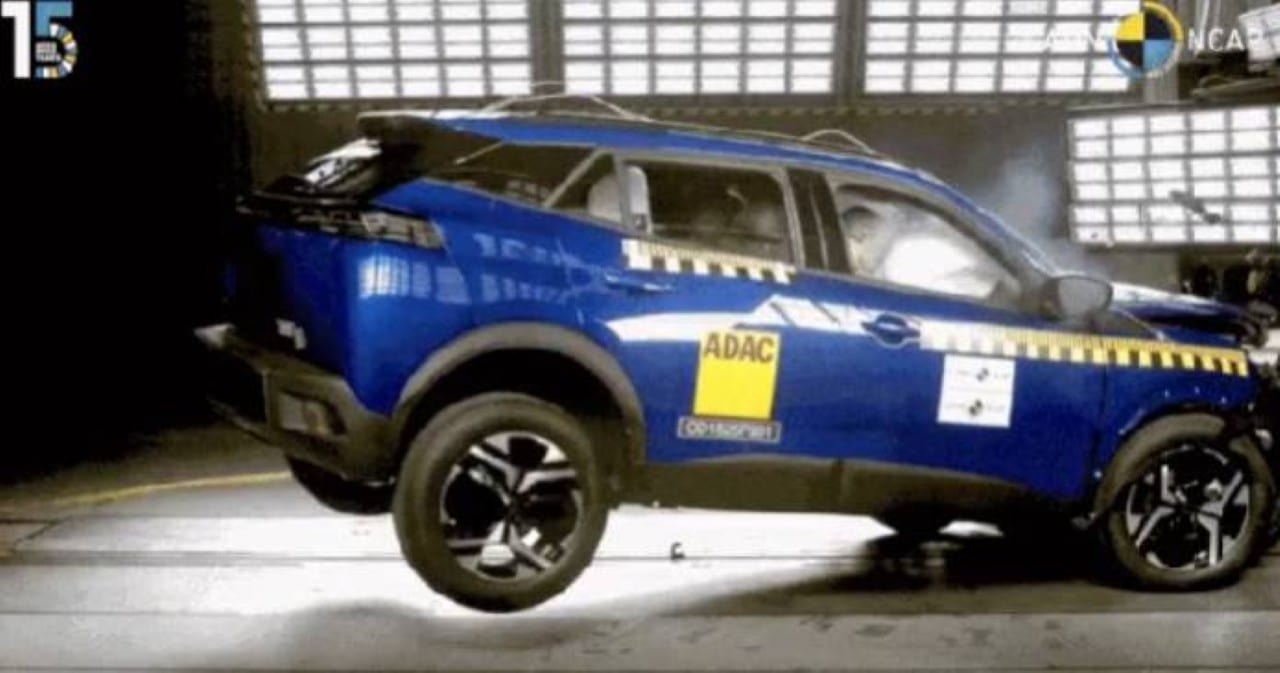
Vehicle safety remains a paramount concern for consumers worldwide, with independent organizations like Latin NCAP conducting rigorous crash tests to establish essential standards. These evaluations serve as a critical benchmark for assessing how well vehicles protect occupants and pedestrians in real-world collision scenarios.
In Brazil, three prominent car models destined for the 2025 automotive market have recently demonstrated concerning safety performances in these crucial evaluations. These vehicles’ low ratings are raising questions about manufacturer commitment to comprehensive safety.
The Citroën Basalt, Peugeot 2008, and Toyota Yaris Cross each received notably low star ratings, highlighting a persistent challenge in ensuring robust occupant and pedestrian protection for new offerings in the region. Their results underscore a critical trend that warrants close attention from both buyers and regulators.
Citroën Basalt: A zero-star result
The Citroën Basalt, an SUV coupe, recorded a disheartening zero-star rating from Latin NCAP in 2024, a result that critically impacts its market standing for 2025 consumers. This score places the vehicle at the lowest tier for safety performance.
Despite being equipped with four airbags for passenger protection, the vehicle’s adult occupant protection was rated at a significantly low 39.37%. This figure indicates severe vulnerabilities and inadequate structural integrity in impact scenarios, posing substantial risks to adult passengers.
Latin NCAP’s assessment also pointed to a critical lack of advanced driver-assistance systems (ADAS) and side curtain airbags as primary reasons for the Basalt’s dismal score. These omissions are key contributors to the insufficient protection offered, raising questions about standard safety features in some new vehicle offerings designed for regional markets.
Peugeot 2008’s single-star performance
The current generation Peugeot 2008 compact SUV also achieved a disappointing one-star rating from Latin NCAP, signaling below-average safety standards for its segment. This outcome positions the vehicle behind many competitors adhering to stricter safety protocols.
Produced in Argentina and specific European facilities, the tested Peugeot 2008 comes equipped with four standard airbags—two frontal and two side thorax airbags—along with electronic stability control (ESC). However, these provisions were deemed inadequate for comprehensive occupant safety in Latin NCAP’s rigorous evaluation.
Toyota Yaris Cross: Two stars and a warning
The Toyota Yaris Cross, expected to launch soon in the Brazilian market, also demonstrated an unsatisfactory performance in its recent Latin NCAP assessment. While scoring higher than the other two models, its overall rating still falls short of modern safety expectations.
Equipped with six airbags, the model underwent comprehensive evaluations including frontal impact, lateral impact, pole side impact, whiplash protection, pedestrian safety, and electronic stability control. These tests cover a wide range of potential collision scenarios.
Despite a higher airbag count compared to the other models, its overall performance resulted in a two-star rating. This underscores areas for improvement in both passive and active safety systems to meet higher international benchmarks.
Stephan Brodziak, president of the Latin NCAP Board of Directors, conveyed a strong message regarding the results, stating, “Unfortunately, the results obtained by Toyota in this round confirm a worrying trend.” This indicates broader concerns within the industry about vehicle safety.
Detailed assessment percentages
A closer look at the detailed scores reveals the stark differences and common shortcomings across the evaluated models. The Citroën Basalt, with its 0 stars, showed adult occupant protection at 39.37% and safety assist at 34.88%, alongside 58.35% for child occupant protection and 53.38% for vulnerable road users. The Peugeot 2008, at 1 star, fared slightly better with 42.16% for adult occupants and 55.81% for safety assist, complemented by 59.21% for child occupants and 54.48% for pedestrians. The Toyota Yaris Cross, despite its 2 stars, had stronger adult occupant protection at 77.01% and child occupant protection at 69.29%, but its pedestrian protection (55.60%) and safety assist (58.14%) scores remained moderate, indicating varied performance across crucial safety categories.
Implications for consumer safety
These low safety ratings for new car models raise serious questions for consumers prioritizing vehicle security when making purchasing decisions. Access to transparent crash test data becomes paramount for evaluating potential risks.
Informed purchasing decisions now rely heavily on publicly available crash test data, creating pressure on manufacturers to integrate higher safety standards proactively. This shift empowers consumers to demand safer vehicles.
The ongoing quest for safer cars
Continuous evaluation by independent bodies like Latin NCAP is vital to foster a safer automotive landscape for all road users. Such assessments hold automakers accountable and drive necessary improvements in vehicle design and standard safety features.