
Sporty appearance and turbo engine do not hide the technology and space flaws of the new Honda HR-V


The Honda HR-V remains one of the most relevant compact SUVs in the national market, maintaining an impressive sales volume that reflects the strength of the brand and the loyalty of its consumers. In its most recent generation, the model adopts a design with more sporty features and relies on the turbo engine as the main attraction for a public that values not only style, but also a more dynamic and engaging driving experience.
Despite its strengths, an in-depth analysis of the SUV exposes critical vulnerabilities that place it in a challenging position in the face of increasingly technological and versatile competition. Itens as an inconsistently functioning driver assistance system, a lower-than-segment-average trunk capacity, and the notable absence of a hybrid option pose significant hurdles for the model.
While the precise handling and mechanical reliability, which are pillars of the Honda, continue to be solid selling points, direct rivals such as the Hyundai Creta, Volkswagen T-Cross and consumer preference.
Bold design and driving as main assets
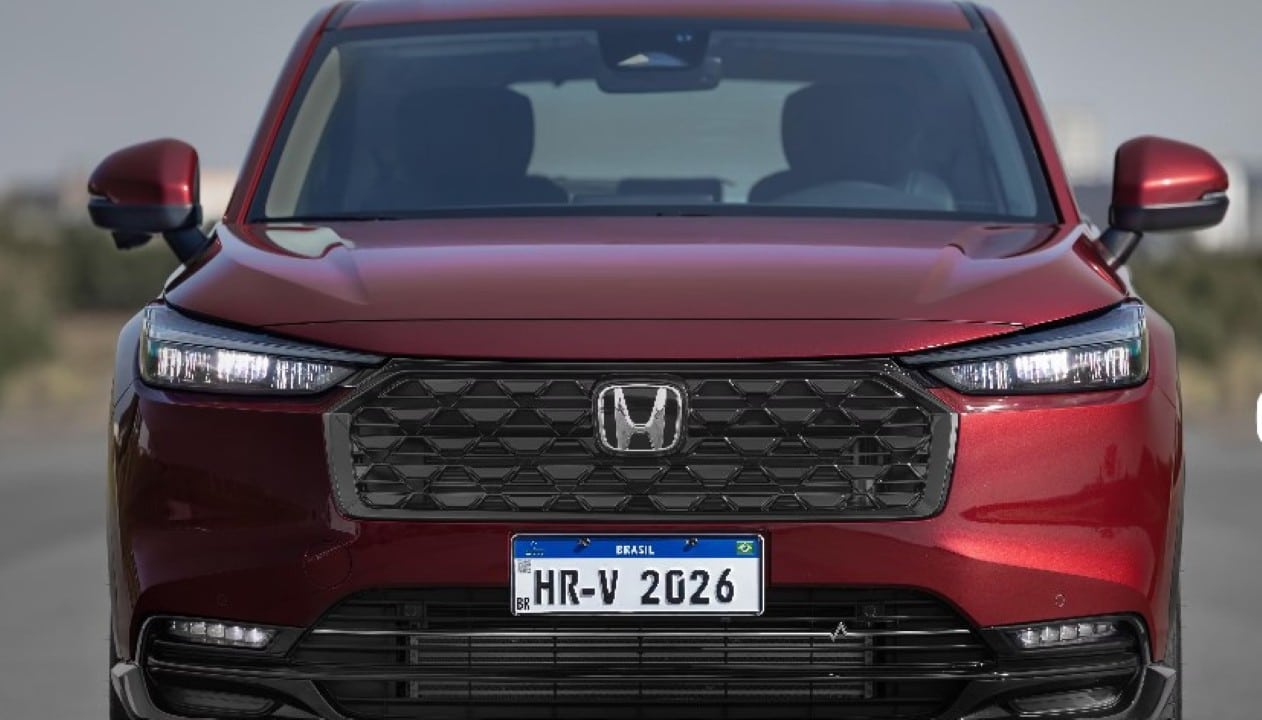
One of the greatest merits of the Honda HR-V lies in its exterior design, which has been refined to accentuate a sporty and modern identity. The top version, Touring, is distinguished by its glossy black front grille, headlights with sequential turn signals and LED taillights that create a sophisticated visual signature. The body with a steep drop in roof at the rear, in coupe style, gives the SUV a dynamic appearance that sets it apart from the more traditional lines of its rivals. The big difference, however, is the experience behind the wheel. Herdando the Civic platform, the HR-V offers a lower driving position than most SUVs, which results in a feeling of greater control and connection with the asphalt. Essa characteristic, combined with a well-adjusted suspension that balances stability in curves and comfort, provides handling that captivates those who value the pleasure of driving, going beyond the simple functionality of a family vehicle. The paddles for manual gear changes on the steering wheel reinforce this proposal, allowing greater control over the performance of the 1.5 turbo engine.
1.5 turbo engine performance under analysis
Equipping the more expensive versions, the 1.5 turbo engine with direct injection is one of the HR-V’s mechanical highlights, delivering 177 horsepower and 24.5 kgfm of torque. Esses numbers translate into agile performance for the SUV, guaranteeing accelerations and speed regains that offer safety when overtaking and agility in urban traffic. In performance tests, the model reaches 100 km/h in approximately 8.9 seconds, a respectable time that positions it competitively within the segment, although it is surpassed by some direct competitors in their more powerful versions, such as the Volkswagen T-Cross Highline.

The continuously variable CVT transmission was calibrated to simulate gears and optimize power delivery, operating smoothly and discreetly in most everyday use situations. Contudo, under more vigorous acceleration, the characteristic noise of this type of gearbox becomes more evident in the cabin, which can be a point of discomfort for drivers who prefer a more sporty sound or superior acoustic insulation. With regard to fuel consumption, the averages recorded are approximately 10 km/l in urban cycle and 12 km/l on highways when fueled with gasoline, values considered only reasonable for a modern combustion engine and which are already widely surpassed by hybrid alternatives available on the market.
Assistance package failures Honda Sensing
The set of driver assistance technologies, sold under the name Honda Sensing, is one of the points that generates the most criticism in the HR-V. Embora the package includes important features, its operation in practice shows inconsistencies that can undermine the driver’s confidence.
The adaptive autopilot (ACC), for example, showed unstable behavior during assessments on heavy traffic roads. The system even activated the brakes abruptly without the presence of clear obstacles, forcing the driver to intervene to ensure safety and fluid driving.
Another significant limitation is found in the lane keeping assistant. Sua activation only occurs from 72 km/h, making it inoperative in most urban scenarios, where it would be more useful to avoid unintentional departures from the road. The absence of an audible alert for this function is also a notable usability flaw.
The blind spot warning system, in turn, adopts a less functional solution. Disponível only for the right side of the vehicle, the camera image is displayed on the multimedia center screen, which forces the driver to divert attention from the GPS map or other functions during maneuvers, a clear disadvantage compared to competitors who project the image directly onto the instrument panel or use warning lights on the rear view mirrors.
Load capacity: a clear weak point
Versatility is one of the main reasons that lead consumers to opt for an SUV, and in this regard, the HR-V is at a clear disadvantage. With a trunk of just 354 liters, the Honda model has the smallest load capacity among its main competitors, which represents an important limitation for families or anyone who needs to transport bulky objects regularly.
In a direct comparison, the Volkswagen T-Cross offers 373 liters (expandable to 420 liters by adjusting the seat back), the Hyundai Creta offers 422 liters, and the Toyota Corolla Cross leads with 440 liters. Essa substantial difference, which can reach almost 25% compared to the Toyota model, can be a decisive factor at the time of purchase for a consumer who prioritizes luggage space.
Hybrid competition advances in the market
The absence of a hybrid version of the HR-V in the Brazilian portfolio has become one of its biggest strategic vulnerabilities in the current scenario. With the advancement of electrification and the growing concern about fuel consumption, direct competitors are gaining ground by offering more efficient options and, in many cases, with more attractive prices.
Models such as the GWM Haval H6 HEV, a conventional hybrid, and the BYD
Furthermore, the Toyota Corolla Cross Hybrid, already established on the market, combines a 196 hp engine with fuel consumption that can exceed 17 km/l. Essa energy efficiency, combined with the brand’s good performance and reputation for reliability, creates a powerful selling point that leaves the combustion-only HR-V in a weaker competitive position.
Internal finish between traditional and dated
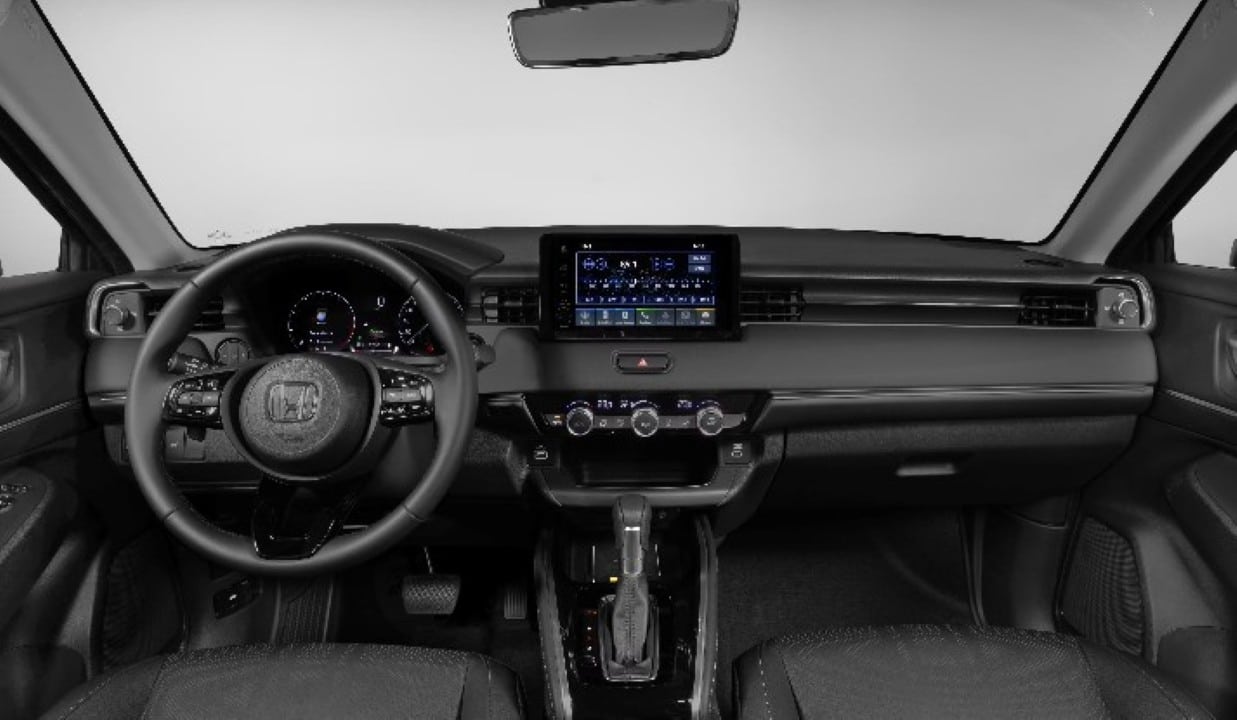
The interior of the Honda HR-V displays a good quality finish and precise assembly, characteristics that are traditional for the Japanese brand. The panel design is functional and ergonomic, with well-located and easy-to-operate controls, using pleasant-touch materials suitable for the category in which it competes.
However, the general environment is perceived as excessively conservative. The multimedia center, despite offering wireless compatibility with Android Auto and Apple CarPlay, has an 8-inch screen and an interface that appears outdated when compared to the larger and more modern screens offered by its rivals, which provide a more fluid and visually attractive user experience.
The cost-benefit ratio in check
With the top-of-the-line version Touring being sold for values approaching R$209,000, the Honda HR-V faces a complex scenario in its cost-benefit ratio. The Esse price puts it in direct competition not only with the most complete versions of combustion competitors, but also with more efficient and technological hybrid models, making the purchasing decision more challenging for consumers who are looking for the most complete and rational package for the amount invested.



