

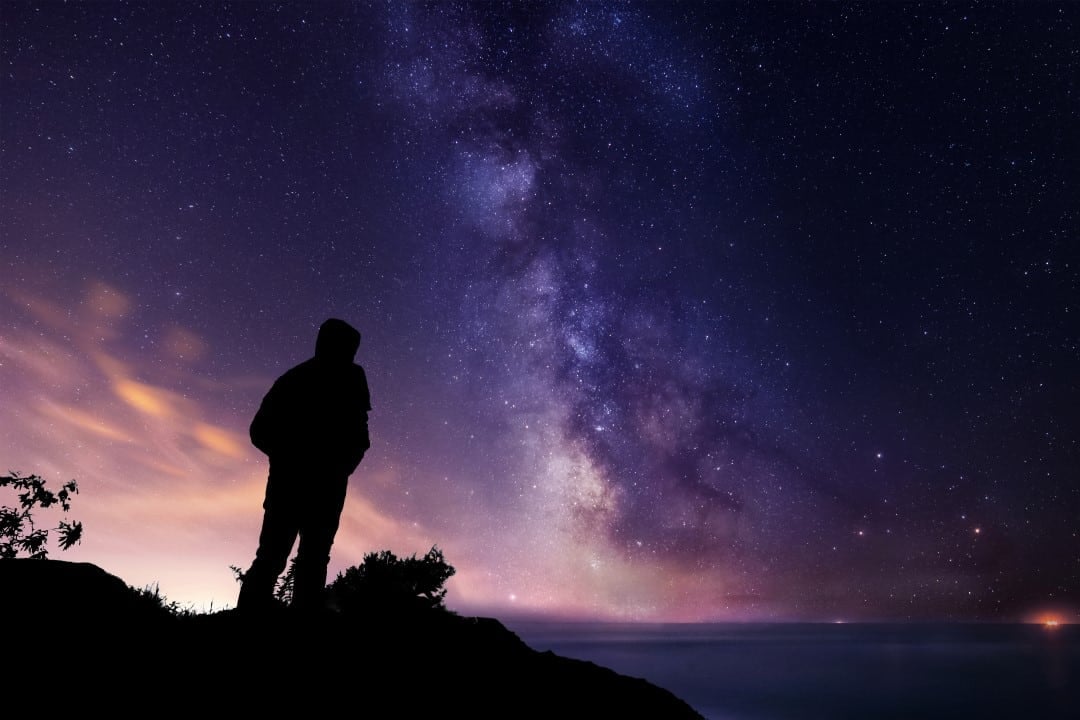
Summer nights in the southern hemisphere become a privileged stage for astronomical observation, offering a sky full of stars and prominent constellations. Durante the month of January, five highly prominent celestial objects can be appreciated without the need for professional equipment, being visible to the naked eye in places with low light pollution. The show is led by the planet Júpiter, which reaches its brightest point in the sky.
The main phenomenon occurs on January 10th, when Júpiter goes into opposition. Nesta date, Terra is positioned exactly between Sol and the gas giant, making it appear larger and brighter throughout the night. Além of the planet, four other celestial targets, including nebulae and star clusters, complete the observation route, providing a unique experience for astronomy enthusiasts and beginners.
To ensure the best viewing, it is recommended to begin observation approximately 90 minutes after sunset, when it is completely dark. Condições favorable climate conditions, such as clear and cloudless skies, and the absence of glare from the full Lua are crucial factors in enhancing the visibility of these celestial bodies.

The majestic Nebulosa of Orion dominates the night sky
Considered one of the most beautiful and important objects in the night sky, Nebulosa of Orion, also cataloged as Messier 42, is a true nursery of stars. Localizada in the constellation of Orion, the Caçador, just below the famous “Three Marias” that form its belt, the nebula can be identified with the naked eye as a diffuse, milky patch. Contudo, when using binoculars or a small telescope, its complex structure of cosmic gas and dust is revealed, illuminated by the intense radiation of young, hot stars within it, such as those in the Trapézio cluster. Distante is approximately 1,500 light years from Terra, its vastness is impressive, covering an area approximately 30 light years in diameter, which is equivalent to more than 20 thousand times the diameter of our entire Sistema Solar. Its appearance, often described as an irregular cloud with greenish or grayish tones, is the result of the fluorescence of ionized hydrogen gas, making it a fascinating and accessible target even in city skies with moderate light pollution.
Pleiades and Híades form an iconic duo in the constellation Touro
In the constellation of Touro, two open star clusters stand out and can be easily found. The most famous of them are the Plêiades, or Messier 45, popularly known as the “Seven Irmãs”. The Este cluster resembles a small shell or a miniature of the Ursa Menor constellation and, under ideal conditions, it is possible to distinguish between six and seven of its brightest stars with the naked eye. With the help of binoculars, the scene expands to dozens of bluish stars, which shine like diamonds spread over dark velvet. The cluster is about 440 light-years away and is made up of more than a thousand young stars.
Not far from Plêiades, there is the cluster of Híades, which forms the “V” contour of the face of Touro. Embora, the red giant star Aldebaran, the brightest in the constellation, appears to be part of the group, it is, in fact, a foreground star, located just 65 light years from As Híades, in turn, is 150 light years away, being the closest open star cluster to our Sistema Solar. Juntos, these two objects create one of the most recognizable and admired landscapes in the summer sky, both located in the Orion spiral arm of our galaxy, a region rich in star formation.
The show of Aglomerado Duplo in Perseus
In the northwest direction, a true celestial treasure awaits observers: the Aglomerado Duplo of Perseus. Composto by the clusters NGC 869 and NGC 884, this magnificent pair can be found near the constellation of Cassiopeia, recognizable by its “W” shape.
To the naked eye, in a very dark sky, Aglomerado Duplo appears as a fuzzy patch, but binoculars reveal its spectacular nature, showing two dense groups of bright stars side by side. Cada one of the clusters is larger in apparent diameter than the full Lua, which makes viewing on low magnification equipment particularly impressive.
Messier 35: a stellar treasure in the constellation Gêmeos
The constellation of Gêmeos is also home to a notable object for observation in January: the open cluster Messier 35. Sua’s location is facilitated by the bright presence of Júpiter, which will be in the same region of the sky throughout the month.
Visible as a subtle haze to the naked eye on dark nights, M35 reveals itself in binoculars as a rich field with dozens of stars arranged in curved rows. Astrônomos describe it as one of the most beautiful open clusters, filling the field of view with a uniform, sparkling glow.
For observers with telescopes, an additional challenge presents itself in the form of the much smaller and more distant cluster NGC 2158, which appears as a small speck next to M35, offering a beautiful contrast of density and brightness.
Practical tips to facilitate amateur observation
To make the most of these celestial spectacles, choosing the location is essential. It is necessary to look for areas far from large urban centers, with as little light pollution as possible. Regiões mountains, such as Serra of Mantiqueira, or plateaus in the Centro-West, such as that of
There is no need to invest in expensive equipment. A simple pair of binoculars, such as the 7×50 or 10×50 models, is enough to reveal incredible details in most of these objects, such as the individual stars in the clusters and the shape of Nebulosa and Orion.
The use of sky map applications for smartphones is also a great ally, as they use the device’s GPS and compass to identify constellations, planets and other objects in real time, making it easier to locate targets in the sky.
It is also important to check the weather forecast to ensure a clear, cloudless night. Evitar periods close to Lua full is another crucial recommendation, as the intense brightness of our natural satellite overshadows deep-sky objects, reducing contrast and visibility.
Events that complement the monthly observations
In addition to the five main highlights, the January sky holds other events. The Quadrântidas meteor shower reaches its peak activity between the 3rd and 4th, and can produce dozens of “shooting stars” per hour in places with dark skies and away from light pollution.
The phases of Lua also play an important role in planning. The new Lua, which will take place on January 18th, marks the ideal period for observations of faintly glowing objects, guaranteeing the darkest nights in the second half of the month.
Following conjunctions, which are apparent approximations between Lua and the planets, can also yield beautiful celestial scenes throughout the night, further enriching the experience of observing the firmament.
Recommended locations expand the visual experience
Brasil has several locations that have become refuges for amateur and professional astronomers due to the quality of their skies. Destinos like Chapada Diamantina, in Bahia, and Parque Nacional of Lençóis Maranhenses are known for offering stunning views of Via Láctea.
In Sudeste, in addition to Serra of Mantiqueira, cities in the interior of Minas Gerais and Rio of The growing interest in astrotourism has led to the creation of itineraries and events focused on celestial observation, combining tourism and science.



