
High demand for AI increases memory costs and could impact the final price of Samsung’s Galaxy S26
Samsung has initiated a strategic reassessment of pricing for its next line of premium smartphones, the Galaxy S26 series, which is expected to launch in early 2026. The move is a direct response to the sharp escalation in the costs of crucial components, especially RAM, which has seen projected increases of up to 40% due to growing demand from the artificial intelligence sector.
Internal industry sources indicate that the South Korean giant is in intense negotiations with several suppliers to mitigate these increases. The objective is to prevent the additional cost from being fully passed on to consumers, which could compromise the competitiveness of the new line in an already fierce global market. Entre The ongoing strategies include diversifying partners and optimizing the internal production of components.
Pressure on costs is not an isolated phenomenon and already affects the brand’s other products. The recently launched Galaxy Z TriFold foldable, for example, is being sold at significantly reduced profit margins in select markets, serving as a wake-up call for the mobile device division. Analistas of the market closely monitor the company’s decisions, as they could establish a new price level for high-end devices next year.
The epicenter of the rise in production costs
The main force behind the exponential increase in RAM prices is the accelerated expansion of data centers dedicated to artificial intelligence. Gigantes of technology around the world are prioritizing the acquisition of high-performance components, such as high-bandwidth memories (HBM), to power their language models and other AI applications. Essa technological race drains the production capacity of semiconductor manufacturers, reducing the supply available for the mobile device market, such as smartphones and notebooks. Como direct consequence, the supply contracts for DRAM and LPDDR memories, essential for the Galaxy S26 series, have undergone readjustments of dozens of percentage points over the last few months. Samsung, although one of the largest global memory producers, faces a dilemma: capitalize on high profits in the AI segment or subsidize its own smartphone division to maintain competitiveness. Essa Complex dynamics affect not only the company’s profit margin, but also the entire logistical and production planning for its most important line of cell phones.
Strategies to contain the transfer to consumers
To overcome the adverse scenario, Samsung is implementing a series of robust internal measures. The main one is the expansion of the use of its proprietary processor, the Exynos 2600. Desenvolvido with an advanced 2 nanometer lithography, this chip promises not only gains in energy efficiency and performance, but also a significant cost reduction as it does not involve the payment of royalties to third parties, such as Qualcomm.
On the same topic: Samsung releases new system update with new features for Galaxy Watch 4 users
The use of the Exynos 2600 should be expanded to the Galaxy S26 and S26+ models in a greater number of regions, a tactic that allows the company to have more control over the production chain and associated costs. Essa approach seeks to balance the scales of expenses without compromising the end user experience, who expects the cutting-edge performance characteristic of the S line.
Diversification in the supply chain
Another area of activity for Samsung consists of renegotiating contracts and searching for alternative suppliers for other expensive components. The company intensified conversations with Chinese manufacturer BOE to supply OLED panels, seeking more competitive prices compared to those produced by its own division, Samsung Display.
This diversification strategy extends to other items, such as camera modules, batteries and biometric sensors. By spreading acquisitions among different partners, the company not only pushes for lower values, but also reduces its vulnerability to production bottlenecks at a single supplier.
The negotiations take place at a critical time, with the Galaxy S26 series assembly line already in the preparation phase. The success of these conversations will be decisive in defining the final price structure of the devices, which the company strives to keep in line with the previous generation.
Understand the case: Global semiconductor crisis will force Valve to raise Steam Machine prices
Direct repercussions on the flagship market
The price revaluation promoted by Samsung is not an isolated case and signals a broader trend that should affect the entire premium smartphone sector. Direct Concorrentes, like Apple and Google, also face similar pressures from the increase in the cost of high-end memories and processors, driven by the same demand from the AI sector.
For the Galaxy S26 line, which traditionally includes the standard models, Plus and Ultra, the ability to maintain prices at levels close to those of the S25 series will critically depend on the success of ongoing negotiations with the supply chain.
If cost reduction attempts do not meet expected targets, consumers are likely to see moderate adjustments to launch values. Esses possible increases would be applied in a calculated manner so as not to compromise global sales volume, which is vital to the financial health of Samsung’s mobile division.
The current scenario reinforces the growing interdependence between the advancement of artificial intelligence and the cost of consumer electronics, a dynamic that is expected to intensify in the coming years and shape the strategies of all major technology manufacturers.
Samsung’s internal dilemma
Samsung finds itself in a unique and complex position as it operates on both sides of the crisis. Sua semiconductor division is one of the biggest beneficiaries of the high demand for high-performance memories, recording record profits from the sale of components for AI servers.
Read also: New Galaxy Watch 9 firmware appears on server and confirms progress in software development
However, this success creates cost pressure on its own mobile device division, which needs to purchase these same components at inflated market prices. Esse internal conflict of interests requires a delicate balance from top management to maximize the corporation’s overall results without cannibalizing the profitability of one of its most iconic products.
Prospects for the official launch
Despite supply chain challenges, expectations for the launch of the Galaxy S26 series remain extremely high. The devices should reach the market with significant innovations in performance, computational photography and, mainly, embedded artificial intelligence resources, consolidating the Galaxy AI platform.
The company works to balance technological avant-garde with commercial viability, maintaining the S line as its main revenue driver in the smartphone segment. Continuous monitoring of the component market in the coming months will be the decisive factor in defining the prices that will reach shelves around the world.
The precedent of the Galaxy Z TriFold
The rise in component costs has already demonstrated its impact on the brand’s recent products. The innovative Galaxy Z TriFold, a tri-fold device, was launched in selected markets with minimal profit margins, precisely because of the high production costs of its flexible screen and other advanced items. The Essa experience serves as an important learning experience for the company, which seeks to avoid a similar scenario with the Galaxy S26 series, a product with a much higher sales volume and strategic for the company.
More news in News (EN)
See more → Samsung releases new system update with new features for Galaxy Watch 4 users
 Digital retail reduces the value of the Galaxy S25 5G smartphone with bank bonuses and device exchange
 Amazon’s wireless CarPlay adapter has a 50% discount and high approval ratings from drivers
 Zach Cregger’s new Resident Evil ignores games and focuses on an unprecedented story with new characters
 Rumor suggests that Nintendo is preparing a special edition of the Switch 2 with a remake of Ocarina of Time
 Apple accelerates production of the iPhone 17e and develops new Air model with dual camera system
 Epic Games platform releases twelve high-budget games at no permanent cost for PC users
 PlayStation 5 Pro price drop accelerates digital retail sales and eliminates global stocks
 New Galaxy Watch 9 firmware appears on server and confirms progress in software development
 Apple’s commemorative project tests cell phone with 1.1 millimeter edge and curved screen for 2027
 New Apple system update optimizes urgent task management for iPhone users
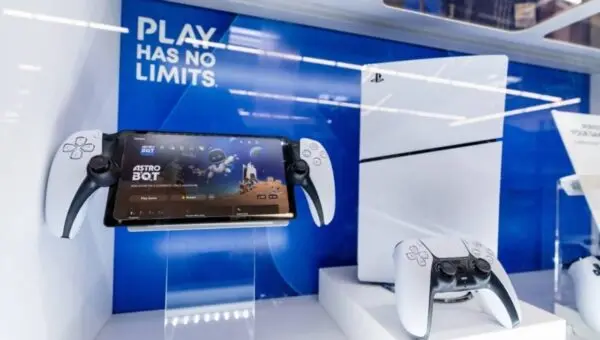 Leak details hardware of the new portable PlayStation with superior graphics to the Xbox Series S
More news on Mix Vale
- 1Colby Minifie confirms Ashley Barrett’s powers in The Boys season five
- 2Napoli x Milan in Serie A with confirmed lineups and where to watch live
- 3New battery test puts Galaxy S26 Ultra ahead of iPhone 17 Pro Max in global ranking
- 4Research reveals that parents are unaware of how their children use artificial intelligence
- 5Oppo officially launches the Find X9 Ultra worldwide with Hasselblad lenses and robust battery
- 6Tim Cook reveals new iPhone and iPod prototypes in celebration of Apple’s fiftieth anniversary
- 7New edition of foldable smartphone brings gold finish to Winter Games competitors
- 8Android system receives native Gemini Nano 4 integration for offline processing on smartphones
- 9Samsung updates QuickStar module and expands visual control of the panel in the One UI 8.5 interface
- 10Leak reveals Lords of the Fallen and Sword Art Online in April’s PS Plus Essential catalog