Trump announces imminent U.S. ground attacks on drug trafficking targets, citing past success

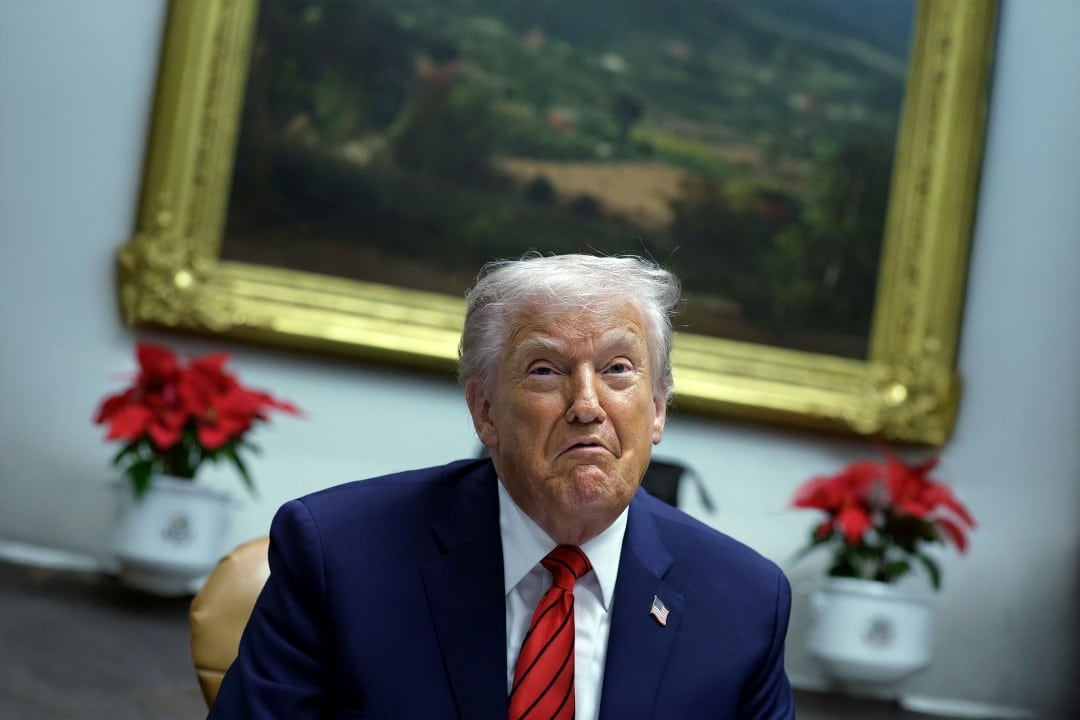
The United States government is poised to initiate ground attacks against drug trafficking targets “very soon,” according to a statement made by former President Donald Trump on Tuesday in 2025. This declaration follows what his administration described as significant successes in disrupting maritime drug routes. Speaking from the White House, Trump emphasized a new phase in the nation’s counter-narcotics efforts.
“You saw what we did on the water. We are starting to do the same on land. In fact, on land it’s much easier,” Trump stated during a press briefing. This marks a notable expansion of U.S. strategy, moving beyond naval interdictions to direct engagements on sovereign territory to combat illicit drug flows.
The president affirmed that terrestrial operations would commence swiftly, explicitly targeting “drugs that come [to the U.S. by] land.” He confidently asserted, “We know exactly where they come from,” though he refrained from specifying any particular country or offering additional details about the planned incursions, leaving the international community to speculate on the precise locations and diplomatic ramifications.
This aggressive stance builds upon his administration’s consistent pressure on nations perceived as sources or transit points for illegal narcotics. The evolving approach underscores a shift towards more direct and potentially unilateral action in combating drug cartels and their networks, signaling a significant geopolitical development in the ongoing war on drugs, highlighted by:
– A commitment to dismantling land-based drug networks.
– An expectation of greater ease and effectiveness compared to maritime operations.
– The potential for intensified international diplomatic tensions over sovereignty.
Escalating the anti-drug offensive
President Trump’s announcement signals an urgent pivot in the nation’s drug interdiction strategy, shifting from primarily maritime operations to direct ground engagements. The move comes as U.S. officials claim substantial reductions in drug flow via sea, prompting a renewed focus on overland smuggling routes that continue to supply the domestic market.
This strategic recalibration suggests a more assertive posture by the United States, aiming to dismantle drug networks closer to their origins. The “very soon” timeline implies meticulous planning has already been undertaken, indicating a readiness for immediate implementation once the final directives are issued.
Past maritime achievements and future strategies
Before this declaration, Trump had highlighted the efficacy of American forces in interdicting drug-laden vessels across the Caribbean Sea and the Pacific Ocean. These operations, he contended, successfully curtailed the volume of narcotics entering the U.S. via maritime pathways, bolstering the rationale for expanding military action to land-based targets.
The perceived success at sea now serves as a blueprint for the anticipated ground operations, with Trump suggesting that terrestrial interventions would prove “much easier.” This assessment could be based on advanced intelligence gathering capabilities and the ability to pinpoint specific land-based infrastructure used by drug traffickers.
Such a transition in strategy reflects an adaptation to the persistent and evolving tactics employed by international drug cartels. As maritime routes become more hazardous due to increased interdiction efforts, traffickers increasingly rely on complex land networks, which the U.S. aims to directly confront with these new measures.
Unspecified targets amid regional tensions
Despite President Trump’s strong assertions regarding the imminent ground attacks and the precise knowledge of drug origins, the absence of named countries has fueled international speculation. This deliberate ambiguity could be a strategic move to maintain operational secrecy and leverage diplomatic pressure without explicitly naming allies or adversaries.
However, this lack of specificity also creates unease among neighboring nations, particularly those along known drug trafficking corridors. Countries like Mexico and Colombia, frequently referenced in discussions about drug routes, are left to interpret the potential implications of such broad statements for their sovereignty and national security.
The “knowing exactly where they come from” declaration underscores the U.S. intelligence community’s ongoing efforts to map and monitor cartel operations with high precision. This detailed intelligence is likely to form the basis for the planned ground interventions, even if the targets remain publicly undisclosed for strategic reasons and to preserve tactical advantages.
The implications for international law and sovereignty are significant, as unilateral ground operations by U.S. forces in other countries could spark diplomatic disputes and challenge existing bilateral agreements on counter-narcotics cooperation. The potential for unintended consequences in complex geopolitical landscapes, including heightened regional instability, cannot be overlooked.
Historical context of drug interdiction efforts
For decades, the United States has engaged in a multifaceted struggle against international drug trafficking, deploying resources from law enforcement and intelligence agencies to military assets. Past initiatives have included aerial eradication programs, financial sanctions against cartel leaders, and significant aid packages to partner nations to bolster their own anti-drug capabilities. Despite these efforts, the flow of illicit drugs, particularly opioids and synthetic substances, into the U.S. has remained a persistent challenge, necessitating continuous adaptation of strategies. The focus on interdiction, whether at sea or on land, often faces the adaptive nature of criminal organizations, which quickly pivot to new routes and methods when old ones are disrupted. This ongoing cat-and-mouse game has driven innovation in both surveillance technologies and operational tactics, as governments seek to gain an advantage over highly resourced and sophisticated trafficking networks. Each successive administration has sought to refine or overhaul these strategies, reflecting changing geopolitical realities and the evolving nature of drug production and distribution while facing constant public pressure to reduce drug availability.
Diplomatic implications and previous warnings
The president’s announcement comes against a backdrop of recent, pointed warnings directed at key Latin American nations, intensifying an already tense geopolitical climate. Previously, Trump had suggested that an operation similar to the one conducted in Venezuela, which involved significant U.S. pressure and sanctions, would be a “good idea” for Colombia. This proposal aimed to address Colombia’s persistent challenges with drug production and trafficking, despite years of extensive U.S. anti-narcotics aid and bilateral cooperation. Such a strong rhetorical stance has consistently put pressure on Bogota, raising questions about sovereignty and the preferred methods of international cooperation.
Regarding Mexico, Trump has repeatedly alleged that the nation is largely controlled by powerful drug cartels, asserting that their pervasive influence deeply undermines governmental authority and stability. These earlier accusations, coupled with the new threat of ground attacks, could significantly strain diplomatic relations and crucial cooperation on border security and trade. Mexico’s strategic geographic position makes it a critical transit country for narcotics entering the U.S., making its stability and partnership vital to any effective counter-narcotics strategy, yet these threats risk alienating a key ally. The implications for regional stability and shared security objectives are therefore considerable, demanding careful diplomatic navigation.
The ongoing challenge of land routes
The shift in focus to land-based drug routes acknowledges the complex and extensive networks utilized by traffickers, often spanning vast, remote territories and dense urban areas. While the U.S. claims these operations are “much easier” than maritime ones, they present unique challenges in terms of logistics, intelligence gathering in foreign territories, and potential engagements with local populations.
Effectively disrupting these terrestrial supply chains requires precise intelligence and robust operational capabilities, often involving coordination with or operations within sovereign territories. The declaration suggests a high level of confidence in the U.S. ability to identify and neutralize these networks, underscoring a sophisticated understanding of land-based trafficking dynamics.
U.S. policy evolution in counter-narcotics
The imminent ground attacks mark a significant evolution in U.S. counter-narcotics policy under President Trump’s administration in 2025. This more aggressive, direct action approach aims to enhance effectiveness by confronting drug operations at their source or primary transit points on land.
This strategic pivot reflects a determination to intensify efforts against drug trafficking. The policy indicates a willingness to employ a broader range of tactics, signaling a more robust and proactive stance against illicit drug flows into the United States and a departure from solely interdicting shipments once they are already in transit.