

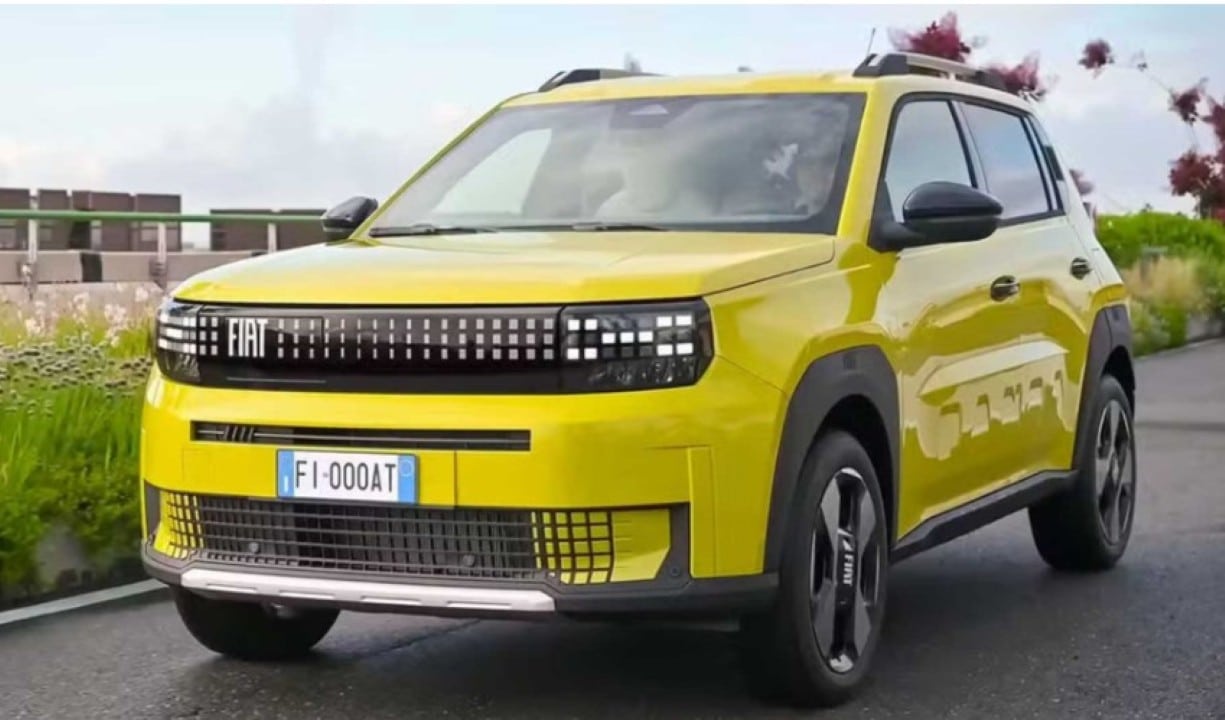
The mystery surrounding the future of the Fiat Argo in the Brazilian market has come to an end with a definitive statement. The new generation of the popular compact hatchback, which will share its base with the recently presented European Fiat Grande Panda, will retain the name Argo for consumers in the country. Esta confirmation came directly from the brand’s global CEO, Olivier François, in an interview with the European portal Auto Infos, dispelling speculation about a possible change or discontinuation of the model.
The strategic decision aims to preserve a name already consolidated among drivers, avoiding unnecessary disruptions and taking advantage of the strong identification that Argo has built over the years. The choice reflects a broader directive from Fiat to harmonize its product line globally, optimizing resources and reducing the complexity of regionalized projects, which directly impacts the reduction of industrial and development costs.
In an automotive scenario in constant transformation, Fiat seeks to balance innovation with accessibility, especially in emerging markets like Brazil. Maintaining the name Argo for the national version of Grande Panda demonstrates a commitment to the strength of the brand and consumer loyalty, while at the same time integrating the model into the global platform of Stellantis.
Fiat reinforces global strategy with platform unification
The strategy of Olivier François and Stellantis, the group to which Fiat belongs, points to an era of greater synergy between models produced in different regions of the world. The use of the STLA Smart platform, an evolution of the well-known CMP, exemplifies this approach. Essa Modular and flexible architecture allows the automaker to develop vehicles with optimized costs and greater agility, maintaining a high technological standard.
This unification is not just limited to the structural basis of vehicles, but also extends to components and systems, generating significant economies of scale. Instead of developing completely different projects for each market, Fiat can adapt its global models to local needs and regulations with greater efficiency, resulting in more competitive and innovative vehicles.
Accessibility and market: Fiat’s focus for the new article
The CEO of Fiat publicly acknowledged that the brand has raised its prices considerably in recent years, a move that has impacted the perception of accessibility. With the new Argo, the automaker has a clear mission: to regain sales volume and leadership position in crucial segments, offering a product with excellent value for money.
The goal is to attract a wide audience, from young drivers to families looking for a reliable and well-equipped vehicle for everyday life. Para the Brazilian market, known for its price sensitivity, this strategy is essential to boost Fiat’s share and strengthen its presence against direct competitors.
The search for accessibility, however, does not mean giving up innovations. Fiat aims to deliver a complete package that includes security, technology and efficiency, even in entry-level versions. Isso demonstrates an effort to democratize resources that were previously restricted to upper segments, making them available to a wider audience.
Details of the future fiat argo 2027
The new Fiat Argo, scheduled to hit the market as a 2027 model, should inherit a series of features and the modern design of the European Grande Panda. The STLA Smart platform will be one of the pillars of this new generation, promising greater torsional rigidity, better dynamic performance and compatibility with future electrification technologies. Essa evolution of the former CMP platform incorporates the latest advances in automotive engineering.
The look of the new Argo will be a fusion of the model’s current identity with the contemporary and robust features of the Grande Panda. Espera has more striking lines, a more imposing silhouette and details that refer to the brand’s heritage, but with a futuristic touch. The inspiration in the “retro-futuristic” design of the Panda, adapted to Brazilian tastes, promises a car that stands out in the urban scene.
Advanced engines and technologies
In terms of mechanics, the engine options of the new Argo 2027 will follow the global trends of the Fiat, adapted for the Brazilian context. The entry-level versions must have an efficient 1.0 aspirated engine, capable of delivering up to 75 hp, offering economy and performance suitable for urban and moderate highway use.
For the more sophisticated configurations, the big news will be the inclusion of a 1.0 turbo Firefly engine, combined with a 12-volt mild hybrid system. Essa mild-hybrid technology improves fuel efficiency and reduces emissions, helping the combustion engine at times of greatest demand and allowing for a smoother and more efficient start-stop system. Electricity is recovered during decelerations, recharging the battery and providing a small electrical boost.
The introduction of the mild hybrid system reflects Fiat’s commitment to sustainability and adaptation to increasing emissions requirements. Além Furthermore, the combination of the turbo engine with hybrid technology promises a more responsive and pleasant driving experience, without compromising energy efficiency. Essa engine must be flex-fuel, meeting the national market demand for vehicles that operate on ethanol or gasoline.
Safety and standard equipment
If the European standard of the Grande Panda is maintained, the new Fiat Argo should surprise with its equipment package, especially in terms of safety. Mesmo the entry-level versions will be able to offer a robust set of items, significantly raising the level of protection for driver and passengers. The presence of six airbags is a key highlight, including front, side and curtain airbags, which guarantee comprehensive protection in the event of a collision.
Complementing passive safety, the model must feature active technologies such as ABS brakes (Frenagem Antibloqueio System) and lane keeping assistant, which works by correcting the direction to avoid unintentional departures. Autonomous emergency braking, which detects obstacles and automatically applies the brakes to prevent or mitigate collisions, will be an important differentiator. Além can also incorporate traffic sign recognition, automatic headlight switching and driver fatigue monitoring, making driving safer and more comfortable. Esses features are crucial to achieving good safety test ratings and providing occupants with peace of mind.
Competitive price and market positioning
The price expectation for the new Argo in the Brazilian market points to a highly competitive positioning, with prices expected to start close to the R$100,000 range. Esta strategy is essential for Fiat to regain its leadership in volume in the compact segment, competing for space with established models such as Chevrolet Onix, Hyundai HB20 and Volkswagen Polo. The automaker seeks to offer a complete package of modernity, safety and technology, while remaining accessible to the average Brazilian public.
The decision to maintain the Argo name and position the vehicle in an attractive price range demonstrates Fiat’s caution in a dynamic market. Instead of a complete break, the brand opts for the evolution of an already consolidated name, investing in a product that combines the solidity of the global platform with the expectations and needs of local consumers, reinforcing its heritage of offering popular cars with a good value for money.



