

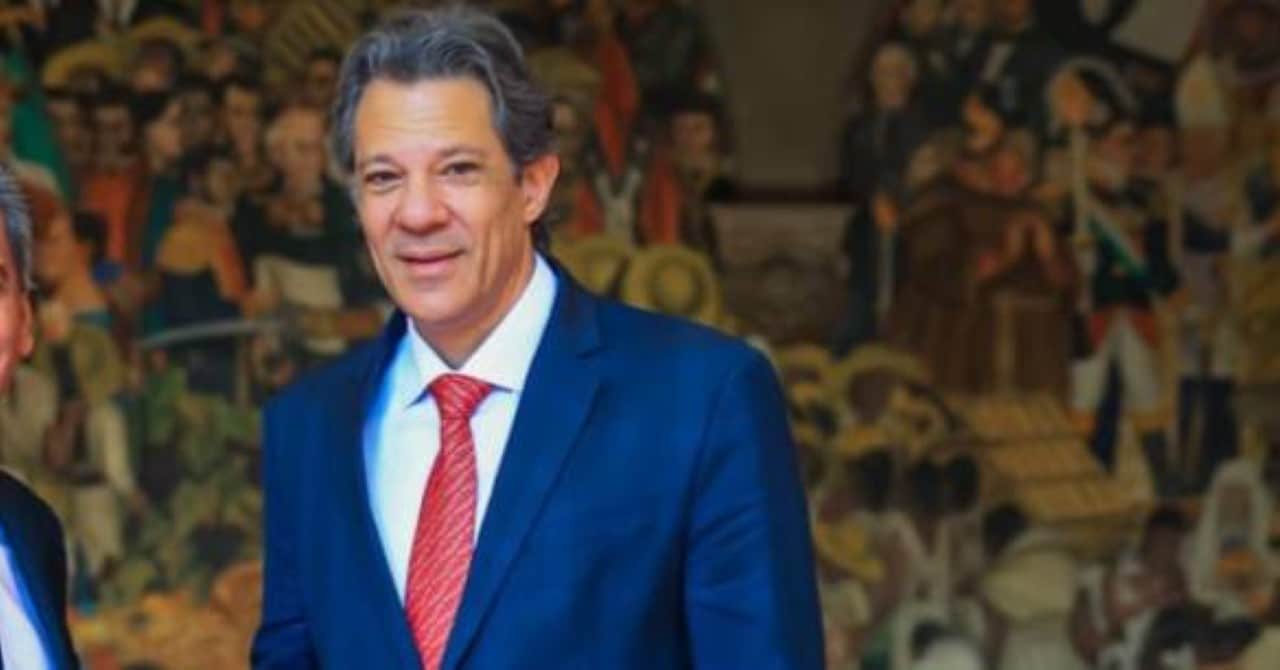
Fernando Haddad, Brazil’s Minister of Finance, has emerged as a leading contender in recent hypothetical first-round presidential election scenarios. The politician significantly outpaces both Senator Flávio Bolsonaro and São Paulo Governor Tarcísio de Freitas in potential matchups, according to a recent assessment of voter intentions.
This strong showing places Haddad at 41.5% against Flávio Bolsonaro’s 35.4% in one scenario. In another, Haddad extends his lead to 42.0%, compared to Tarcísio de Freitas’s 28.9%, illustrating a notable electoral advantage early in the political cycle.

Despite these promising poll numbers for a potential future presidential bid, Haddad recently indicated that he does not intend to run in “this year’s elections,” clarifying his focus remains on “discussing a country project in the international scenario” through his current ministerial role.
Haddad’s lead over key bolsonaristas
Minister Haddad’s significant lead over Senator Flávio Bolsonaro underlines a potential shift in voter dynamics for a future presidential contest. With 41.5% of the vote against Bolsonaro’s 35.4%, the results suggest a robust base of support for the current finance minister, reflecting public perception of his role and policies. Flávio Bolsonaro, a federal senator for Rio de Janeiro, is a prominent figure within the Liberal Party (PL) and a son of former President Jair Bolsonaro.
The margin between Haddad and Bolsonaro indicates a substantial advantage for the former, prompting discussions about the strength of the Worker’s Party (PT) leader outside his current administrative duties. This scenario is particularly relevant as political parties begin to strategize and identify their key players for upcoming electoral cycles.
Competing scenarios for the presidency
Haddad’s performance against São Paulo Governor Tarcísio de Freitas reveals an even wider gap, securing 42.0% of the intentions compared to de Freitas’s 28.9%. De Freitas, affiliated with the Republicans party, holds a significant position as governor of Brazil’s most populous state. His political trajectory has been closely watched, especially given his strong ties to the previous federal administration. This substantial difference suggests that Haddad’s appeal may extend more broadly across the electorate when pitted against other prominent right-wing figures.
The disparities between the two hypothetical matchups highlight the varying degrees of support for the leading Bolsonarist figures. Haddad’s consistent lead across both scenarios firmly positions him as a strong candidate in early assessments, even as the political landscape remains fluid and subject to change.
Other notable figures in the race
Beyond the leading contenders, several other prominent political figures garnered support in these preliminary scenarios. Ronaldo Caiado, the current Governor of Goiás for the União Brasil party, consistently appeared as the third strongest candidate, securing 5.2% in the first scenario and 5.0% in the second. His steady presence suggests a consolidated, albeit smaller, base of support.
Further down the list, other figures like Renan Santos of Movimento Brasil Livre (MBL), with 3.4% and 3.6%, and Romeu Zema, Governor of Minas Gerais for the Novo party, at 3.3%, represent diverse political ideologies. Eduardo Leite, Governor of Rio Grande do Sul (PSD), received 2.6%, while former minister Aldo Rebelo (DC) garnered 1.1% and 0.7%, indicating a broad spectrum of political aspirations for the future.
Unpacking voter intentions and undecideds
The scenarios also provided insight into the significant portion of the electorate that remains uncommitted or opts for protest votes. In the first hypothetical matchup involving Flávio Bolsonaro, blank or null votes amounted to 6.3% of the total. An additional 1.1% of respondents indicated they did not know who they would vote for, highlighting a segment of the population that could still be swayed by campaigning.
The second scenario, featuring Tarcísio de Freitas, saw an even higher share of uncommitted voters. Here, blank or null votes surged to 9.5%, almost a 50% increase from the first scenario. The percentage of undecided voters also rose slightly to 1.6%. These figures are crucial for understanding the political terrain, as these unaligned voters often become decisive factors in the later stages of an election.
These statistics underscore the early nature of the poll and the substantial opportunity for candidates to engage and define their platforms to capture the attention of these flexible voter segments. The high number of blank/null votes also suggests a certain level of dissatisfaction or disengagement with the current political options presented.
Haddad’s current focus versus future prospects
Fernando Haddad’s public declaration that he is not focused on “this year’s elections” aligns with his critical role as Minister of Finance, where he is responsible for managing Brazil’s economy. His emphasis on an “international project” underscores the Lula administration’s foreign policy and economic diplomacy objectives. These statements serve to clarify his immediate priorities, steering clear of early presidential campaign speculation.
However, the consistent polling results, placing him significantly ahead of potential rivals, inevitably fuel speculation within political circles about his long-term ambitions. A finance minister polling so strongly for the presidency creates a unique dynamic, where his current performance in the economic portfolio could directly impact his future political viability.
This situation presents a strategic challenge for Haddad and his party, balancing his essential governmental duties with the burgeoning public recognition as a leading presidential prospect. The poll outcomes, despite his current disinterest in a near-term candidacy, provide a crucial benchmark for the political landscape.
Political landscape and evolving alliances
The early scenarios paint a dynamic picture of Brazil’s evolving political landscape as parties and figures begin to position themselves for upcoming electoral challenges. The strong performance of Haddad against prominent right-wing contenders indicates a complex interplay of ideological preferences and public perceptions. Political alliances are constantly shifting, and these early poll results will undoubtedly influence future strategies and nominations.