


Toyota is preparing the global launch of the sixth generation of one of its biggest sales successes, the RAV4. The SUV, which is scheduled to debut at Japão in December 2025 and arrive in other markets in the following months, will undergo a complete redesign, abandoning exclusively combustion engines to adopt a more powerful and efficient hybrid system in all its versions.
The main mechanical novelty is the adoption of the fifth generation of the Toyota hybrid system, which promises not only a reduction in fuel consumption, but also superior acceleration performance. Visualmente, the model adopts the brand’s new design language, known as “hammerhead”, which gives a more modern and robust appearance to the sports utility vehicle.
The changes extend to the interior, which will receive a more refined finish and an updated technology package, including a new multimedia center with a screen of up to 14 inches and the ability for remote updates (over-the-air). Test Unidades have already been seen in Brasil, indicating that the launch in the country should take place in the first half of 2026, with probable adaptation to hybrid flex technology.
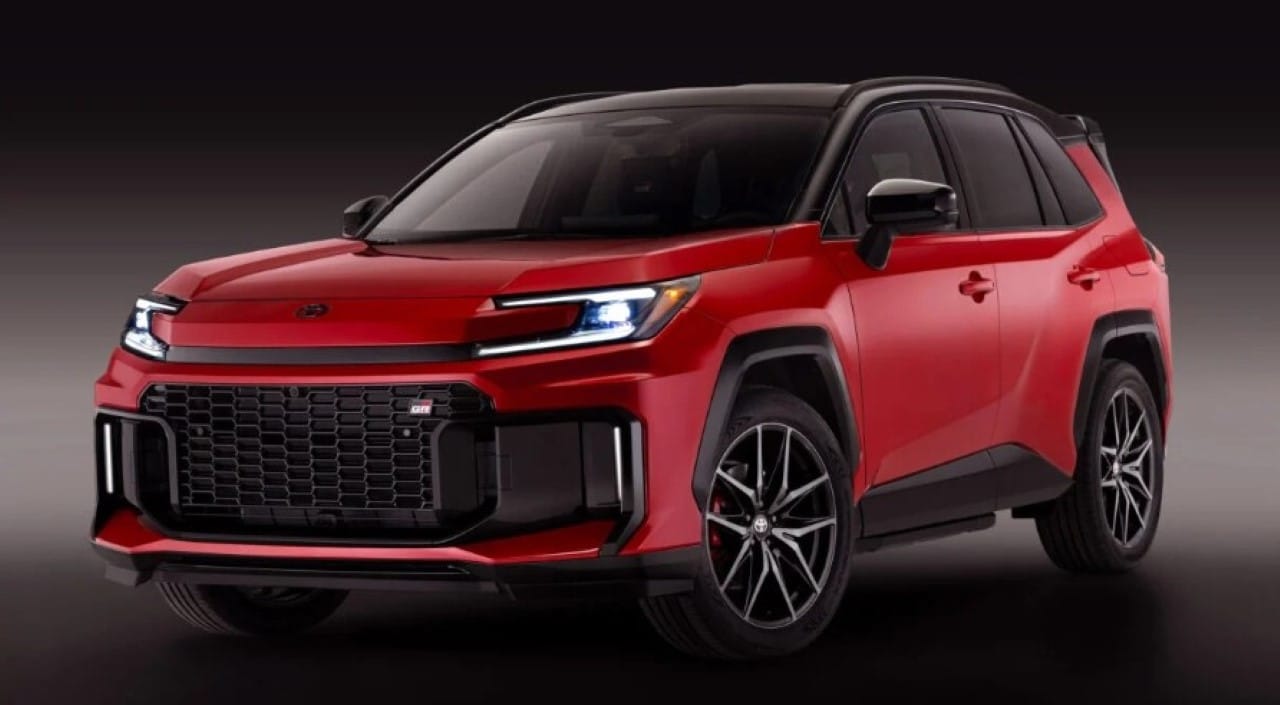
Renewed design with ‘hammerhead’ visual identity
The sixth generation of the Toyota RAV4 adopts a significantly more imposing visual stance, in line with the automaker’s most recent launches, such as the Prius and the Corolla Cross. The front is the big highlight, with thin, tapered “C”-shaped LED headlights, which are integrated into a more discreet front grille embedded directly into the bumper. Essa “hammerhead” configuration eliminates the traditional upper grille, creating a cleaner, more aerodynamic front. The new design not only modernizes the SUV, but also contributes to better aerodynamic efficiency, which helps reduce fuel consumption. Elementos that refer to robustness, such as prominent bumpers and well-marked wheel arches, were maintained and improved, reinforcing the vehicle’s capacity for different types of terrain. At the rear, the lights have also been redesigned and are now connected by a horizontal light bar, a common trend in modern models, giving the vehicle a distinct and sophisticated visual signature.
Technological interior with more space
Inside the cabin, the Toyota promoted an evolution focused on technology and comfort. The dashboard has been completely redesigned to house a new fully digital instrument cluster and a floating multimedia center, whose screens can reach 14 inches in the most complete versions. The operating system has been updated, allowing over-the-air updates (OTA) that keep the vehicle’s software up to date without the need to visit a dealership.
Despite the modernization, the brand chose to maintain physical controls for essential functions, such as air conditioning and audio volume, a decision that prioritizes ergonomics and driving safety. The choice of materials has also been improved, with greater use of soft-touch surfaces and high-quality synthetic leather upholstery options.
Thanks to optimizations on the TNGA-K platform, the internal space has been slightly increased. Isso translates into more comfort for rear seat passengers, who gain more leg area, and a trunk with increased load capacity, reinforcing the SUV’s versatility for families and travel.
Exclusively hybrid and more efficient engine
Following its global electrification strategy, Toyota has decided that the new generation of RAV4 will be offered exclusively with a hybrid engine. The entry-level version will combine a 2.5-liter combustion engine with two electric motors, delivering a combined power of approximately 226 horsepower, a notable increase over the current model.
This mechanical set, which represents the fifth generation of the Toyota Hybrid system, has been recalibrated to offer more linear accelerations and more agile responses. The expectation is that the acceleration time from 0 to 100 km/h will be reduced by around half a second, at the same time that fuel consumption will improve by up to 15% in urban cycles.
All-wheel drive versions will continue to use the E-Four system, which employs a dedicated electric motor for the rear axle. Essa technology intelligently distributes torque between the wheels, ensuring greater stability and traction capacity on low-grip surfaces, without the need for a physical cardan.
Additionally, a plug-in hybrid (PHEV) version will be available in selected markets. Equipada with a higher capacity battery, it will allow a purely electric range of more than 100 kilometers, ideal for daily use in urban centers without emitting pollutants. Recharging can be done at residential sockets or at fast charging stations.
Improved security with new Toyota Safety Sense
The RAV4’s active and passive safety suite has been taken to a new level with the addition of the latest version of Toyota Safety Sense (TSS). The frontal pre-collision system now features higher resolution sensors and cameras, improving pedestrian and cyclist detection, especially at night, and adding the ability to identify vehicles at intersections.
Adaptive cruise control (ACC) has been improved to work in all speed ranges, including in heavy traffic situations, making driving in traffic jams less tiring. The lane keeping assistant is also more precise, making gentle steering corrections to keep the vehicle centered. Além In addition, the SUV will feature 360-degree cameras to facilitate maneuvers and a more comprehensive blind spot monitoring system, offering complete protection to the occupants.
Availability and versions in the global market
The launch schedule for the sixth generation Toyota RAV4 will begin at Japão, in December 2025. The North American market will receive the model shortly thereafter, with an estimated starting price of around $31,900 for the entry-level configuration. The range of versions must vary depending on the market, but the main nomenclatures, such as Adventure and Z, must be maintained.
The Adventure version will continue with a more off-road appeal, while the Z will focus on a more luxurious and urban finish. Nos Estados Unidos, versions such as the Woodland, which includes raised suspension and mixed-use tires, should also be part of the portfolio, serving an audience that seeks more versatility for outdoor activities.
Expectations for arrival at Brasil
The presence of camouflaged prototypes of the new generation RAV4 being tested at Brasil since mid-2024 confirms Toyota’s plans to launch the model on the national market. The official debut is expected to take place during the first half of 2026. The model will compete directly with other mid-size SUVs, such as the Honda CR-V and the Volkswagen Tiguan, as well as Chinese models such as the GWM Haval H6 and the BYD Song Plus. Para adapts to the particularities of the Brazilian market, it is almost certain that the 2.5-liter combustion engine will be converted to flex technology, allowing fueling with ethanol, a strategy that Toyota has already successfully applied to the Corolla and Corolla Cross.
Evolution of an icon in the SUV segment
Since its original launch in 1994, the Toyota RAV4 has established itself as one of the pioneers and leading names in the compact and midsize SUV segment. The fifth generation, launched in 2018, was a milestone in introducing the TNGA platform and popularizing hybrid variants on a global scale, reinforcing the brand’s reputation for reliability and efficiency.
The sixth generation represents a natural step in this evolution, focusing exclusively on electrification and incorporating the most modern in design, technology and safety in the Toyota line. The complete abandonment of combustion engines reflects the company’s global strategy towards carbon neutrality and positions the RAV4 as a strong competitor in an increasingly electrified and competitive market.



