

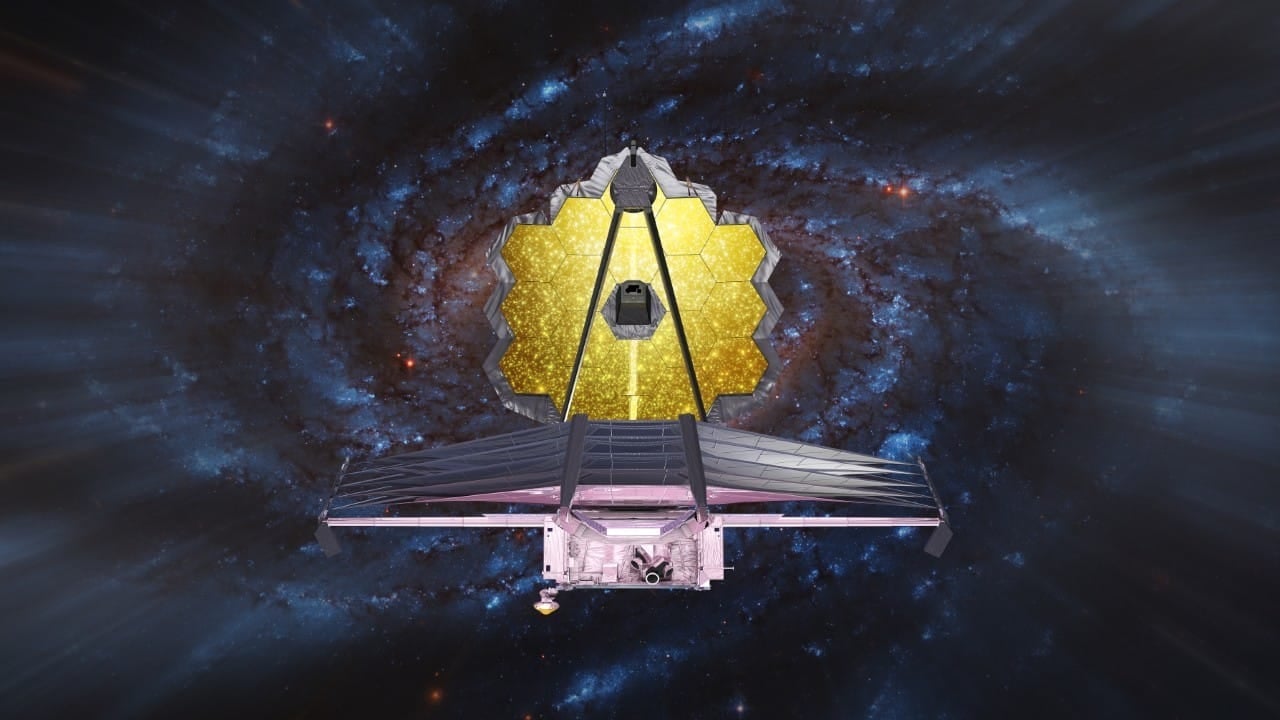
Nasa’s James Webb Space Telescope has delivered an extraordinarily detailed high-resolution image of a star’s final moments, zooming into the heart of the Helix Nebula to capture the intricate expelled gas structures from a dying star remarkably similar to our own Sun. This cosmic spectacle offers scientists an unparalleled view into the processes that mark the end of a star’s life, illustrating the complex interplay of gas, dust, and intense energy released into the vastness of space. The captured image provides a critical window into stellar evolution, revealing layers of gas in expansion and the powerful, high-velocity winds emanating from the stellar corpse.
The detailed observations by the Webb telescope are not merely a visual feast; they are a profound scientific endeavor. Researchers are using this data to understand the mechanisms by which stars shed their outer layers, creating the breathtaking nebulae seen across the cosmos. This particular event holds significant implications, as the ultimate fate of this dying star is widely considered a preview of what awaits our Sun billions of years from now.

Webb’s unprecedented view of stellar demise
The new image from the Webb telescope provides an unprecedented look at the Helix Nebula, also known as NGC 7293, allowing astronomers to scrutinize the layers of gas and dust being ejected by the central star. These expelled materials form a complex, shell-like structure, glowing brightly as they interact with the star’s remaining energy. The advanced infrared capabilities of Webb cut through the dust, offering clarity unmatched by previous observations.
This intricate dance of stellar material is driven by the dying star at its core, which generates powerful, high-speed winds of hot gas. These winds push the expanding gas layers further into space, contributing to the nebula’s iconic “Eye of God” appearance. The resolution achieved by the Webb telescope allows for the identification of subtle features and temperature variations within these dynamic structures, crucial for refining current stellar evolution models.
Unraveling the Helix Nebula’s secrets
For decades, the Helix Nebula has been a prime target for various ground-based and space observatories due to its proximity and distinct morphology. Its well-defined structure makes it an ideal laboratory for studying planetary nebulae, which are not related to planets but are shells of gas and dust ejected from stars at the end of their lives. The Webb’s deep dive into this familiar object has, however, brought new insights that significantly enhance our understanding.
The latest imagery from Webb builds upon a rich history of observation, combining its high-resolution infrared data with previous visible and infrared records. This multi-wavelength approach is essential for a holistic understanding of such complex astrophysical phenomena. By observing the nebula in different light spectra, scientists can piece together a more complete picture of its composition, temperature, and evolutionary history.
These detailed captures reveal the intricate structures within the nebula with exceptional clarity. The expansion of the gas layers and the intensity of the winds are mapped with precision, offering critical data points for astrophysical models. Understanding how these elements interact is key to comprehending the entire lifecycle of stars like our Sun.
Gaseous structures and expanding layers
The Webb image prominently features an expanding layer of gas, which is a hallmark of a dying star entering its red giant phase before becoming a white dwarf. This outward flow of material is a violent, yet natural, part of stellar evolution, enriching the interstellar medium with heavier elements that may one day form new stars and planetary systems. The distinct patterns observed within this gas layer are crucial for understanding the physics governing these ejections.
Intense winds of hot, high-velocity gas are continuously generated by the dead star at the nebula’s center. These winds exert pressure on the surrounding gas, shaping the nebula and creating its characteristic rings and filaments. The detailed thermal mapping provided by Webb shows how energy is distributed and dissipated throughout these vast gaseous structures, providing clues about their formation and interaction.
The composite image created by Nasa, merging data from Webb with earlier observations, highlights the evolutionary journey of these celestial objects. For instance, a 2012 record from the Visible and Infrared Survey Telescope for Astronomy (VISTA) provides a wider contextual view, with Webb’s magnified region offering an unprecedented close-up. Such comparisons are invaluable for tracking changes and movements over time, albeit on cosmic scales.
Studying these expanding gas shells also provides a unique opportunity to measure the rate at which stellar material is lost and recycled into the galaxy. The speed and direction of these ejected gases offer insights into the previous stages of the star’s life and the processes that triggered its final, dramatic expulsion of material. This cyclical nature of matter is fundamental to the universe’s ongoing evolution.
A glimpse into our sun’s distant future
The scientific community widely expects our Sun to undergo a similar transformation billions of years from now, evolving into a red giant and eventually shedding its outer layers to form a planetary nebula before settling into a white dwarf. The observations of the Helix Nebula, therefore, provide a tangible preview of the Sun’s ultimate destiny. This star, once similar in mass and type to our Sun, serves as a natural cosmic laboratory.
Understanding the processes occurring within the Helix Nebula offers critical data points for predicting the Sun’s future evolution and its impact on the solar system. While Earth will likely be engulfed or rendered uninhabitable long before the Sun becomes a white dwarf, the study of such nebulae informs our broader comprehension of stellar lifecycles and the eventual fate of solar systems. These cosmic events are not isolated but are part of a universal pattern of birth, life, and death among stars.
Decades of celestial observation
The Helix Nebula has been a subject of intense astronomical scrutiny for decades, captured by a multitude of terrestrial and space-based observatories. Each new instrument and technological advancement has peeled back another layer of its complexity, revealing more about its structure, composition, and dynamic processes. The cumulative data from these observations has been instrumental in refining models of stellar evolution and nebular formation. The Webb telescope represents the pinnacle of this observational journey, providing unprecedented clarity and detail, particularly in the infrared spectrum where dust and gas structures are most revealing. Its ability to detect faint heat signatures and pierce through obscuring cosmic dust clouds has opened new avenues for discovery. This ongoing research underscores the importance of long-term astronomical campaigns and the continuous development of advanced observational tools.
Thermal signatures within the nebula
A striking feature in the Webb image is the color coding of the gas, where blue hues indicate hotter gas regions, contrasting with yellow areas representing cooler gas. This thermal mapping provides invaluable insights into the energy distribution and physical conditions within the nebula. The presence of these varying temperatures helps astronomers to trace the paths of the stellar winds and understand how they heat and compress the surrounding material, shaping the nebula’s intricate beauty.
An incandescent white dwarf, the dense remnant of the dead star, resides precisely at the nebula’s center. This extremely hot, compact object is the core that remains after the star has shed its outer layers, slowly cooling over billions of years. Its intense radiation energizes the surrounding expelled gas, causing it to glow in the various colors observed by the telescope.