

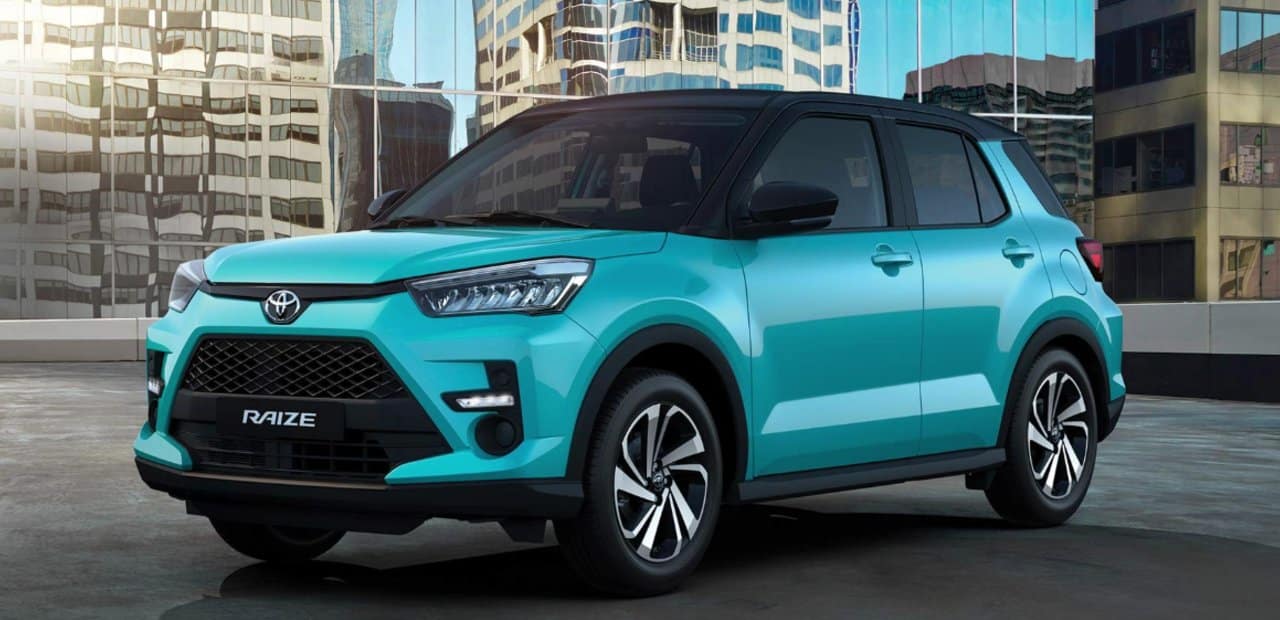
Toyota and Daihatsu plan a complete redesign of the Raize and Rocky compact SUVs, highlighting the introduction of variants with three rows of seats, called Raize Space and Rocky Space. Essas versions expand capacity for up to seven occupants in a still compact body, with launch scheduled for the end of 2026 or beginning of 2027 in the Japanese market. Estimated prices start from 1.98 million yen for the two-row models and reach around 2.35 million yen for the three-row configurations.
The new models maintain the technical base developed by Daihatsu, which also manufactures the Raize as an OEM vehicle for the Toyota. The addition of the third row represents a response to the demand for versatile vehicles in compact segments. Informações of utilities indicate that the project is moving forward despite previous delays related to certification issues.
The current popularity of Raize in Japão reinforces the expectation surrounding these news. The model leads sales among compact SUVs, with monthly averages higher than other brand competitors.
Enlarged dimensions for greater versatility
The overall length of the two-row versions remains around 3,995 mm, with a width of 1,695 mm and a height of 1,650 mm. Essa configuration preserves the urban agility characteristic of current models.
In the Space variants, the length increases to approximately 4,400 mm, while the width remains the same and the height reaches 1,680 mm. The addition of approximately 400 mm allows the installation of the third row without excessively compromising the compact size.
This expansion positions the Space models close to the size of vehicles like the Toyota Corolla Cross or the Sienta minivan. The elongated body accommodates the third row in the luggage compartment, offering functional space for adult occupants on short journeys.
Consolidated powertrain with hybrid options
The new Raize and Rocky use a 1.2-liter three-cylinder gasoline engine, with approximately 90 horsepower and 12 kgfm of torque. Essa unit meets entry-level configurations with 2WD or all-wheel drive.
The e-Smart Hybrid option combines the same engine for power generation, delivering around 110 horsepower and 17 kgfm through the electric drive. The system prioritizes efficiency and smooth performance in daily use.
Both engines receive updates to better balance between stability and driving comfort. Equipamentos advanced safety features also evolve, including more refined driver assistance features.
The CVT transmission remains standard, compatible with the demands of compact SUVs in Japanese traffic. The hybrid stands out for reducing consumption in urban environments.
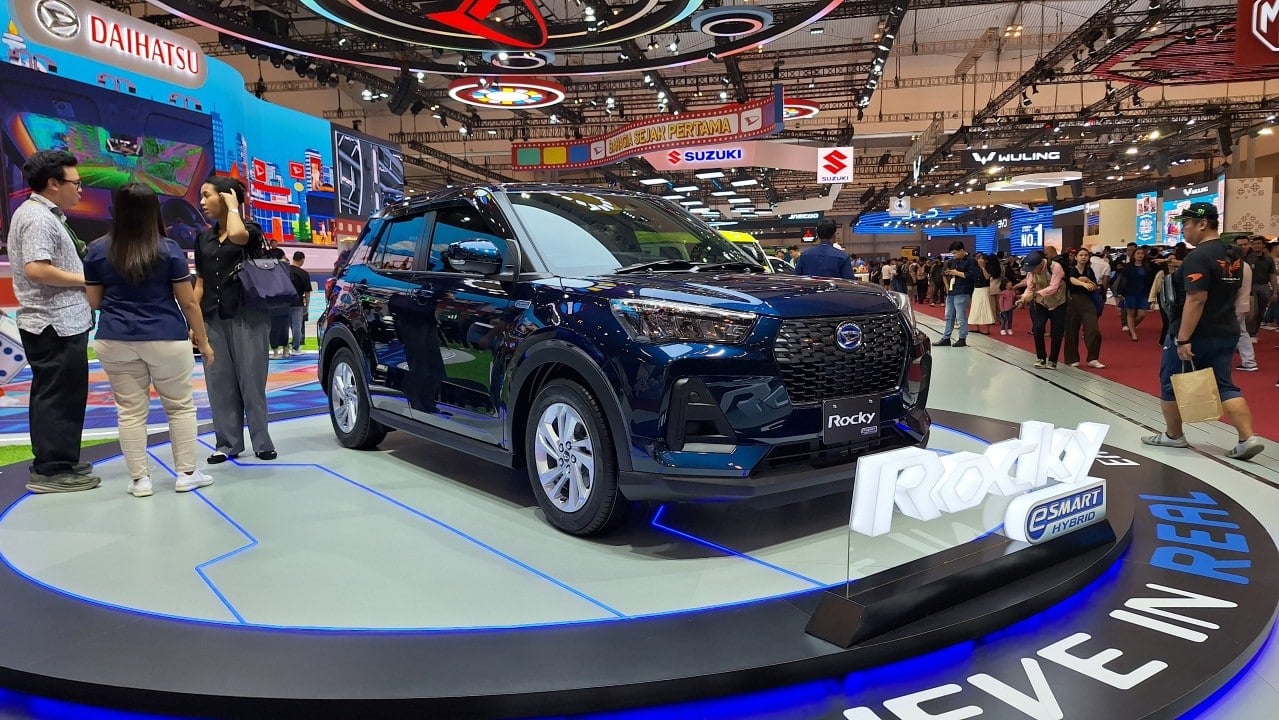
Base inspired by an Indonesian model
The third row of the Space models derives from the Daihatsu Xenia, sold at Indonésia with a similar configuration. Esse vehicle combines SUV and minivan elements in a 4,395 mm body.
The Xenia serves as a direct reference for Japanese development, adapting to local size and safety standards. The front grille and external details receive a more robust identity, reinforcing the SUV appeal.
Compared to the Toyota Sienta, at 4,260 mm, the Space offers a greater length of around 140 mm. Apesar In addition, the space in the third row remains at an equivalent level, prioritizing practicality for up to six adults on moderate journeys.
The Sienta’s flat fuel tank is not adopted, but the design compensates with intelligent distribution of internal space. The rear seats can be folded down to increase cargo volume when necessary.
Competitive prices in the segment
Estimated range for two-row models ranges from 1.98 million to 2.53 million yen in 2WD versions. Configurações higher with hybrid raises the maximum value.
The Space variants add around 370,000 yen, starting from 2.35 million for the basic gasoline option. The top-of-the-line hybrid is close to 2.9 million yen.
This pricing positions the models as affordable alternatives among seven-seat SUVs. Comparados to the intermediate Sienta, from 2.464 million yen, the Space offer a unique proposal in the compact SUV format.
Dealers highlight the inevitable increase in relation to current ones, justified by additional equipment and technical developments. The cost structure also reflects the expansion of the body in the three-row versions.
Current popularity drives expectations
The Toyota Raize consolidates itself as the best-selling SUV in the Japão, representing 30% to 40% of compact passenger car sales. Average monthly Registros exceeds 8,400 units, ahead of Yaris Cross.
Production by Daihatsu guarantees stable delivery times, generally less than four months. Esse factor contributes to preference among consumers and resellers.
Unlike other Toyota models with occasional order suspensions, the Raize maintains constant flow. The absence of prolonged outages reinforces its position in the market.
The introduction of the third row should broaden the family appeal, attracting new audiences. Analistas project additional growth in sales with the diversification of the line.
Comfort and finishing details
The interiors receive improved textures, increasing the perception of quality compared to the current generation. More refined Materiais combine with the premium positioning of the higher versions.
Space in the third row accommodates adults with acceptable comfort for trips of up to an hour. The position of the knees avoids excessive discomfort, thanks to the well-distributed floor.
Folding the rear seats creates a flat area for bulky cargo. Compartimentos additional items make it easier to transport smaller objects on a daily basis.
The striking presence of the front grille differentiates the Space versions visually. Updated Faróis and taillights follow the brand’s recent design language.
Compact SUV market in the Japão
The compact SUV segment is continually growing, driven by versatility and ease of maneuverability. Modelos below four meters meet favorable tax standards in the country.
Competitors such as the Nissan X-Trail and Mitsubishi Outlander PHEV offer seven seats, but in larger bodies, above 4,500 mm. Os Space fills the gap in intermediate size.
The demand for efficient hybrids favors e-Smart, already proven in current models. Consumidores prioritize savings without sacrificing performance.
Resellers anticipate moderate wait lists at initial launch. The production capacity of Daihatsu must absorb the projected volume.



