
With a 120Hz screen and promotional price, Xiaomi’s POCO Pad M1 is officially launched in Japan

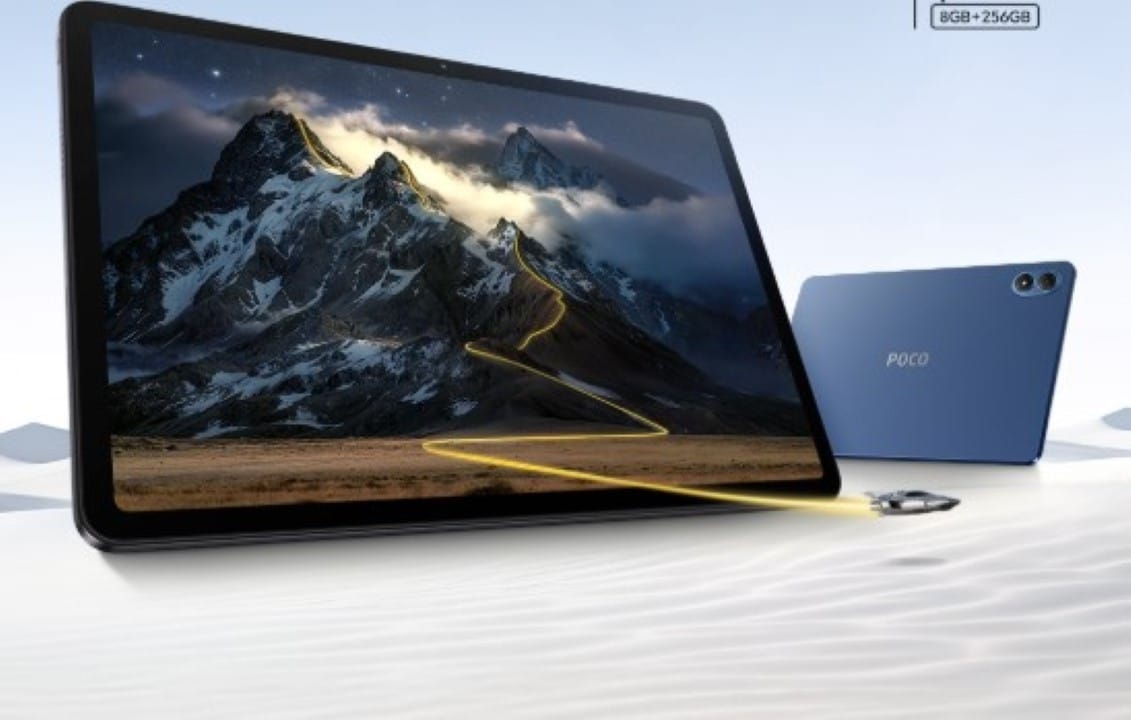
Xiaomi officially announced the arrival of a new device on the Japanese market with the start of sales of the POCO Pad M1 tablet this Thursday, January 22, 2026. The device seeks to consolidate itself in the intermediate segment, offering a robust set of specifications for a competitive price. The launch strategy includes a special offer for first-time buyers.
Available in a single configuration with 8 GB of RAM and 256 GB of internal storage, the tablet has a suggested price of 49,980 yen. Contudo, as part of the launch promotion, which runs until February 4th, consumers can purchase it for a reduced price of 44,980 yen, encouraging early adoption of the product.
The POCO Pad M1 is available in blue and black, catering to different style preferences. Sales occur through official Xiaomi channels at Japão and at partner retailers, expanding the device’s reach across the country. The brand bets on the versatility of the tablet to attract students, professionals working remotely and users focused on entertainment.
أكثر متعة، مع بطارية أكبر 😍 POCO Pad M1
تجربتك قوية وما لها حدود 🤍pic.twitter.com/0T5S2Iru05— POCO KSA (@PocoKsa)January 4, 2026
Immersive screen with eye protection
One of the main attractions of the POCO Pad M1 is its 12.1-inch screen with 2.5K resolution (2560 x 1600 pixels). Essa feature provides high definition images, ideal both for viewing documents and spreadsheets and for consuming video content with greater clarity and detail.
The visual experience is enhanced by the adaptive refresh rate of up to 120 Hz, which ensures fluidity when browsing, gaming and scrolling pages. The panel also supports Dolby Vision and displays more than 1 billion colors, increasing the quality of films and series compatible with the technology.
Performance for everyday life
The tablet is equipped with the Snapdragon 7s Gen 4 processor, a platform that balances performance and energy efficiency. Esse’s Qualcomm chipset allows the device to perform multiple tasks simultaneously, as well as run demanding applications and casual games without compromising battery life.
The operating system is Android 15, running under the Xiaomi HyperOS 2 interface, which promotes optimized integration with other devices in the brand’s ecosystem, such as POCO smartphones. Essa synergy makes it easy to transfer files, screen mirror and even answer calls directly on the tablet.
For those who need more space, the 256 GB internal storage can be expanded using a microSD card of up to 2 TB, offering ample capacity for storing documents, photos, videos and applications.
Autonomy and charging capacity
The battery is one of the strong points of the POCO Pad M1, with a robust capacity of 12,000 mAh. Segundo the manufacturer, this configuration guarantees prolonged autonomy, reaching up to 16 hours of continuous video playback on a single charge.
This performance meets the needs of users who spend long periods away from a socket, whether traveling, classes or external meetings. Battery longevity is optimized by the efficiency of the processor, which intelligently manages energy consumption.
When recharging is necessary, the device supports 33W fast charging, allowing you to recover a significant amount of energy in a short time. An additional feature is wired reverse charging of up to 27 W, which makes it possible to use the tablet to charge other devices, such as cell phones and headphones.
The combination of high capacity and agile recharging positions the POCO Pad M1 as a reliable companion for intense use journeys, whether for work, study or leisure, ensuring that the user remains connected and productive for longer.
Design and sound experience
The POCO Pad M1 features a premium construction with a unique aluminum body, which provides greater durability and a sophisticated look. At just 7.5 mm thick and weighing approximately 610 grams, the tablet is relatively thin and light for its size, making it easy to carry daily in backpacks or briefcases.
In terms of audio, the device stands out for its four stereo speaker system with support for Dolby Atmos technology. Essa configuration creates an immersive and immersive sound experience, with high-resolution audio that benefits the consumption of films, series, music and podcasts. Além In addition, the tablet maintains the P2 (3.5 mm) input for headphones, a convenience for those who prefer wired accessories.
Accessory ecosystem for productivity
To expand the functionalities of POCO Pad M1 and transform it into a complete productivity tool, Xiaomi has developed a line of dedicated accessories that are sold separately. Entre they are the POCO Smart Pen, a smart pen with high pressure sensitivity, ideal for taking notes, drawing or signing digital documents with precision, sold for 4,980 yen. Outro item is the POCO Pad M1 Keyboard keyboard, which connects magnetically and converts the tablet into a notebook-like device, making it easier to type long texts; its suggested price is 6,980 yen. Completa the POCO Pad M1 Cover protective case line, which offers protection against scratches and impacts, available for 3,980 yen.
Additional comfort features
The tablet was designed with a focus on user comfort during prolonged use. The device is TÜV Rheinland certified for low blue light emission and flicker reduction technology, which help minimize eye fatigue. Reading mode adjusts the screen’s color temperature for a more pleasant experience, while wet touch technology ensures the display responds to commands even with wet hands.
Availability and launch offer
The POCO Pad M1 is now available for purchase at Japão, consolidating the presence of the Xiaomi sub-brand in the country. The launch promotion, which offers a 5,000 yen discount, is a strong attraction for consumers looking for a device with good value for money. The strategy aims to position the tablet competitively against other intermediate models from brands already established in the local market. The single configuration simplifies the consumer decision process, focusing on delivering a complete package of features.



