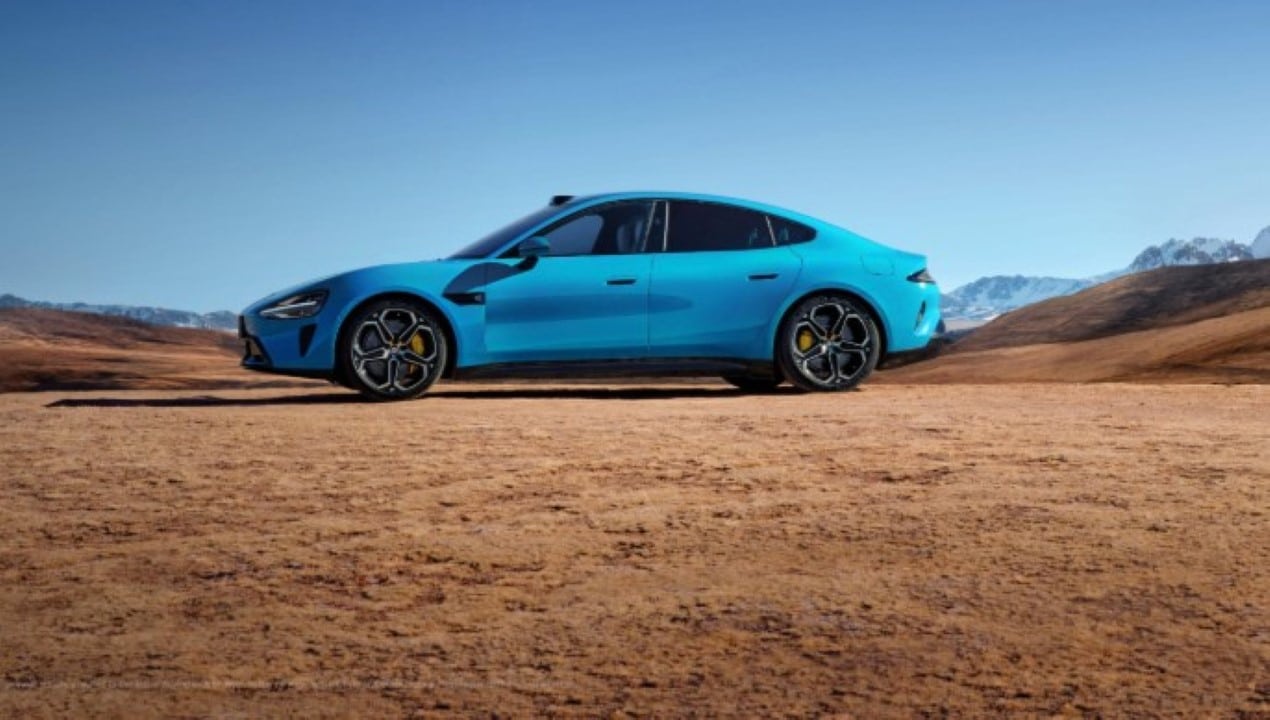
The Xiaomi electric vehicle division has confirmed a new milestone for the automotive industry, positioning its SU7 Max sedan as a leader in durability and efficiency. In a continuous 24-hour endurance test, the model covered an impressive distance of 4,264 kilometers, setting a new world record for series-production electric vehicles. The feat was achieved on a high-speed oval circuit, validating the robustness of the brand’s engineering under extreme conditions.
The event took place at the Yancheng test track, located in the Jiangsu province, at China, a site designed for high-performance evaluations. Durante throughout the period, the SU7 Max operated uninterruptedly, with strategic stops only for quick recharges, maintaining an average speed of approximately 177 km/h. Este result not only demonstrates the capacity of the battery, but also the effectiveness of the vehicle’s thermal management system, which operated flawlessly under constant stress.
The achievement reinforces Xiaomi’s ambition to compete directly with established giants in the premium electric segment. By surpassing previous records from renowned brands, the company sends a clear message about its ability to innovate and develop cutting-edge technology, solidifying the SU7 Max’s reputation as a high-performance and reliable sedan.
Carrying out the resistance test
The test was meticulously planned to simulate the most intense use possible in a controlled environment. The choice of a 7.8 km oval track allowed drivers to maintain high and constant speeds, reaching peaks of 240 km/h in certain sections. Esse circuit format is ideal for endurance evaluations, as it minimizes the need for sudden braking and focuses on powertrain performance and aerodynamic efficiency.
To ensure continuous operation throughout the 24 hours, a team of professional drivers took turns at the wheel. The logistics included ultra-fast recharging stops, which were crucial to the final result. The SU7
The Xiaomi monitored all vehicle systems in real time, collecting vital data on battery health, engine temperatures and cooling system efficiency. The information obtained during the test will serve as a basis for future improvements and optimizations in the brand’s electric vehicle line, ensuring that technology validated in extreme conditions is transferred to production models.
A new standard for production vehicles
The performance of the SU7 Max places the Xiaomi in a prominent position on the global electric vehicle scene. The 4,264 km mark surpassed previous records set by major competitors in the market by a significant margin. The previous record holder among production models was the XPeng P7, which had covered 3,961 km in a similar test. The difference of more than 300 kilometers demonstrates a considerable technological leap.
Other reference models in the segment were also left behind. The electric Mercedes CLA, for example, recorded 3,717 km, while the acclaimed Porsche Taycan, known for its sporty performance, achieved 3,425 km in its 24-hour test. By surpassing these numbers, the SU7 Max proves that efficiency and range can coexist with high performance, challenging the perception that high-performance electric vehicles need to sacrifice durability.
The technology behind the performance
Success in the stress test is a direct result of an advanced technological platform. The SU7 Max is built on an 897-volt electrical architecture, one of the highest on the market. Essa high voltage allows for more efficient energy transfer, reducing heat losses and optimizing both charging and power delivery to the motors.
The heart of the propulsion system is the HyperEngine V6s Plus electric motor, which, combined with a second motor on the front axle, delivers a total power of 495 kW. The all-wheel drive configuration not only guarantees impressive acceleration, but also provides stability and control at high speeds, an essential factor for safety during the race.
The ternary lithium battery, with a capacity of 101.7 kWh, is another fundamental component. Sua high energy density allows storing a large amount of energy in a relatively compact and lightweight package. In the CLTC test cycle, closer to real conditions of use in the China, the model has an approved autonomy of 835 km on a single charge.
To manage the heat generated during continuous operation at high power, the SU7 Max uses a sophisticated thermal management system, shared with the Ultra version of the range. Essa technology was vital in keeping the battery and motors at ideal temperatures, preventing performance degradation and ensuring component longevity.
Ultra-fast recharge capability
Range is only part of the equation in an endurance test. Reload speed was the decisive factor that allowed the SU7 Max to minimize downtime. The vehicle has a maximum charge rating of 5.2C, one of the highest values currently available in production cars. In practical terms, this means that the battery can be recharged at an extremely high speed without suffering damage.
At compatible charging stations, the SU7 Max is capable of going from 10% to 80% of its capacity in approximately 19 minutes. During the test, this capability allowed the engineering team to plan short, efficient stops, ensuring the vehicle returned to the track quickly to continue accumulating distance. The combination of high-voltage architecture and advanced battery chemistry is what makes this recharge speed possible.
Performance and security specifications
The SU7 Max was designed to be a luxury sports sedan, and its performance figures reflect this proposition. With all-wheel drive, the model accelerates from 0 to 100 km/h in less than 3 seconds, a time that puts it in supercar territory. The declared maximum speed is 265 km/h, a value that was explored in the fastest sections of the Yancheng circuit. The 24-hour test was not only a test of autonomy, but also a validation of the vehicle’s mechanical robustness. The chassis, constructed from lightweight, high-strength materials, withstood the extreme G-forces generated during high-speed cornering, while the suspension and braking systems were sized to operate consistently under prolonged stress. Além of raw performance, the Xiaomi applied the latest active and passive safety upgrades, with driver assistance systems operating throughout the entire journey, ensuring the test ran without incident and validating the reliability of the onboard software.
Position in the premium electric market
Xiaomi’s entry into the automotive sector is relatively recent, but the company has demonstrated a remarkable ability to accelerate its development and challenge the status quo. The SU7, in its various versions, was designed to compete directly with models such as the Porsche Taycan and the Tesla Model S, offering a package of technology, performance and design at a competitive price.
This endurance record is a powerful marketing tool, serving as practical proof of the technical superiority that the brand claims to have. Para consumers, results like this convey confidence in the durability and quality of the product, crucial factors in the decision to purchase an electric vehicle. Xiaomi’s strategy of validating its advances in real and transparent conditions helps to build a solid and trustworthy brand image.
Energy efficiency details
Aerodynamics played a crucial role in reaching the 4,264 km mark. The SU7 Max has an extremely low coefficient of drag (Cd), meaning it cuts through the air with minimal resistance. At high speeds, where air resistance becomes the biggest obstacle to efficiency, an optimized aerodynamic design significantly reduces energy consumption, allowing the vehicle to travel greater distances on the same battery charge.
