
Carlos Alcaraz and Aryna Sabalenka confirm favoritism and guarantee a place in the round of 16 at the Australian Open By Thiago Lemos
7 min read
 |
Carlos Alcaraz and The atmosphere in the capital of Victoria favored the intense pace of the game, consolidating the permanence of the main seeds in the main table of the first Grand Slam of the season.
The Spanish Carlos Alcaraz did not find it difficult to overcome the French Corentin Moudet, closing the match with partials of 6/2, 6/4 and 6/1. Demonstrando with impeccable physical conditioning and precise strikes from deep on the court, Alcaraz controlled the pace from the first set, frustrating the European opponent’s attempts to react. The main statistical highlights of the clash included:
- Success of more than 80% in points played with the first serve.
- Total of 35 winning balls against just 12 from the opponent.
- Efficiency in getting to the net, winning most of the points when he put pressure on the Frenchman.
- Low rate of unforced errors during the three sets played.
The world No.1 showed he meant business in a 6-2 6-4 6-1 victory 🇪🇸https://t.co/Y3UicowhKL
— #AusOpen (@AustralianOpen)January 23, 2026
Decisive confrontation of Sabalenka against Anastasia Potapova
Aryna Sabalenka faced a considerably more balanced challenge on her way to her third title on Australian soil. The Belarusian defeated the Austrian Anastasia Potapova by 2 sets to 0, but needed two tie-breaks to seal the victory, with final splits of 7/6 (4) and 7/6 (7).
The match was marked by powerful exchanges and remarkable mental resilience from Sabalenka, who knew how to save crucial points in the decisive moments of each set. Potapova imposed resistance, but the experience of the current two-time champion prevailed at the maximum pressure points in Rod Laver Arena.
Next challenges defined in the men’s and women’s bracket
With victories guaranteed, the ranking leaders already know their next opponents in the round of 16 of the tournament in Melbourne Park. Carlos Alcaraz will face the American Tommy Paul, who advanced after Alejandro Davidovich Fokina withdrew during the previous confrontation.
Aryna Estes clashes promise to further raise the technical level of the tournament, as both opponents are going through good phases of the season.
Athletes’ performance in numbers and technical consistency
Alcaraz’s performance in Melbourne has been closely monitored by analysts, who highlight its ability to adapt to the fast courts of Austrália. The Spaniard has varied his game with drop shots and slices, keeping his opponents in constant movement and tactical discomfort during rallies.
Sabalenka continues her quest for a historic feat, trying to win her third consecutive Australian Open title, something rare on the modern women’s circuit. Sua power on the serve continues to be her main weapon, recording speeds that often exceed the 185 km/h mark, making it difficult for her opponents to return.
Brazilian participation and results in doubles in Melbourne
In addition to the singles games, the Australian Open featured important moves in the doubles brackets with the presence of Brazilian athletes. Luisa Stefani, Rafael Matos and Orlando Luz remain alive in the competition after consistent victories in their respective debuts and subsequent rounds at the Melbourne complex.
Unfortunately, the Brazilian Laura Pigossi was eliminated from the competition, ending her participation in this edition of Grand Slam. The focus now turns to the double players who seek to advance to the final stages, maintaining the country’s representation on the main stages of world tennis.
Players’ physical conditions and competition pace
João Fonseca also commented on his participation and physical state, stating that his back is fully recovered for his professional commitments. The young Brazilian athlete highlighted that, although the pace of the game still needs adjustments, physical health is no longer a concern for future tournaments.
Australian Open 2026 continues with high temperatures, requiring players to manage their hydration and recovery well between games. The tournament organization maintains strict protocols to guarantee the integrity of the athletes, especially in long matches played under the strong Australian summer sun.
Tactical strategies for the second week of Grand Slam
Entering the second week of an Grand Slam requires a change in mentality, where physical exhaustion begins to weigh as much as technical talent. Treinadores and support teams intensify physiotherapy and video analysis work to prepare athletes for clashes against higher-ranked rivals.
Alcaraz and Sabalenka are expected to maintain aggressiveness, but with a greater safety margin to avoid unnecessary errors. The ability to close out games quickly, as seen this Thursday, is essential to preserving energy for the quarter-finals and eventual semi-finals to come.
Expectation of public and global audience in Melbourne
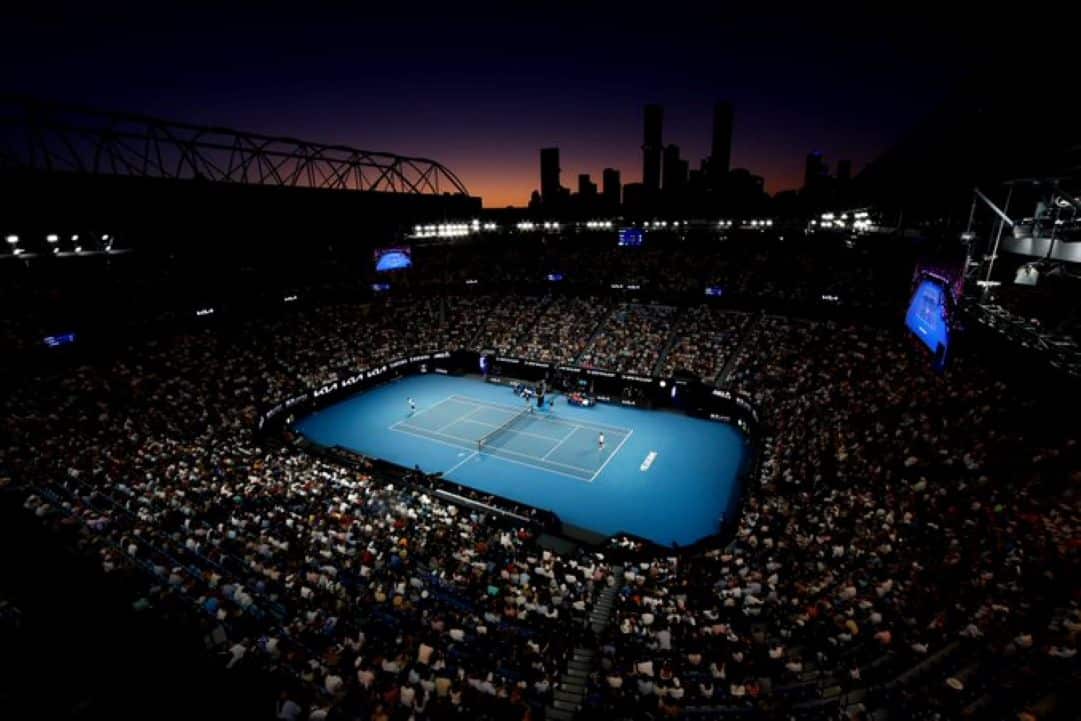
Rod Laver Arena has been operating at maximum capacity, reflecting the public’s enormous interest in the duel between the new generation and the already established names. Global viewership via streaming platforms and television channels also records record numbers in this 2026 edition.
The organizers of Australian Open highlight that the presence of world leaders such as Alcaraz and Sabalenka in the final stages is fundamental to the commercial and sporting success of the event. The atmosphere at Melbourne Park remains vibrant, with fans of different nationalities following every move on the big screens spread throughout the complex.
Mental preparation and focus on decisions on the court
Sabalenka’s resilience in tie-breaks against Potapova served as a reminder of his psychological evolution in recent years. Anteriormente criticized for moments of instability, the Belarusian now demonstrates an icy calm in the points that define the sets and important matches.
Alcaraz, although younger, already has experience from multiple Grand Slam titles, which gives him an aura of invincibility at certain moments in the game. Sua transition from defense to attack is considered the best on the current circuit, allowing him to reverse unfavorable situations with just one well-executed strike.
The technical impact of new racket and string technologies
This 2026 season, many players have implemented adjustments to their equipment to handle the heavier balls used in the tournament. Alcaraz and Sabalenka use specific tensions in their strings to maximize control without losing the power characteristic of their playing styles.
These technical details, although imperceptible to the common spectator, make all the difference at a level where matches are decided by a few points. Real-time data analysis technology has also helped players adjust their positioning during side turns.
Logistics and schedules for the next rounds in Melbourne
The round of 16 matches are scheduled to start at local prime times, aiming to serve both the attending public and international markets. The official schedule is published daily by the organization, taking into account the rest time required for each tennis player after their respective matches.
The Melbourne time zone requires careful adaptation from athletes coming from other regions of the world, but the leaders of the ranking are already fully acclimatized. The training routine on secondary courts remains intense to maintain the precision of the strikes and the ball time necessary to face Tommy Paul and Viktoria Mboko.
Analysis of the female profile and the main threats to Sabalenka
Although Sabalenka is the favorite, the women’s table features other strong competitors looking to prevent her third consecutive title. Viktoria Mboko’s consistency will be the next real test for the Belarusian, who cannot afford to lower her intensity at any point in the match.
The diversity of playing styles in the women’s group has provided long and tactically rich matches, pleasing the sport’s purists. Sabalenka will need to keep her serve efficient to avoid being broken by Mboko, who is known for her excellent return and counterattacking ability.
Path of Alcaraz and the possible early ending
On the men’s side, the bracket seems to be shaping up for epic clashes in the final rounds if the favorites continue to win. Alcaraz sees each game as a final, avoiding very long projections that could divert his focus from his immediate opponent, the American Tommy Paul.
Tommy Paul is a player who has surprised big names before and has a very athletic style of play that could test Alcaraz’s patience. The Spaniard will need to be surgical in his break opportunities to prevent the American from gaining confidence and taking the match into long, exhausting sets.
Conclusion of the third round and general balance of the tournament
The Australian Open of 2026 reaches its most acute phase with the main protagonists in full physical and technical shape. The balance of this first week is highly positive for the organizers, with few abandonments due to injury and a technical level that surpasses previous editions.
Expectations now revolve around how the ranking leaders will behave under the increasing pressure of the round of 16. Melbourne continues to be the epicenter of world tennis, providing unforgettable spectacles for fans who follow every detail of these athletes’ journey towards the championship trophy.











