James Webb Telescope deepens mystery about the speed of expansion of the cosmos and challenges science

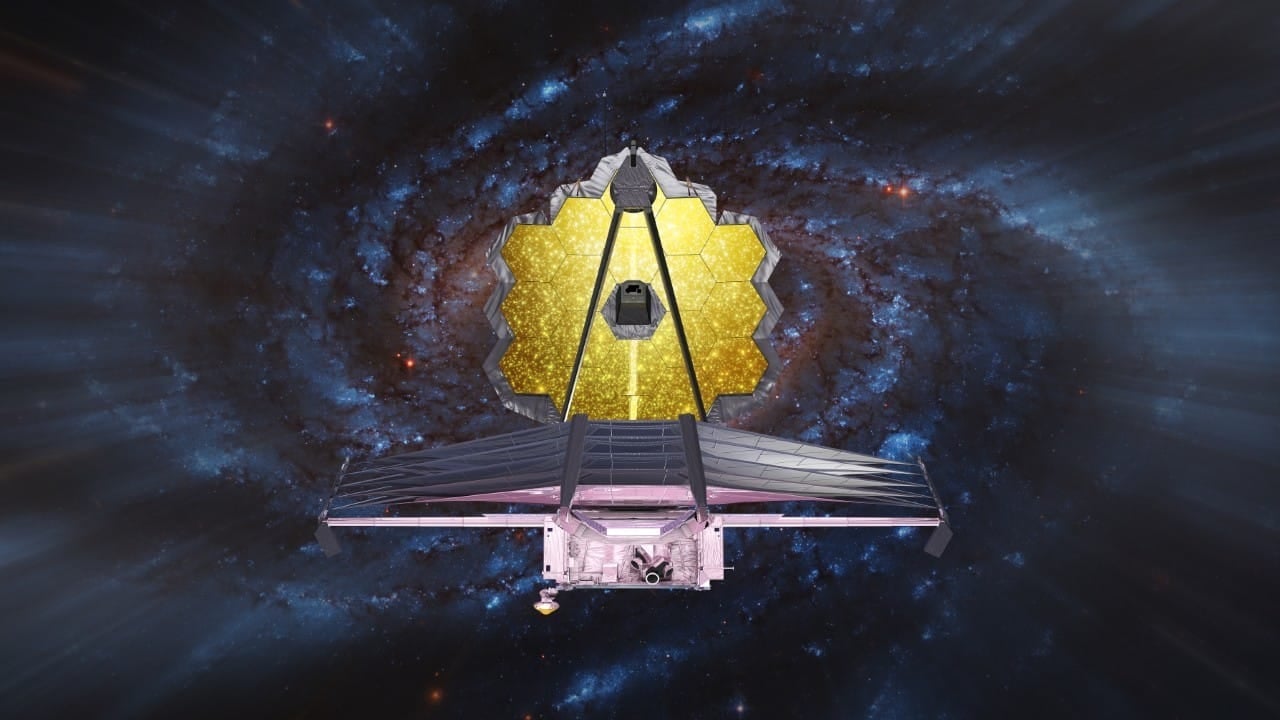
New high-precision measurements by Telescópio Espacial James Webb have intensified one of the biggest debates in modern astronomy, confirming a persistent discrepancy in the expansion rate of the universe. The results reinforce what scientists call the “Hubble tension,” a conflict between values measured in the local universe and predictions based on the early universe, just after Big Bang.
This fundamental divergence calls into question the standard cosmological model, the most accepted theory to explain the evolution of the cosmos. By validating previous data with unprecedented precision, Webb eliminated the possibility that measurement errors were the cause of the problem, forcing the scientific community to consider the existence of new physics to explain the phenomenon.
The constant of Hubble is the parameter that describes the speed at which galaxies move away from each other. The confirmation that there are two different values for this same constant, depending on how and when it is measured, suggests that our understanding of the components of the universe, such as dark energy and dark matter, may be incomplete.
The origin of the cosmic impasse
The controversy lies in the numerical difference between two forms of measurement. Observações of the nearby universe, using stars such as Esses data, now refined by James Webb, is consistent with measurements made by Telescópio Espacial Hubble over decades.
On the other hand, analyzes of the cosmic microwave background radiation — an echo of Big Bang — carried out by missions such as the Planck satellite of Agência Espacial Europeia (ESA), predict a slower expansion rate, around 67 kilometers per second per megaparsec. Essa difference, although it seems small, is statistically significant and cannot be ignored, pointing to a flaw in our understanding of cosmic history.
Edwin Hubble’s legacy and expansion
The idea of an expanding universe was established in the 1920s by astronomer Edwin Hubble. Ele observed that most galaxies were moving away from ours and that the most distant ones were moving faster. Essa revolutionary discovery gave rise to the Hubble constant, a pillar of modern cosmology.
Determining the exact value of this constant is crucial for several areas of astrophysics. The number directly influences calculations about the age of the universe, estimated at approximately 13.8 billion years, and helps determine the proportion of its fundamental ingredients.
Any change in the constant of Hubble reverberates in our understanding of dark energy, the mysterious force that accelerates cosmic expansion, and dark matter, which makes up most of the mass of the universe. The precise value is essential for predicting the ultimate fate of the cosmos.
Different Cosmic Measurement Methods
Astronomers use two different approaches to calculate the constant of Hubble, and the conflicting results from both give rise to the tension. The first method focuses on the “local” or most recent universe. Ele is based on the construction of a “cosmic distance ladder”, which uses objects of known brightness to measure galactic distances.
Cefeidas variable stars, which pulsate with a rhythm directly related to their intrinsic luminosity, function as the first rungs of this ladder. At greater distances, astronomers use supernovae of type Ia, stellar explosions that reach an extremely consistent peak brightness, serving as cosmic beacons.
The second method looks into the distant past, analyzing the cosmic microwave background (CMB). Essa fossil light, emitted just 380,000 years after Big Bang, carries a map of the conditions of the universe in its infancy. By analyzing small temperature fluctuations in the CMB, scientists can use the standard cosmological model to predict what the expansion rate should be today.
James Webb’s ability to observe in infrared allows it to measure the light from Cefeidas more precisely, as it can pass through the cosmic dust that obscured the Hubble observations. Essa improved clarity confirmed that local measurements are correct, deepening the mystery rather than solving it.
The decisive role of the James Webb telescope
The recent contributions of James Webb were crucial in solidifying the tension of Hubble. By observing Cefeidas in galaxies that also harbor Ia-type supernovae, the telescope calibrated the cosmic distance ladder with unprecedented precision. The data obtained aligned perfectly with the Hubble results, eliminating the hypothesis that systematic errors in the instruments or methodology were to blame for the discrepancy.
Furthermore, in observation programs such as PEARLS (Prime Extragalactic Areas for Reionization and Essas observations provide an independent method for measuring the constant of Hubble, and initial results also point to the higher value, reinforcing the local universe measurements.
Reevaluating the Standard Model of the Universe
The persistence of the Hubble tension suggests that there may be something fundamentally wrong or incomplete in the Lambda-CDM model, the theory that describes the composition and evolution of the universe. Este model assumes that the cosmos is composed of ordinary matter, cold dark matter (Cold Dark Matter) and a constant dark energy, represented by the Greek letter Lambda. The discrepancy indicates that one or more of these components may behave differently than previously thought. One of the most discussed hypotheses is the existence of a “primordial dark energy”, a form of energy that would have influenced the expansion rate of the universe shortly after Big Bang and then dissipated. Outras possibilities include unknown interactions between dark matter and other particles, or the existence of exotic subatomic particles such as sterile neutrinos. Resolver this enigma could lead to a new revolution in physics, redefining our view of the fundamental laws that govern the cosmos.
The future of observational cosmology
The global astronomical community, including scientists from NASA and ESA, is mobilized to investigate the Hubble strain. The debate is no longer about whether the discrepancy is real, but rather about what it means.
Novas fronteiras da pesquisa
James Webb will continue to play a central role, with observation programs dedicated to further refining measurements of the cosmic distance ladder. The goal is to reduce uncertainty to such a low level that theoretical explanations can be rigorously tested.
Meanwhile, other observatories, both in space and on land, such as the upcoming Observatório Vera C.
Carolina Costa é colaboradora da redação do Mix Vale, portal de notícias com cobertura de Brasil e mundo. Produz conteúdo nas editorias de economia e benefícios, com foco em informação de serviço para o leitor brasileiro. Escreve para o portal desde 2019. Formação: Administração