
Safe flight of asteroid 2025 TP5 recorded an approach to Earth less than the distance to the Moon By Bruna
5 min read
 |
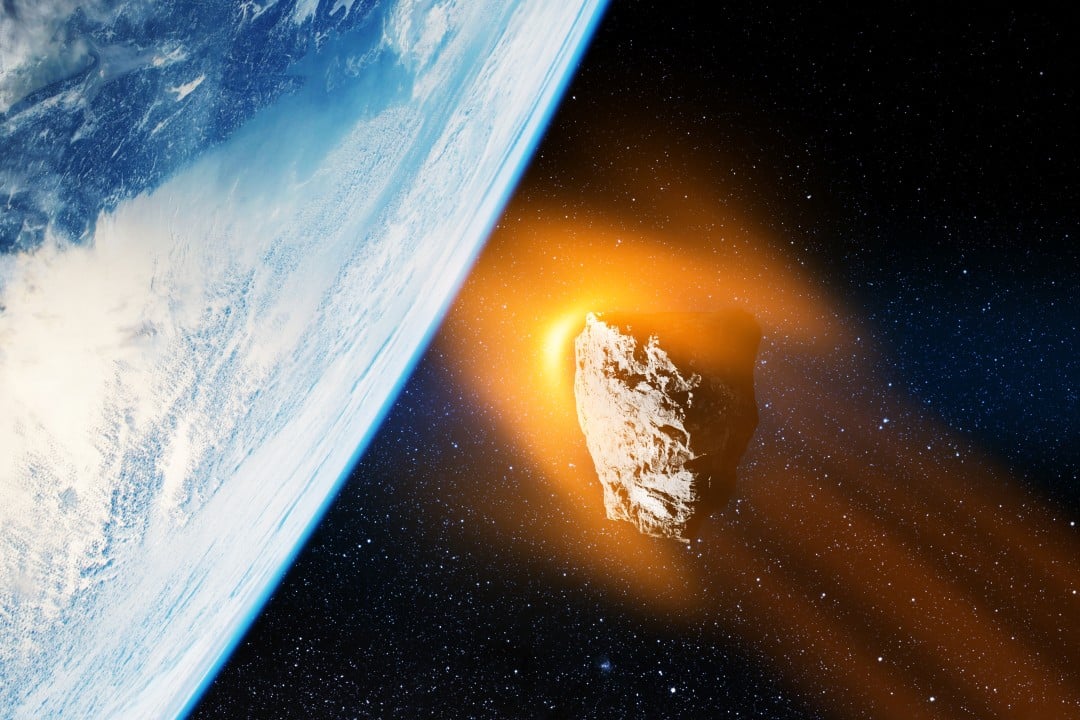
A space rock, cataloged as 2025 TP5, made a remarkably close pass to Terra, reaching its perigee, or point of closest approach, in a maneuver that, despite the short distance, did not pose any risk of collision. The event was closely monitored by space agencies and astronomers, who confirmed the safe trajectory of the celestial object.
The asteroid, with an estimated diameter of 16 meters, passed just 97 thousand kilometers from our planet. To put Para into perspective, this distance is equivalent to about a quarter of the average distance between Terra and Lua, making the flyby one of the closest recorded by an object of this class.
The passage occurred precisely, with the point of closest proximity being recorded at 5:09 pm, Brasília time, on Wednesday, October 15, 2025. After the encounter with Terra, the object continued its journey through the solar system, with a scheduled approach to Lua the following day, passing approximately 120 thousand kilometers from the lunar surface.
Details of the approach and orbital trajectory
The trajectory of asteroid 2025 TP5 was calculated with high precision shortly after its discovery, allowing scientists to reliably predict its path. The passage 97,000 kilometers from the Earth’s surface is considered extremely close in astronomical terms, providing a valuable opportunity for observation and data collection. Instrumentos on the ground were able to refine measurements of its size, speed and composition, crucial information for the field of planetary defense.
Após its perigee with Terra, the space rock continued in its elliptical orbit around Sol. The subsequent approach to Lua was also a point of interest, as gravitational interaction with both celestial bodies could subtly alter the asteroid’s future trajectory. Continuous monitoring of these events helps improve orbital prediction models, making tracking of Objetos Próximos and Terra (NEOs) increasingly reliable and accurate into the future.
The last-minute discovery by the ATLAS system
The detection of asteroid 2025 TP5 occurred just two days before its closest approach, a fact that highlights the effectiveness of modern space surveillance systems. The object was identified on Tuesday, October 13, by Asteroid Terrestrial-impact Last Alert System (ATLAS), a network of robotic telescopes funded by NASA and operated by Universidade of Havaí.
The ATLAS system is specifically designed to scan the night sky for moving objects, being able to detect smaller asteroids days or weeks before a possible approach to Terra. Assim that 2025 TP5 was identified, its data was sent to Minor Planet Center, an organ of the União Astronômica Internacional (IAU), which made the discovery official and disseminated the information to the global scientific community.
The size and comparison with the Chelyabinsk event
With its 16 meters in diameter, 2025 TP5 belongs to a category of asteroids that, although small, can cause significant damage if they enter the Earth’s atmosphere. The size is comparable to that of the meteor that exploded over the city of Chelyabinsk, in Rússia, in February 2013.
The event of Chelyabinsk serves as an important reference. Naquela occasion, an object of similar size disintegrated at high altitude, releasing a shock wave that broke windows, damaged buildings and left more than a thousand people injured, mainly by flying glass.
The energy released by the explosion was estimated to be hundreds of kilotons, exceeding that of many nuclear weapons. Essa comparison highlights the importance of detecting and tracking even the smallest asteroids that cross Terra’s orbit, as they carry considerable destructive potential.
The importance of continuous space surveillance
The passing of the 2025 TP5 is not a rare event. Diariamente, Terra are visited by space rocks of various sizes, although most are too small to be detected or disintegrate harmlessly in the upper atmosphere.
Tracking technology has advanced exponentially in recent decades, allowing scientists to identify and catalog a growing number of NEOs with unprecedented precision.
Sistemas like ATLAS and other surveillance programs operated by agencies like NASA and ESA (Agency Espacial Europeia) work around the clock to map the sky and identify any object that could pose a threat.
Graças to this global and coordinated effort, experts say that there are no known threats of collision with large asteroids, capable of causing global catastrophes, for the next century.
Risk classification and threat criteria
Apesar From its impressive proximity, asteroid 2025 TP5 was not classified as a Objeto Potencialmente Perigoso (PHA). Essa designation is reserved for celestial bodies that meet two specific criteria: having a diameter greater than 140 meters and having an orbit that brings it within 7.5 million kilometers of Terra. The 2025 TP5 failed the first criterion as its size of 16 meters is well below the established threshold. Essa classification is essential so that space agencies can prioritize their monitoring resources on objects that represent the greatest statistical risk. Asteroides like Bennu, which is much larger and has a small chance of impact in the distant future, are examples of PHAs that receive continued attention to refine their orbits and assess the need for future mitigation missions.
The asteroid’s visit history
Orbital calculations revealed that this was not the first time that 2025 TP5 passed through the neighborhood of Terra. Análises retrospectives of its trajectory indicate that the asteroid had already made a similar approach in 1979.
Other objects of interest in the solar system
Além of the objects that pass close to Terra, the scientific community’s attention turns to other celestial bodies that offer clues about the formation of our solar system. A notable example is asteroid 16 Psyche, located in the main belt between Marte and Júpiter.
Psyche is a peculiar object believed to be the exposed iron and nickel core of an ancient protoplanet. Sua metallic composition makes it extremely bright and a target of great scientific and economic interest, with its mineral value estimated at astronomical amounts. Missões spacecraft are being planned to study it closely.











