
Brazil’s 2026 stock market rally: high liquidity predominantly funnels into a handful of major companies

The Brazilian stock market is experiencing a significant surge in early 2026, largely fueled by a substantial influx of foreign investment. This period of market euphoria has propelled daily trading volumes to impressive heights, marking the highest monthly average since June 2023. However, beneath the surface of this bullish sentiment, a critical issue persists: the market’s liquidity remains heavily concentrated in a select few large-capitalization stocks, raising questions about broader market health and diversification.
Daily trading volumes have averaged approximately BRL 22.5 billion (around USD 4.5 billion) through January 20, reflecting robust investor confidence and active participation. This heightened activity underscores the appeal of Brazilian assets to international investors, contributing to the country’s prominent index, the Ibovespa, reaching new record highs. Yet, this celebratory atmosphere often overshadows the underlying structural challenge of liquidity distribution.
Market euphoria amidst underlying concentration
The current market momentum, significantly boosted by foreign capital inflows, paints a picture of robust growth and renewed investor interest in Brazilian equities. This surge in trading volume and record-breaking index performance are undoubtedly positive indicators for the national economy and its financial markets. However, a deeper look reveals that this prosperity is not evenly distributed across all listed companies.
Analysts point out that while the overall market appears vibrant, the vast majority of trading activity, and consequently liquidity, flows into a limited number of established corporations. This dynamic suggests that while the “party” is in full swing, only a select group of attendees are truly benefiting from the increased attention and capital.
Key players dominate trading volumes
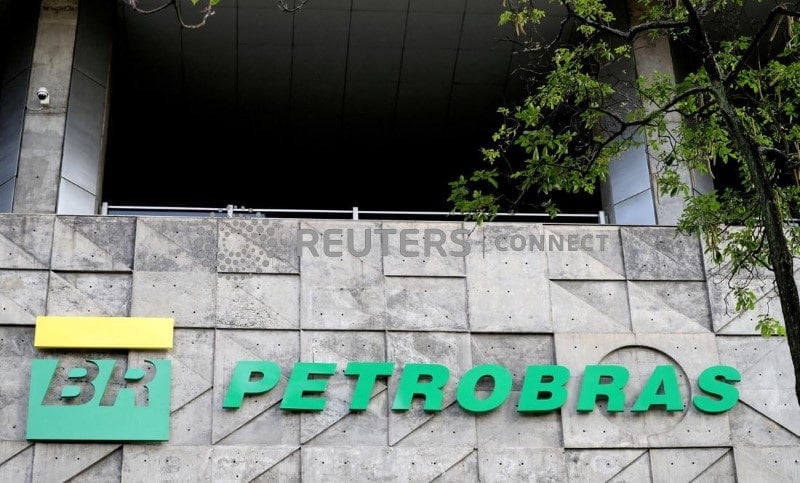
Examining the daily trading figures up to January 20, Vale (VALE3) alone commanded an average daily volume of BRL 2.32 billion, representing more than 10% of the total market liquidity. This figure nearly doubles that of the second most traded stock, Petrobras preferred shares (PETR4), which recorded approximately BRL 1.17 billion per day during the same period. This stark disparity highlights the significant reliance on a few market giants.
Further down the list, other major companies like Itaú Unibanco (ITUB4), B3 (B3SA3), and Auren Energia (AXIA3) also attract substantial liquidity, followed by Banco do Brasil (BBAS3) and Bradesco (BBDC4). Einar Rivero, CEO of Elos Ayta, confirms this trend, emphasizing the strong concentration of liquidity in large-capitalization stocks that typically dominate market indices. This pattern creates a challenging environment for smaller and mid-sized companies seeking to attract significant investment.
Economic structure drives asset weighting
The high concentration of the Ibovespa in a few assets is not inherently a market flaw, but it cannot be treated as a neutral factor either. This phenomenon largely mirrors the fundamental structure of the Brazilian economy, which remains heavily reliant on major enterprises linked to commodities and the financial sector. Pedro Ros, CEO of Referência Capital, explains that this economic framework naturally leads to a market where a few dominant players, often with global reach and stable cash flows, attract the lion’s share of investment.
This dependency on a handful of sectors means that these companies, by their very nature, possess the scale and stability that appeal to large institutional and foreign investors. The sheer size and established market presence of commodity exporters and major financial institutions make them natural magnets for liquidity, solidifying their positions at the top of trading volumes and index weightings.
Risks of skewed market representation
The problem arises when this concentration begins to distort the interpretation of the market itself. Raphael Figueredo, equity strategist at XP, points out that while the index by definition reflects the reality of high-capitalization companies weighted by negotiability, this model implicitly attributes significant risk to just a few corporations. Should any of these dominant players face substantial challenges, their impact could disproportionately affect the overall market performance, creating vulnerability for the broader index. This concentrated risk profile can obscure the performance of the wider economy and make it harder for investors to gain diversified exposure to different growth stories within Brazil.
Strategies for broader market diversification
To foster a more diversified financial market, improving the financial conditions of smaller companies is crucial, according to Figueredo. Enhancing their access to capital, reducing bureaucratic hurdles, and increasing transparency could help them attract greater liquidity. Such measures would enable a wider range of companies to become more appealing to both domestic and international investors, reducing the current over-reliance on a handful of giants.
This diversification would not only de-risk the market by spreading investment across more entities but also provide new avenues for growth. By supporting emerging sectors and smaller, innovative firms, Brazil could cultivate a more resilient and representative stock market that truly reflects the breadth of its economic potential. Policy reforms and incentives could play a key role in leveling the playing field for these companies.
Analyst insights on future market evolution
Analysts consistently observe that commodities and banks have historically led this process due to their inherent strength and appeal to foreign investors. These sectors often gain notoriety, negotiability, capitalization, and representation due to their perceived stability and global relevance. However, the market landscape is not static, and future shifts could bring new leaders to the forefront.
Index composition highlights concentration
The current composition of the Ibovespa clearly illustrates this market concentration. Vale holds the heaviest weight, accounting for 11.98% of the index’s portfolio. Combined, the ordinary and preferred shares of Petrobras constitute 9.97%. Completing the top three is Itaú Unibanco, with an 8.47% representation. This triumvirate alone represents a significant portion of the entire index, underscoring the dominance of a few companies.
Furthermore, among the top ten stocks in the index, five are companies from the financial market, highlighting the sector’s pervasive influence. Together, these ten leading stocks command a greater representativeness (51.39%) than the remaining 75 stocks (48.61%) that collectively make up the Ibovespa. This overwhelming dominance by a small group means that the performance of the index is disproportionately driven by a select few, rather than reflecting the collective health of the broader market.



