Catalog of near-Earth asteroids reaches the mark of 40 thousand objects mapped by ESA
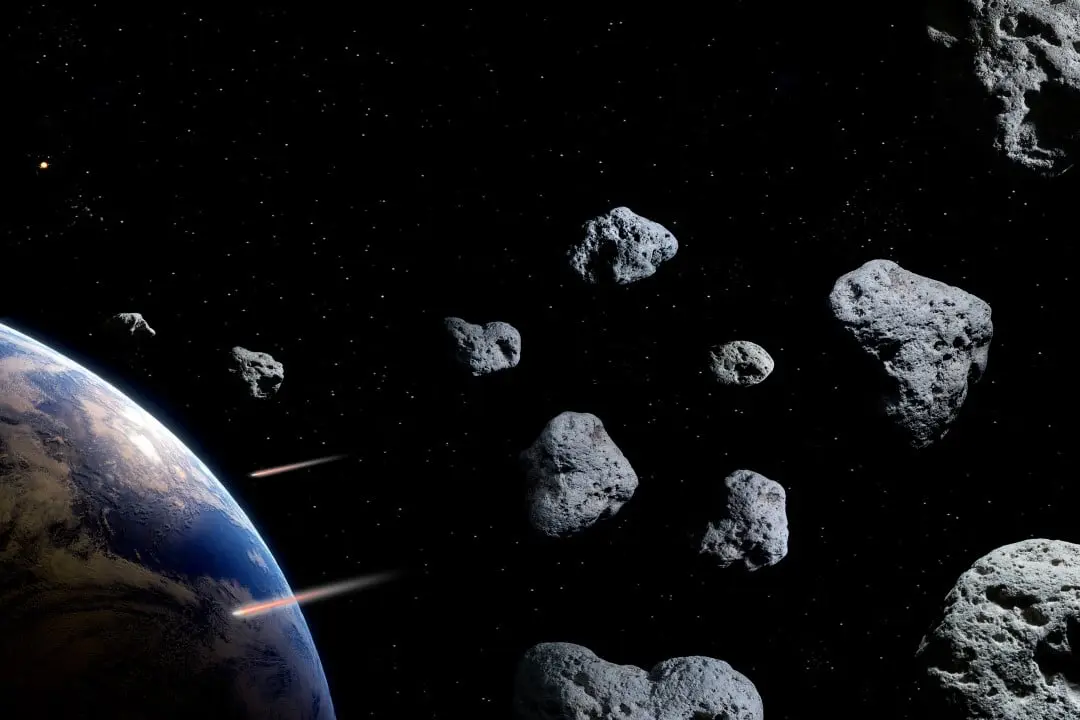
Agência Espacial Europeia (ESA) confirmed a significant milestone in the surveillance of our solar system with the registration of the 40,000th object close to Terra (NEA). The announcement reflects the growing capacity and efficiency of celestial monitoring systems, which have dramatically accelerated the pace of discoveries in recent years.
Considered cosmic “neighbors”, NEAs are asteroids or comets whose orbits bring them at a distance of up to 45 million kilometers from Terra. Embora the vast majority do not represent a danger, the complete and continuous mapping of these bodies is the fundamental basis for planetary defense strategies, ensuring the anticipation of any potential threat.
Technological advancement is mainly responsible for this new level. Apenas over the past three years, around 10,000 new NEAs have been added to the official catalogue. Este volume of detections, which previously would have taken decades to achieve, is now a demonstration of the power of new telescopes, data analysis software and international collaboration.
The acceleration of celestial discoveries
The journey to map the sky had modest beginnings. The first NEA, named Eros, was discovered in 1898, and for nearly a century, additions to the catalog were slow and sporadic. Até the early 2000s, fewer than a thousand of these objects were known to the scientific community. The turning point occurred in the 1990s, with the implementation of automated astronomical surveys, which replaced manual searches with systematic, computerized scans of the sky. Essa new technological approach has triggered exponential growth: the number of known NEAs jumped to 15,000 in 2016, doubled to 30,000 in 2022, and now surpasses the 40,000 mark. Essa continuous acceleration is driven by increasingly sophisticated algorithms, capable of identifying the subtle movement of an asteroid against the background of fixed stars in images captured by highly sensitive robotic telescopes.
Terra’s eyes pointed to the sky
Detection capacity is about to take a new qualitative leap with the entry into operation of state-of-the-art instruments. On the ground, Observatório Vera C. Rubin, located at Chile, promises to revolutionize the field, adding tens of thousands of new asteroids to the catalog in the coming years. Sua 3.2 gigapixel camera will allow it to map the entire visible sky every few nights, detecting much smaller and more distant objects than was previously possible. In parallel, ESA is developing the Flyeye network, a system of four telescopes with an extremely wide field of view, distributed across the planet. Essa configuration will allow a faster and more complete scan of the night sky, capturing fast-moving asteroids that could escape more traditional surveys.
In space, the initiatives are equally ambitious and aim to cover blind spots in ground-based observatories. The NEOMIR mission, planned for the next decade, will be positioned at a strategic point between Terra and Sol. From there, it will use infrared sensors to detect the heat emitted by asteroids, an especially effective technique for finding objects approaching the direction of Sol, a region where the sun’s brightness overshadows conventional optical telescopes. Esta mission will be crucial in providing early warning about asteroids on trajectories that are currently very difficult to predict from the Earth’s surface, completing the global surveillance system.
Real risks and existing level of monitoring
Currently, around two thousand NEAs are on an observation list because they present a probability, albeit extremely remote, of collision with Terra in the next hundred years.
Most of these objects are small and, if they entered the atmosphere, they would disintegrate without causing significant damage to the surface.
All asteroids larger than 1 kilometer in diameter capable of causing a mass extinction event have been identified, and none of them pose a known threat for the near future.
Leia Também



The main focus of concern for scientists is on objects of intermediate size, with diameters between 100 and 300 meters. Estima Only 30% of this group has been cataloged to date, and an impact from a celestial body of this scale could devastate an entire metropolitan area or cause tsunamis of catastrophic proportions.
Ongoing planetary study and defense missions
ESA’s Hera mission is on its way to the Didymos-Dimorphos asteroid system to carry out a detailed analysis of the results of the impact caused by NASA’s DART mission in 2022.
This post-collision investigation is vital to validating the simulation models and transforming the “kinetic impact” technique into a reliable and replicable asteroid deflection method.
Another important operation is the Ramses mission, which will closely monitor the passage of the asteroid Apophis in 2029, one of the closest encounters with a large object ever recorded in history, offering a unique opportunity to study its gravitational effects and composition.
The importance of continuous monitoring
ESA’s Centro of Coordenação of Objetos Próximos of Terra (NEOCC), located at Itália, acts as the brains of this global surveillance operation. Ele centralizes observations from telescopes around the world to calculate asteroid trajectories with the greatest possible accuracy. Cada new measurement, however small, helps to refine the predicted orbits, reducing the margins of uncertainty and allowing increasingly safe and reliable risk predictions for the coming decades.
A catalog for global security
The exponential increase in the number of discoveries does not mean that the danger is growing, but rather that our ability to see it is improving remarkably.
This robust, constantly updated catalog is humanity’s most powerful tool for planetary defense, strengthening global preparedness against one of the oldest natural threats in the universe.