GPS and global communications systems under threat after intense solar activity detected by NASA
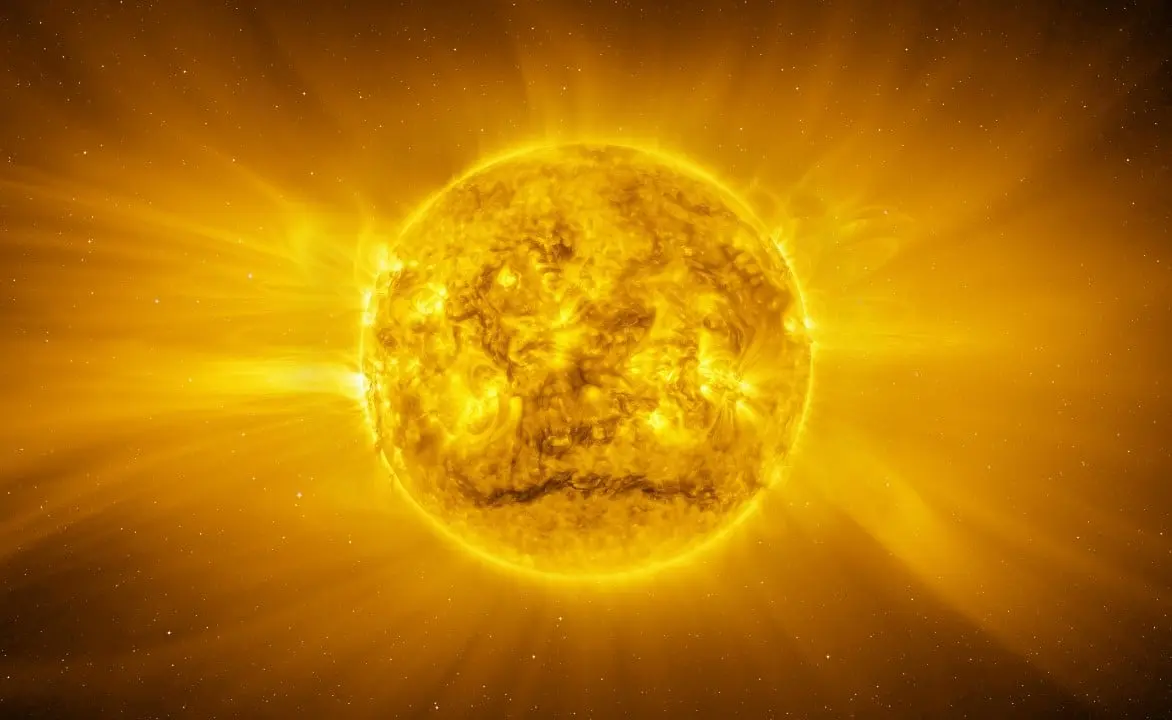
A significant alert was issued by Administração Oceânica and Atmosférica Nacional of Estados Unidos (NOAA) following the detection of a powerful eruption on the surface of Sol. The event, classified as a coronal mass ejection (CME), is being closely monitored by space agencies due to its potential to interfere with essential technologies in Terra.
Dinâmica Solar’s Observatório (SDO) captured detailed images of the explosion, which released a vast cloud of plasma and charged particles into space. Especialistas of Centro of Previsão of
The main concern lies in the interaction of these particles with the Earth’s magnetosphere, the magnetic field that protects the planet. Essa collision can trigger geomagnetic storms of varying intensity, capable of destabilizing everything from electrical grids to the precise satellite signals that support global communication and navigation.
Attention ‼️
A category S4 severe solar radiation storm is underway – the largest solar radiation storm in more than 20 years. The last time S4 levels were observed was in October 2003. Potential effects are mainly limited to releases…pic.twitter.com/kLSBy3AKx9
— JAMES WEBB (@jameswebb_nasa)January 19, 2026
Dynamics of coronal mass ejections and technological impact
Solar flares represent the largest explosions in the solar system, releasing energy equivalent to billions of atomic bombs in a matter of minutes. Quando to Terra is in the trajectory of a coronal mass ejection, the energized particles traveling through space and colliding with the planet’s magnetic field. Essa interaction generates intense electrical currents in the upper atmosphere, especially in polar regions, creating the visual spectacle of auroras. Contudo, for technological infrastructure, the phenomenon represents a considerable challenge. Equipamentos Navigation systems, like GPS systems, are particularly vulnerable because their signals must traverse the ionosphere. Durante a geomagnetic storm, this atmospheric layer becomes turbulent and irregular, distorting radio signals from satellites and causing calculation errors that can compromise the safety of air and maritime transport operations, which depend on accurate geolocation data to operate safely.
Security procedures adopted by space agencies
Nasa and NOAA operate a sophisticated network of space observatories dedicated to continuous monitoring of Sol. Esses satellites function as an early warning system, providing crucial data for predicting the intensity and trajectory of solar storms.
Based on these alerts, commercial and military satellite operators can take preventive measures. In high-risk situations, sensitive equipment is often placed in “safe mode” to protect it against current spikes that could cause permanent damage.
Airlines are also informed about space weather conditions in real time. Voos that normally cross polar regions, where the effects of radiation are more intense, may have their routes diverted to lower latitudes as a precautionary measure.
This strategy aims to ensure the safety of passengers and crew, minimizing exposure to high levels of radiation and ensuring that communication systems with air traffic control remain operational and stable throughout the journey.
Direct risks to the functioning of electrical networks
Geomagnetic storms are capable of inducing electrical currents in the ground, which can flow into power transmission networks through long-distance lines and grounding points. Essas currents, known as GICs (Geomagnetically Induced Currents), pose a direct threat to high-voltage transformers, vital components of any electrical system.
Leia Também



Abnormal current flow can lead to magnetic saturation in transformer cores, causing overheating, structural damage and, in extreme cases, permanent failure. An event of this nature can trigger a cascade effect, resulting in blackouts that affect vast geographic areas and millions of consumers.
Although modern electrical infrastructure is more robust than in the past, increasing interconnection and dependence on electronic systems increases society’s vulnerability to prolonged outages. Power utilities use predictive models and real-time sensors to maneuver grid load and isolate vulnerable equipment before a storm peaks, mitigating the risk of large-scale outages.
Solar Dynamics Observatory and Critical Data Collection
The role of Observatório of Dinâmica Solar (SDO) of Nasa is indispensable for space weather science. Posicionado in geostationary orbit, the satellite captures images of Sol in different wavelengths every few seconds, allowing unprecedented monitoring of the evolution of active regions and the magnetic fields that originate eruptions.
The data collected by SDO feeds complex computer models that simulate the propagation of the plasma cloud through interplanetary space. Essas simulations are essential to more accurately predict the arrival time and intensity of the impact on Terra.
The accuracy of these predictions is vital as it provides crucial reaction time for aviation, energy, telecommunications and satellite operators to implement their security protocols, minimizing financial losses and protecting critical infrastructure.
Consequences for space exploration and satellites
For astronauts aboard Estação Espacial Internacional (EEI), a strong solar storm poses a significant risk of radiation exposure. Durante these events, extravehicular activities are immediately canceled and the crew is advised to take shelter in the most armored areas of the station.
Terra’s thousands of low-orbit satellites also face dangers. The storm’s energy heats and expands the upper atmosphere, increasing atmospheric drag on the satellites, which can alter their orbits and, without correction maneuvers, lead to premature reentry.
Continuous study of the solar cycle
Sol operates on an activity cycle of approximately 11 years, with periods of solar minimum and maximum. Atualmente, the star approaches the peak of its current cycle, which means that events such as flares and geomagnetic storms will become more frequent and intense in the coming years.
Scientists around the world continue to invest in new technologies and international cooperation to improve monitoring and forecasting systems. Compreender solar physics is critical to protecting the global technological infrastructure on which modern society has become dependent.
Solar activity and modern communication
Satellite communication, which supports everything from television broadcasts to global financial transactions, is directly affected by solar activity. Instability in the ionosphere can degrade the quality of signals, causing data loss and interruptions in essential services, impacting the economy and the daily routine of millions of people around the world.