
Brazil formalizes candidacy to host the 2029 Club World Cup in meeting with FIFA president By Thiago Lemos
5 min read
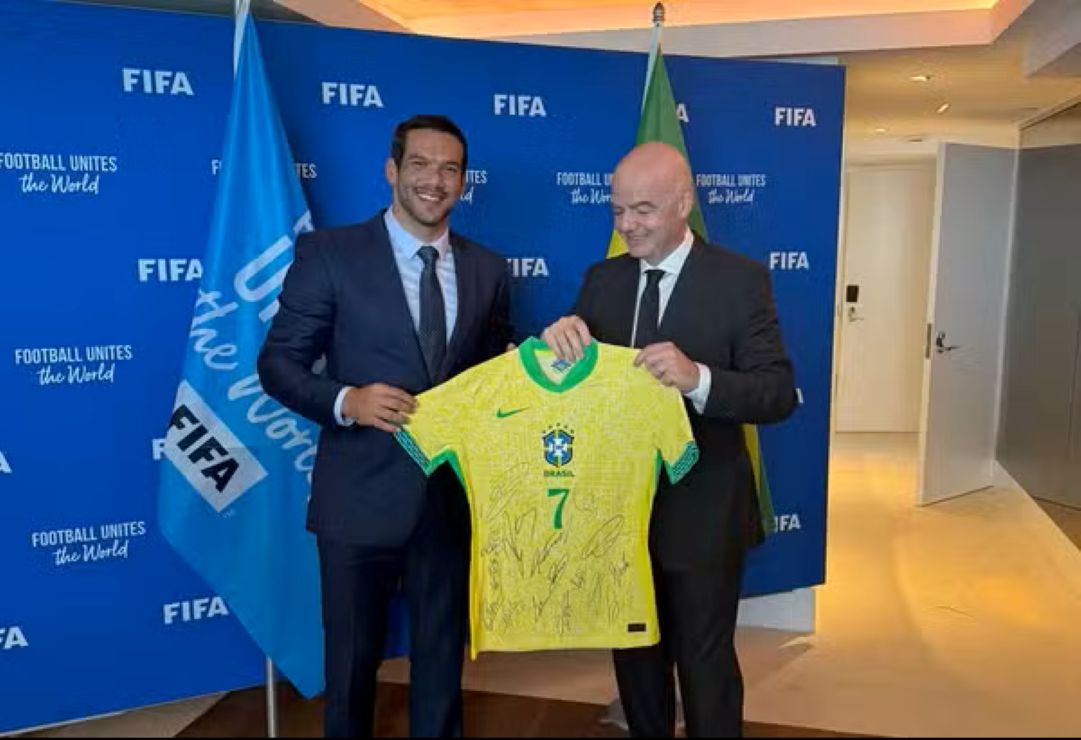 |
The Confederação Brasileira of Futebol (CBF) made official the country’s interest in becoming the headquarters of the Copa of the Fifa, Gianni Infantino, and the president Luiz Inácio Lula of Silva.
The Brazilian delegation was robust, including the president of the CBF, Samir Xaud, and the coach of Seleção Brasileira, Carlo Ancelotti, whose presence added technical and media weight to the candidacy. The initiative aims to position Brasil as a nerve center for global football at the end of the decade, capitalizing on the national passion for the sport and the already consolidated infrastructure.
This strategic move places Brasil in a vanguard position, as Fifa has not yet formally started the application process for the event. Anticipation allows the CBF and the federal government to articulate support and demonstrate organizational capacity before potential competitors, gaining an advantage in the diplomatic and sporting race.
Political articulation as an asset of the candidacy
Institutional support from the federal government is presented as the main pillar of the Brazilian proposal. The Ministro of the Esporte, André Fufuca, was also present at the meeting, reinforcing the commitment of the
The rapprochement between the sports entity and the government was articulated by the vice-president of the CBF, Gustavo Dias Henrique, who worked behind the scenes to align the speeches and present a cohesive project to Fifa. The message conveyed is that the country offers a safe and profitable environment for one of the international federation’s main products.
Initial conversations about the candidacy began discreetly during the 2025 tournament, held in Estados Unidos, when Samir Xaud probed Gianni Infantino about the possibility. The meeting at Brasília represents the culmination of this preliminary planning, transforming the intention into a concrete project with explicit government support.
With this demonstration of unity and planning, the CBF seeks to show that Brasil is not just a candidate with potential, but a safe choice and prepared to meet all the demands of a global event, overcoming bureaucratic challenges that have marked past events.
Existing infrastructure is a differentiator for Brasil
One of the biggest arguments in favor of Brasil is its network of modern arenas, a direct legacy of Copa from Mundo in 2014. The maintenance and modernization of these structures over the last decade provides a significant competitive advantage.
In addition to the stadiums, the hotel and transport infrastructure in the main capitals is prepared to receive the large flow of delegations, journalists and fans from all over the world. The experience acquired in previous mega events guarantees a tested and approved capacity in logistics and hospitality. Essa operational readiness is a differentiator in relation to possible competitors, such as Espanha, Marrocos and Catar, who also showed interest in hosting the tournament.
Infantino schedule and other events on the radar
Gianni Infantino’s visit to Brasil was not limited to the discussion about Mundial of Clubes of 2029. The president of Fifa is also in the country to monitor the preparations for Copa of Recentemente, the official competition brand was launched on the Rio of Janeiro, a milestone symbolizing the start of the countdown to the event.
The CBF takes advantage of the presence of the main leaders of world football to strengthen ties and suggest that the Brasil hosts one of the next annual conferences of the Fifa. Holding an event of this magnitude in the country would be an important political victory, consolidating Brazilian influence in global sport decisions and making it easier to obtain votes for future candidacies.
The new format and the first classifieds
The 2029 Mundial of Clubes will be played in the new format, with 32 teams, which increases the complexity and attractiveness of the tournament. The presence of clubs with great popular appeal is crucial to the commercial success of the event, and Brasil already has a strong argument in this regard. Flamengo, champion of the 2025 Conmebol Libertadores, has already secured its place, being the first confirmed South American representative.
The participation of a mass club like Flamengo is used by the CBF as a guarantee of full stadiums and high engagement from the local public. The passion of Brazilian fans is an intangible asset that the candidacy exploits to sell the image of a vibrant competition with a unique atmosphere.
On the European scene, Paris Saint-Germain has also stamped its passport, ensuring the presence of world football stars. The combination of South American and European giants, added to teams from other continents, turns the tournament into a high-value product for sponsors and broadcast rights holders, exactly what Fifa is looking for to consolidate the competition in its calendar.
Carlo Ancelotti as project ambassador
The participation of Carlo Ancelotti in the meeting with Fifa was a strategic move by the CBF. The national team coach, with his global reputation and vast experience in the biggest clubs in the Europa, acted as an informal ambassador for the candidacy, giving technical credibility to the Brazilian project. Sua perspective on the needs of high-performance athletes, from the quality of lawns to the logistics of training centers, enriched the proposal presented.
Economic legacy and development for national football
The candidacy to host the Mundial of Clubes of 2029 goes beyond the four lines, presenting a robust plan for an economic and social legacy for the country. The expectation is that the tournament will inject significant resources into the local economy, boosting sectors such as tourism, services, commerce and advertising throughout the competition period. The international visibility of Brasil as a safe and attractive tourist destination would be amplified, with the potential to attract new visitors and investment in the long term. In the sporting sphere, the event would serve as a catalyst for the development of national football on several fronts. The CBF argues that global attention focused on the country would encourage youth teams, create new opportunities for emerging talents and strengthen the infrastructure of smaller clubs. The organization of an event of such magnitude would also multiply international partnerships, strengthening the entire Brazilian football production chain and reaffirming its prominent position on the global stage.
Next steps for the organizing committee
After the formal presentation of interest, the next step involves an in-depth technical dialogue between the CBF teams and the operational departments of Fifa. A special commission will be created within the confederation to prepare the specifications, detailing all technical, logistical and financial aspects of the Brazilian candidacy.
The federal government has already committed to streamlining bureaucratic processes, such as issuing visas to delegations and fans, and ensuring integration between public security bodies. Optimism behind the scenes is great, with the belief that the synergy between the public authorities and the highest entity of Brazilian football will be the decisive factor in bringing the Mundial of Clubes back to the country.











