


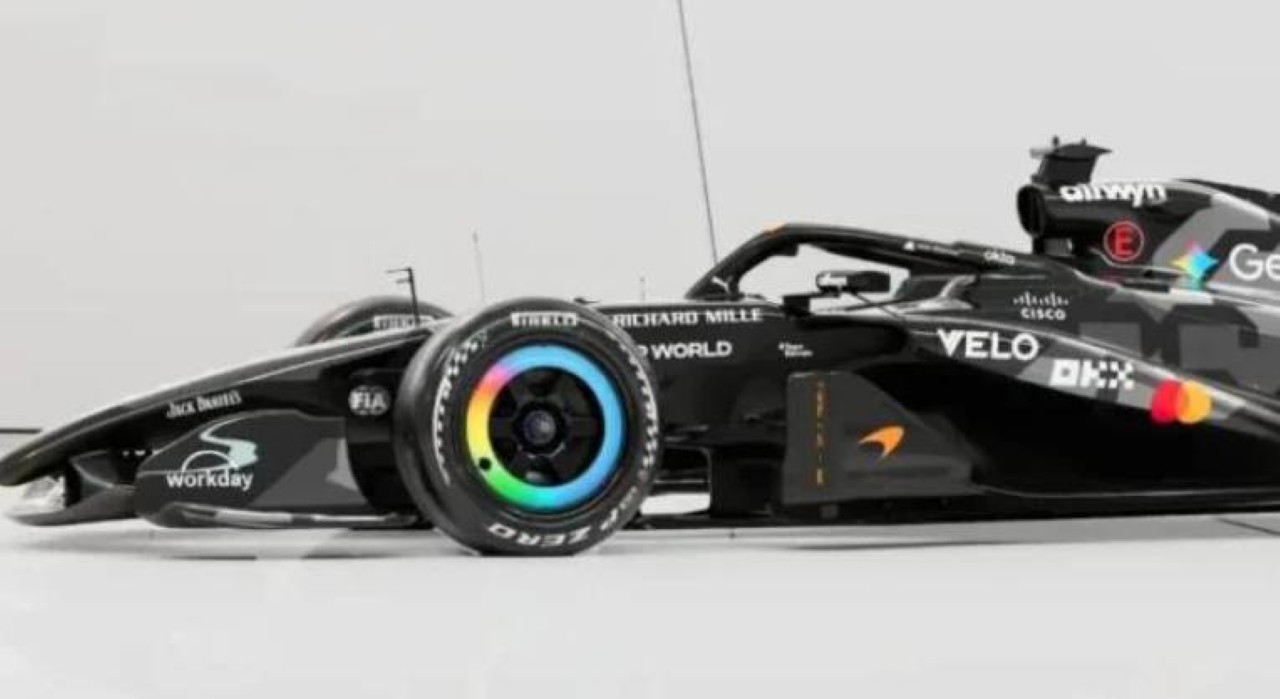
McLaren released this Monday, January 26th, the first official images of the MCL40, the car that will defend the constructors’ title in the 2026 Fórmula 1 season. The renderings show the model in a predominantly black temporary livery with silver details, which will be used exclusively during the private collective tests at the Circuito of Barcelona-Catalunya, between January 26th and 30th. The British team chose not to reveal the final livery now, reserving the full launch for February 9th, before the second test session at Bahrein.
The event at Barcelona marks the start of track activities for all teams under the new 2026 technical regulations, which introduce profound changes to the chassis, power units and tires. McLaren, the current champion, confirmed that it will not participate in the first day of activities, prioritizing additional development time at the factory. The debut of the MCL40 on the Catalan track is scheduled for the second or third day of the schedule.
The decision reflects the strategy of maximizing the car’s initial performance in a year of general technical reset in the category. Andrea Stella, team leader, highlighted the complexity of the project, which involved a complete redesign of practically all components.
Technical characteristics of the MCL40
The MCL40 features visibly aggressive aerodynamic solutions right at the front. The front wing adopts a rounded profile with a nose slightly tilted downwards, a configuration that better directs the airflow under the floor. Essa choice contrasts with the trends of some rivals and demonstrates a focus on aerodynamic efficiency from the first kilometers.
The sidepods have a steep slope, with a high air intake and a narrow body in the lower region. Essa architecture helps channel air to the rear diffuser, a critical area under new rules that emphasize revised ground effect. The front suspension returns to the push-rod layout, abandoning the pull-rod used in recent years to optimize internal packaging and weight distribution.
Testing strategy in Barcelona
McLaren will divide the five days available in Barcelona with three effective track sessions, as per agreement between the teams. The absence on the 26th allows for final adjustments after validations on the dynamometer and internal simulations. The team will transport the car directly from the testing facility to the Spanish circuit.
Lando Norris and Oscar Piastri will alternate driving on selected days. The program prioritizes collecting correlation data between simulator and real track, essential in a year of new regulations. The temporary painting reduces the visual weight of sponsors, although the Mastercard logo appears more prominently as the title sponsor.
- Verification of new hybrid systems
- Initial performance assessment of tires supplied by Pirelli
- Aerodynamic data collection with extra sensors
- Long run reliability tests
Regulatory changes impact development
The 2026 rules represent one of the biggest technical revolutions in the recent history of Fórmula 1. Power units gain greater electrical participation, with partial elimination of the MGU-H and an increase in power of the MGU-K. The chassis are lighter and shorter, with prohibited active floor and controlled partial ground effect return.
McLaren has invested heavily in infrastructure to deal with these simultaneous changes. Rob Marshall, head of design, stated that “every screw” on the MCL40 differs from the previous model. The team maintained an aggressive philosophy in aerodynamic development, even with wind tunnel restrictions imposed by the champion’s regulations.
Official launch and expectations
The full presentation event is scheduled for February 9th, via online broadcast, just before the official tests at Bahrein. On this occasion, McLaren will display the definitive competition livery, with the expected return of the traditional papaya and anthracite colors. Patrocinadores main ones will gain prominent positions in the final layout.
The team enters the season as a natural favorite after dominating in 2025. However, the technical reset equalizes initial conditions between the competitors. Especialistas point out that the early correlation between virtual tools and the track will be a decisive factor in the first races.
Highlighted aerodynamic details
The floor region has more flexible edges within current regulatory limits. The rear diffuser maintains aggressiveness, with pronounced side channels to extract downforce. The engine cover adopts a compact shape, facilitating hot air extraction in the new era of power units.
The rear suspension continues with pull-rod, maintaining advantages in center of gravity height. McLaren opted for conservative solutions in some areas to ensure initial reliability. Previous private Testes validated critical components prior to exposure in Barcelona.
Schedule until premiere
The Barcelona tests serve as a collective shakedown closed to the public. Cada team has three free days within the five-day window. McLaren will focus efforts on basic setup and systems validation.
Next, the focus shifts to Bahrein, with official sessions open to the press between February 19th and 21st. The opening race takes place at Melbourne, at Grande Prêmio at Austrália, between March 6th and 8th. The team plans continuous evolution of the aerodynamic package throughout the first stages.
Internal team reactions
Andrea Stella emphasized the unprecedented volume of work in the last 20 months. The Italian compared the 2026 project to the biggest redesign challenge ever faced in his career. Apesar From the pressure of defending the title, the team maintains a cautious approach to avoid early reliability issues.
Drivers expressed confidence in the car’s potential after simulator sessions. The technical base consolidated in recent years allows for moderate optimism. McLaren seeks to repeat the upward trajectory seen since 2023, now starting from a privileged position.
Comparison with rivals
Red Bull also released images of the RB22 on the same date, adopting a similar approach with temporary livery. Outras teams like Ferrari and Mercedes preferred initial silence, concentrating internal efforts. The grid demonstrates general caution given the magnitude of technical changes.
McLaren stands out for its early transparency in the renderings. Analistas point to an aggressive front as a possible initial advantage on high-downforce circuits. Dados concretes will only appear after the first timed kilometers.



