Apple’s iPhone 18 Pro could eliminate Dynamic Island with invisible camera and translucent design
Apple is developing one of the biggest aesthetic and technological redesigns for its line of smartphones with the long-awaited iPhone 18 Pro. Rumores consolidated in the sector indicate that the company plans to completely abandon the Dynamic Island, which would be replaced by an advanced front camera technology positioned under the screen, making it practically invisible during use.
This change represents a significant step towards a truly immersive full-screen experience. The innovation will not be limited to the display, as the device must also adopt a new design with translucent elements, bringing back an aesthetic that marked the brand’s iconic products in the past.
In addition to the visual transformations, the next generation of the Apple premium smartphone should bring substantial improvements in performance, with the introduction of the A20 Pro chip, a more versatile camera system with variable aperture and improvements in battery life. The company’s strategy appears to be to combine cutting-edge innovation with nostalgic appeal to further consolidate its market leadership.
A design that rescues the legacy of Apple
The inspiration for the new look of the iPhone 18 Steve Jobs.
More on this story: Apple revolutionizes iPhone 18 Pro line with translucent back and hidden camera under the display
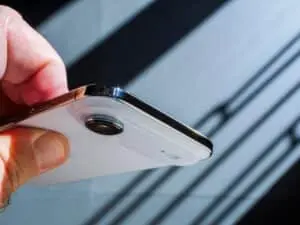
The main feature of the new design would be the inclusion of a translucent glass section on the back of the device. Essa area would be located around the MagSafe induction charging ring, allowing users to view internal components, such as the charging coil and other electronic circuits, creating a technological and differentiated visual effect.
This approach seeks to create an emotional connection with the brand’s oldest consumers, while attracting a new audience fascinated by technology and design. It is a way of paying homage to one’s own legacy, showing that innovation can coexist with reverence for its history.
Despite the aesthetic renovation, the Apple must maintain consistency in screen sizes. Espera The iPhone 18 Pro will maintain the 6.3-inch panel, while the Pro Max version will continue with its 6.9 inches, ensuring that the already established familiarity and ergonomics are preserved for users of the line.
Learn more: Apple plans launch of iPhone 18 Pro with semi-transparent glass back and under-display front camera
The end of Dynamic Island and the future of the screen
One of the most anticipated and technically complex changes for the 2026 Pro line is the definitive elimination of the cutout known as Dynamic Island, which was introduced in the iPhone 14 Pro. To achieve this goal, Apple is investing in the development of a solution that integrates the Face ID’s selfie camera and sensors directly under the OLED panel. Quando the camera is not in use, the pixels above it will light up normally, making the sensor completely invisible and providing a seamless viewing experience. Successful implementation of this technology would increase usable screen area by approximately 5%, optimizing space for content consumption, gaming and productivity.
The sensors responsible for the Face ID facial recognition system will also be located under the display. However, preliminary information suggests that while the selfie camera may become completely unnoticeable, the components of the Face ID may still create slight distortion or be minimally visible under certain lighting conditions. Isso indicates that the transition to a screen 100% free of visible cutouts may be a gradual process, but the iPhone 18 Pro will represent a fundamental advance in this direction, eliminating the main visual obstruction present in current models and redefining the user’s interaction with the display.
Variable aperture camera system
The iPhone 18 Pro’s photographic set should receive one of the most significant upgrades in recent years, with the introduction of a main sensor with variable aperture technology. Esse feature, already explored by other manufacturers, offers unprecedented manual and automatic control over the amount of light that reaches the sensor and the depth of field of the images. Espera users can adjust the aperture of the main lens in a range from f/1.4 to f/2.0. In practice, a larger aperture such as f/1.4 is ideal for low-light scenarios, as it allows more light to enter, resulting in clearer photos, with less noise and a more pronounced and natural background blur (bokeh effect) for portraits. On the other hand, a smaller aperture, such as f/2.0, increases depth of field, making it perfect for landscape or group photography, where the goal is to keep all elements of the scene in sharp focus.
See Also


Power and efficiency with the A20 Pro chip
All new features, from the under-screen camera’s image processing to high-resolution video recording capabilities, will be driven by the new A20 Pro chip. Produzido with advanced 2 nanometer (nm) technology, this processor promises a significant leap in both raw performance and energy efficiency compared to previous generations.
The greater density of transistors, made possible by the 2nm process, will allow the chip to perform complex artificial intelligence and machine learning tasks with much greater speed and lower power consumption. Isso is instrumental in enhancing computational photography capabilities such as Modo Cinema and Smart HDR, as well as opening doors for new AI applications integrated directly into the operating system.
On the same topic: Apple prepares iPhone 18 Pro with under-screen camera and semi-transparent design
Battery and cooling system optimization
The power management and durability of the iPhone 18 Pro Max will be improved through a structural change in the battery compartment. The Apple plans to replace the aluminum casing used in current models with a stainless steel one.
This material change offers two main benefits. The first is an increase in impact resistance, making the internal component more protected against falls and deformations. The second, and perhaps more important for performance, is a significant improvement in heat dissipation.
Stainless steel has thermal properties that allow for more efficient heat transfer away from the battery and processor. Better thermal management prevents overheating (thermal throttling), allowing the device to maintain peak performance for longer periods during intensive activities such as graphics-heavy gaming or exporting 4K and 8K videos.
Consolidating the premium position
The decision to rescue classic design elements, combining them with cutting-edge technology, is seen by analysts as a strategic maneuver by Apple. The company seeks to reinforce the premium identity of its products, creating a device that is not just a tool, but also an object of desire that unites history and future, justifying its position at the top of the market.
More on this story: Apple redesigns iPhone 18 Pro with 6.9-inch screen, invisible camera and translucent design
New launch strategy for the line
For the 2026 cycle, Apple may be planning a change in its launch schedule. The iPhone 18 models Pro and Pro Max would hit the market in September, as usual. However, the standard and Plus models would be released later in spring 2027.
This change in strategy would allow the company to focus its marketing and production efforts on the Pro models during the peak demand period at the end of the year. Além Furthermore, staggering launches could optimize the supply chain and offer consumers new options at different times of the year, keeping interest in the brand always high.