Minneapolis Faces New Protests After Murder Amid Strict Immigration Policies
Minneapolis has seen a climate of tension and intensified protests in recent weeks, triggered by a recent murder that reignited old social wounds. The death of a citizen, whose details are still being investigated by the authorities, increased popular excitement in an already complex scenario.
The city, known for its diversity and history of activism, sees its community mobilized against what many consider a series of violence and injustices. Este evento trágico ocorre em um contexto de cerco anti-imigração, que tem gerado apreensão e dificultado a integração de diversas parcelas da população.
The situation challenges local authorities to seek quick and effective responses, both for criminal investigation and for managing the social crisis. The population demands transparency and concrete actions to restore order and confidence.
Wave of indignation shakes the local community
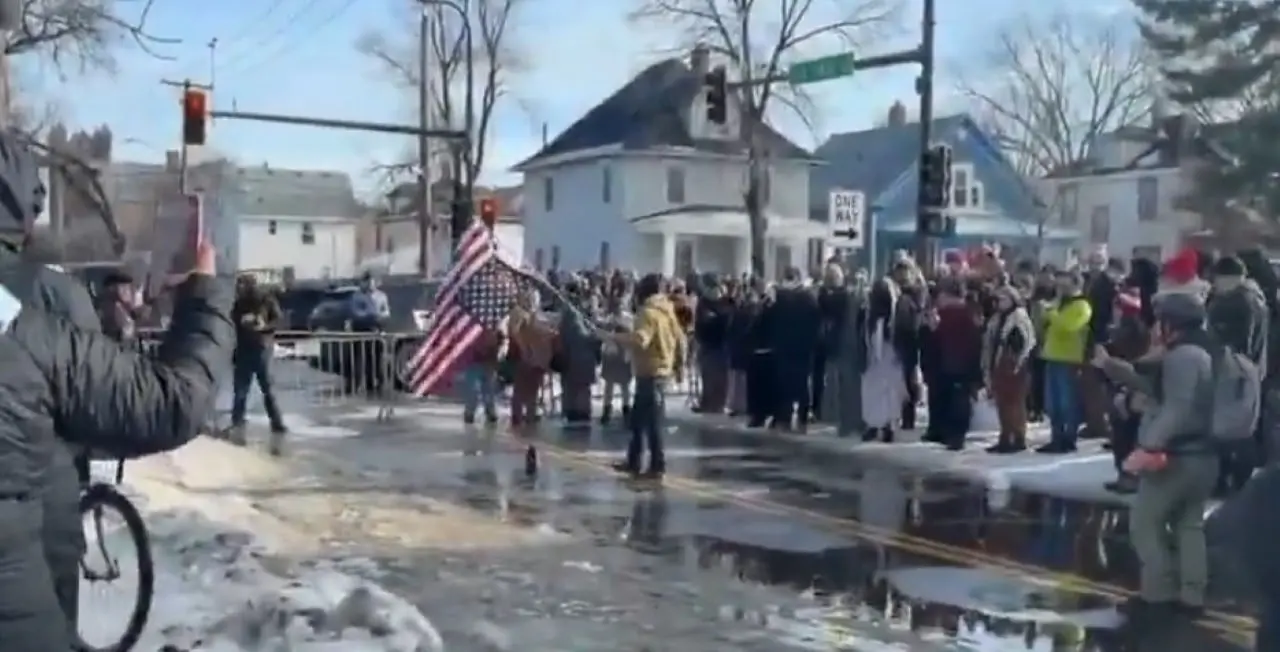
The violent death of a young community member in the northern region of Minneapolis sparked a wave of outrage that quickly spread through neighborhoods. Moradores and activists took to the streets, demanding justice and accountability for those involved in the crime. The brutality of the act reignited debates about public safety and police action.
Peaceful demonstrations were interspersed with moments of greater tension, resulting in road blockages and sporadic clashes. The local police force was called in to contain tempers and ensure security, but the intensified presence of agents generated more discussions about the militarization of urban security.
Anti-immigration measures amplify tensions
The recent murder of a resident of Minneapolis occurred at a time when the city was already experiencing an environment fraught with new anti-immigration guidelines. Estas policies, implemented at the state level and with local repercussions, have been the target of intense criticism from human rights organizations and community leaders. The restriction on welcoming immigrants, combined with increased supervision, has created a feeling of vulnerability among foreign populations and ethnic minorities, who feel increasingly marginalized and unprotected.
The imposition of barriers and the difficulty in accessing basic services for newcomers contributed significantly to the increase in distrust in institutions. Essa atmosphere of siege and discrimination, according to experts in urban sociology, can exacerbate social conflicts and make it difficult to resolve community problems, such as violence. The complex interaction between migration issues and local crime became a focal point for the protests, uniting different groups in a common cause of protection and equity, as well as a search for more security and stability for all.
Responses and actions of municipal authorities
Faced with a scenario of growing social unrest, the city hall of Minneapolis and the police department released statements reiterating their commitment to investigating the facts. The local police chief said a full investigation is underway to identify those responsible for the murder and that additional security measures will be implemented in the most affected areas. The intention is to reestablish order and a sense of security among residents who were directly impacted by the wave of violence.
At the same time, the municipal administration announced the formation of a community dialogue committee, with the participation of local leaders, activists and representatives of different ethnicities. The objective is to create an open channel to listen to the population’s demands and seek joint solutions to the problems that afflict the city. Esta initiative aims to ease tensions and promote a more collaborative approach to crisis management.
Proposals were also presented to review interaction policies between the police and communities, seeking greater transparency and accountability. The idea is to train agents to deal with cultural diversity and minimize incidents arising from prejudice or misunderstanding. Continuous education and awareness raising are seen as fundamental pillars to build a relationship of mutual trust between security forces and citizens.
Leia Também



History of tensions and struggles for rights
The city of Minneapolis has a long history of racial tensions and civil rights struggles, a context that gives depth to the current protests. Desde past events that gained international repercussion, the local community has shown itself to be resilient in the search for social justice and equity. Rights movements, often led by minority groups, demonstrate a persistent demand for structural reforms.
This history of activism has shaped how citizens respond to new injustices. The collective memory of past confrontations serves as a catalyst for the current mobilization, with many seeing the recent murder as another chapter in an ongoing struggle. The current demonstrations are not just an isolated reaction, but the echo of voices that have been calling for change for decades.
Protests spread to strategic neighborhoods
The protests, initially concentrated in specific points, began to spread across strategic neighborhoods in Minneapolis, marking an escalation in mobilization. The diversification of protest sites aims to expand the scope of demands and put more pressure on the authorities. Ruas and important avenues became the stage for marches and symbolic acts, attracting the attention of the media and external observers.
Solidarity between different communities has been a crucial factor in the maintenance and expansion of protests. Grupos from different ethnic and social origins came together on the common agenda of justice and security, demonstrating the transversality of concerns. Esse movimento de união fortalece a voz dos manifestantes e imprime um caráter de urgência às suas demandas, exigindo respostas imediatas das esferas governamentais.
Social mobilization and its impacts
Social mobilization in Minneapolis has demonstrated a remarkable capacity for organization and engagement, with a significant impact on the city’s routine. Desde from calling community assemblies to organizing marches and vigils, the population has used different strategies to give visibility to their demands. The active participation of young people, religious leaders and members of civil associations highlights the breadth of the movement and the depth of the feeling of dissatisfaction.
The impacts of these actions go beyond the immediate justice agenda for the murder. Eles force the reevaluation of public policies, the review of security protocols and the debate on the integration of communities. The social effervescence in Minneapolis reflects a search for a fairer and safer future for all its inhabitants, regardless of their origin or social status.
Debate on the future of public security
Amid recent events, the debate about the future of public security in Minneapolis takes on new contours, driven by the urgency and gravity of the situation. Diversas proposals are being discussed, from increasing community policing to restructuring budgets to invest in social and violence prevention programs. The city seeks a model that is effective in reducing crime and, at the same time, respects the rights and dignity of all its citizens.