

Apple has launched the second generation of its popular tracking device, the AirTag, promising enhancements that aim to optimize the user experience and expand location capabilities. Este new model, which succeeds the original 2021 version, hits the market with modifications that, although they may seem modest at first glance, represent a significant advance in precision and range, consolidating the AirTag’s position as an essential tool for locating lost items. The update is designed to integrate even more fluidly into the company’s ecosystem, offering a robust solution for personal tracking.
Since its initial release, AirTag has been a key part of Apple’s Find My network, allowing millions of users to keep track of their belongings. The new version maintains this essence, but incorporates innovations that respond directly to demands for greater efficiency and safety. Extended compatibility with the brand’s latest devices, such as the iPhone 17 and Apple Watch Ultra 3, reinforces the interconnectivity and convenience offered to consumers.
Discreet improvements, such as improved speaker sonic capacity and increased ultra-wideband technology, contribute to a more agile and reliable tracking experience. Essas changes reflect Apple’s commitment to refining its products, ensuring that location tools are not only efficient, but also safe and intuitive for everyday use. The focus on technical details and functional enhancements highlights the device’s evolution in the wearable technology landscape.
Design and visual subtleties
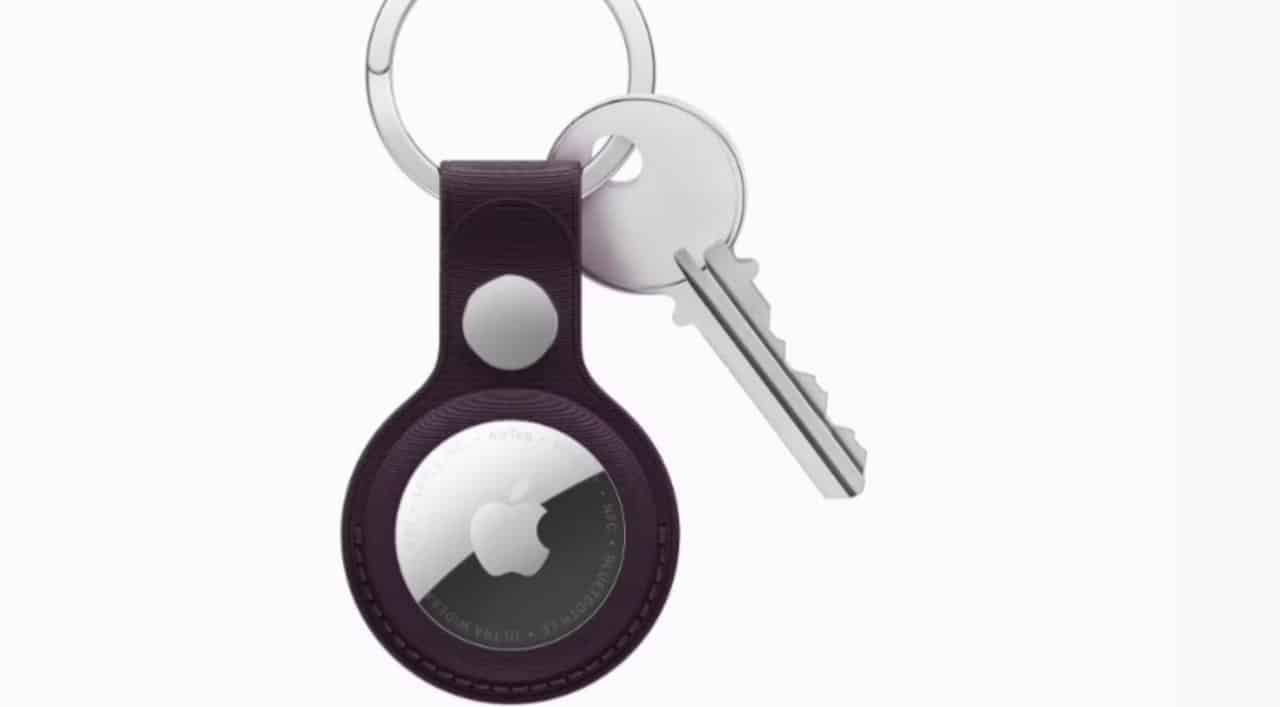
The second-generation AirTag maintains a striking aesthetic similarity to its predecessor, preserving the circular design and compact dimensions. Measuring 31.9mm in diameter and 8mm in height, the new tracker ensures that existing accessories, such as first-generation cases and keychains, remain fully compatible. Essa design decision is a direct benefit for consumers, who can transition to the updated model without the need to purchase new accessories, optimizing costs and practicality.
Despite the external similarity, there is a subtle visual detail that allows the two generations to be distinguished: the inscription on the back of the device. Enquanto the original model displays information such as “AirTag / Designed by Apple in California / Assembled in China / Bluetooth LE / WIDEBAND / IP67 / APPLE INC”. Essa small change not only serves as an identifier for the version, but also reaffirms the integration of key functionalities directly into the body of the device.
Technological improvements and the U2 chip
The highlight of the second-generation AirTag lies in the integration of the U2 chip with ultra-wideband (UWB) technology, an innovation that marks a significant evolution in its tracking capabilities. The Este chip, also present in high-end Apple devices such as the iPhone 17 line, the iPhone Air, the Apple Watch Ultra 3 and the Apple Watch Series 11, is the engine behind the “Search UWB technology allows AirTag to not only locate items, but also determine their exact position in space with great accuracy, which is crucial for finding objects in complex or crowded environments.
The implementation of the U2 chip is not just limited to extending the range; it improves communication between your AirTag and compatible devices, resulting in a faster, more accurate location experience. Ultra-wideband operates at a different radio frequency than traditional Bluetooth, minimizing interference and increasing reliability in detecting object distance and direction. Essa precision is what allows the user to be intuitively guided to the lost item through arrows and haptic feedback on their iPhone or Apple Watch, transforming the search into a simple and efficient task.
Improved search features
“Search Precisa” is a fundamental feature of the AirTag, and its new generation takes this functionality to a higher level. With the U2 chip, users can now enjoy a more robust tracking experience, especially in scenarios where the exact location of an item is crucial. Essa enhancement allows the device to not only provide a general proximity indication, but direct the user with pinpoint accuracy, utilizing a clear visual interface on the iPhone or Apple Watch to guide the path to the lost object.
For the first time, “Search Precisa” expands its compatibility to include models such as Apple Watch Series 9, Da Likewise, users of iPhones from the 15/15 Pro line onwards can take full advantage of this improved functionality. Essa broader integration ensures that a greater number of users in the Apple ecosystem can benefit from the new AirTag’s advanced technology, making it an even more versatile and accessible tool for locating objects.
Although Apple did not disclose an exact percentage for the increase in Bluetooth range over the original AirTag, it is widely recognized that there has been a notable expansion. Essa general improvement in connectivity
The combination of the U2 chip and general connectivity improvements optimizes AirTag performance in a variety of situations, from finding lost keys at home to locating a forgotten backpack in a public place. The “Find” network, which is made up of hundreds of millions of Apple devices around the world, plays a crucial role in relaying the location of AirTags that are out of Bluetooth range of the owner, making recovery of lost items a real and efficient possibility on a global scale.
More powerful audio for location
One of the most noticeable and practical improvements to the new AirTag is the improvement of its speaker, which now offers 50% greater sound power. Este advancement means that the audible alert emitted by the tracker can be heard from distances up to two times greater than in the previous version. In situations where an item is hidden under cushions, in a drawer or lost in a noisy environment, the ability for sound to travel further is a significant difference in the speed and effectiveness of the search.
In addition to the amplified volume, the sound emitted by the second generation AirTag also has different characteristics compared to the original model. Although the exact nature of this sound difference has not been detailed, the modification suggests an adjustment in the frequency or pattern of the alert, designed to be more easily identified and distinguishable in different scenarios. Este refinement in audible feedback complements the accuracy of visual and tactile tracking, offering multiple ways for the user to locate their belongings efficiently.
Advanced security against misuse
Apple has demonstrated a strong commitment to user privacy and security, and the new AirTag reflects this priority by incorporating an industry-leading set of protections against unwanted use. Estas measures are crucial to mitigate concerns related to the potential for unauthorized tracking. Entre implemented features, including cross-platform alerts and the use of unique Bluetooth identifiers that change frequently, making persistent traceability by malicious third parties difficult.
Cross-platform alerts are a significant advancement, allowing users of different operating systems (like Android, through specific apps) to receive notifications if an unknown AirTag is moving with them for an extended period of time. Essa collaborative approach to security is vital to protecting individual privacy. Adicionalmente, the AirTag’s constantly varying Bluetooth identifiers make it much more difficult for someone to use the device to monitor a person’s location without their consent, an issue that has sparked ongoing debate and improvements in tracking technology.
Maintaining autonomy and resistance
In terms of battery life and resistance to external elements, the second generation AirTag maintains the characteristics that were already successful in the original model. The device continues to use the CR2032 lithium battery, widely available on the market, which offers an autonomy of around one year of use. Essa Battery longevity is one of AirTag’s strengths, ensuring that users do not need to worry about frequent recharging or interruption of tracking service due to power outages, contributing to the product’s convenience and reliability.
The IP67 certification against water and dust also remains unchanged, ensuring that the new AirTag is resistant to immersion in water up to one meter deep for 30 minutes, in addition to being completely protected against the ingress of dust. Esta Robustness is essential for a device that is intended to track objects in different situations and environments, offering users peace of mind that their trackers will withstand the hardships of everyday use, maintaining their functionality even in less favorable conditions.
Price and purchase options on the market
The new second-generation AirTag maintains a price strategy consistent with that of its predecessor in the international market. Nos Estados Unidos, the device is sold for the same price of US$30 per unit. Para For those looking for a more comprehensive solution, Apple continues to offer a set of four trackers for US$100, providing savings for purchasing multiple AirTags. Essa price stability aims to facilitate adoption and ensure that the product remains accessible to a wide range of consumers interested in protecting their belongings.
In the Brazilian market, the second generation AirTag is available for R$370 per unit, reflecting exchange rate fluctuations and local taxes. The package with four trackers is offered for R$1,250, maintaining the cost-benefit ratio for volume purchases. Além from the flagship device, the Apple took advantage of the launch to introduce a new FineWoven keychain, a premium accessory made from a sustainable material. Disponível in colors such as fox orange, midnight purple, navy blue, moss and black, this keychain sells for US$35 in the US and R$426 for the Brasil, offering customization and protection options for the AirTag.



