

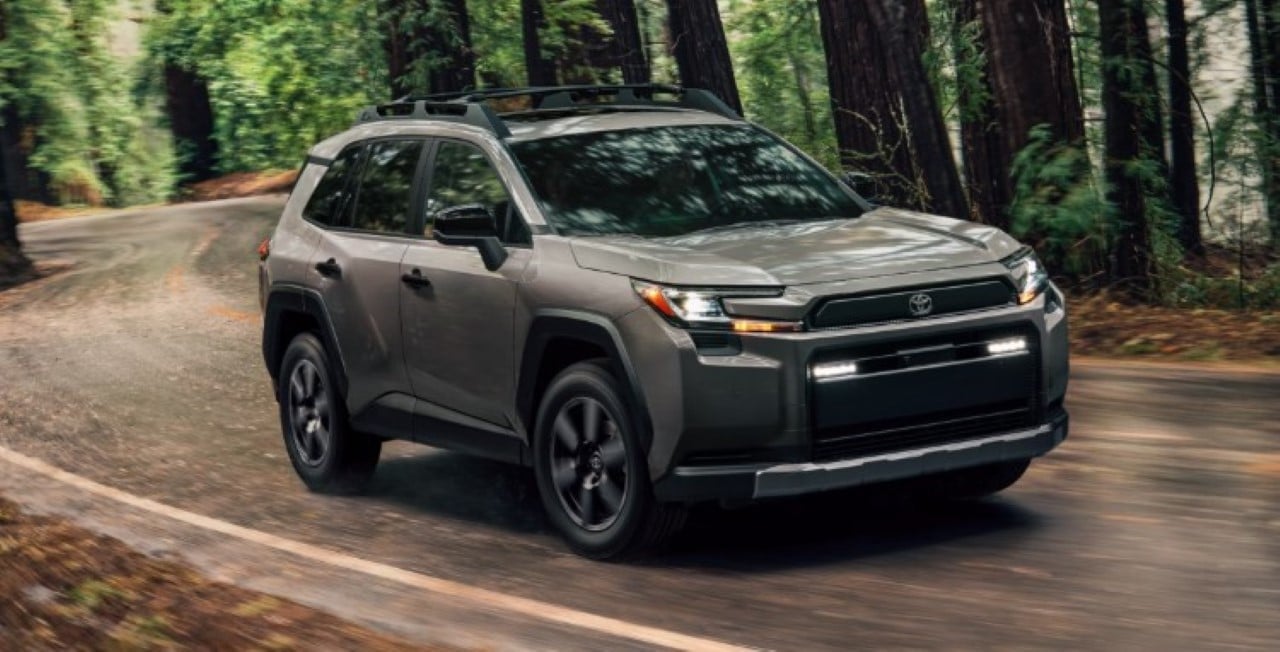
Toyota announced the sixth generation of one of its most iconic models, the RAV4, consolidating its leadership position in the SUV segment. The new model, scheduled for the next launch cycles, arrives with significant updates in design, technology and, mainly, in the engine, reinforcing the Japanese brand’s commitment to increasingly efficient and powerful hybrid systems.
The vehicle, which has sold more than 15 million units globally since its launch in 1994, seeks to regain the prominence lost to new competitors, especially fully electric models. Para This, the new generation of the RAV4 combines the reliability of its mechanics with innovations that meet the growing demands for sustainability and performance.
The main novelty is under the hood, with the offer of a plug-in hybrid system that delivers up to 308 horsepower. Essa configuration not only guarantees sporting performance, with acceleration from 0 to 100 km/h in less than 6 seconds, but also offers a purely electric range of over 100 kilometers, an important milestone for the category.
With these credentials, Toyota positions the new RAV4 as a robust alternative both for daily urban use, without polluting emissions, and for longer trips, taking advantage of the versatility of the hybrid system. The model’s arrival in the main markets is scheduled to begin in the first half of the year, with deliveries scheduled for the summer in the northern hemisphere.
Modernized exterior design
The sixth generation of the Toyota RAV4 presents a striking visual evolution, with more aggressive and contemporary lines that reinforce its presence on the streets. At the front, the headlights adopt a new LED format, integrated into a redesigned front grille with hexagonal patterns that identify the brand. The bumper was also restyled, giving the SUV a more robust and aerodynamic appearance. Essas changes are not just aesthetic; they contribute to better energy efficiency and the reduction of wind noise at high speeds, improving comfort on board.
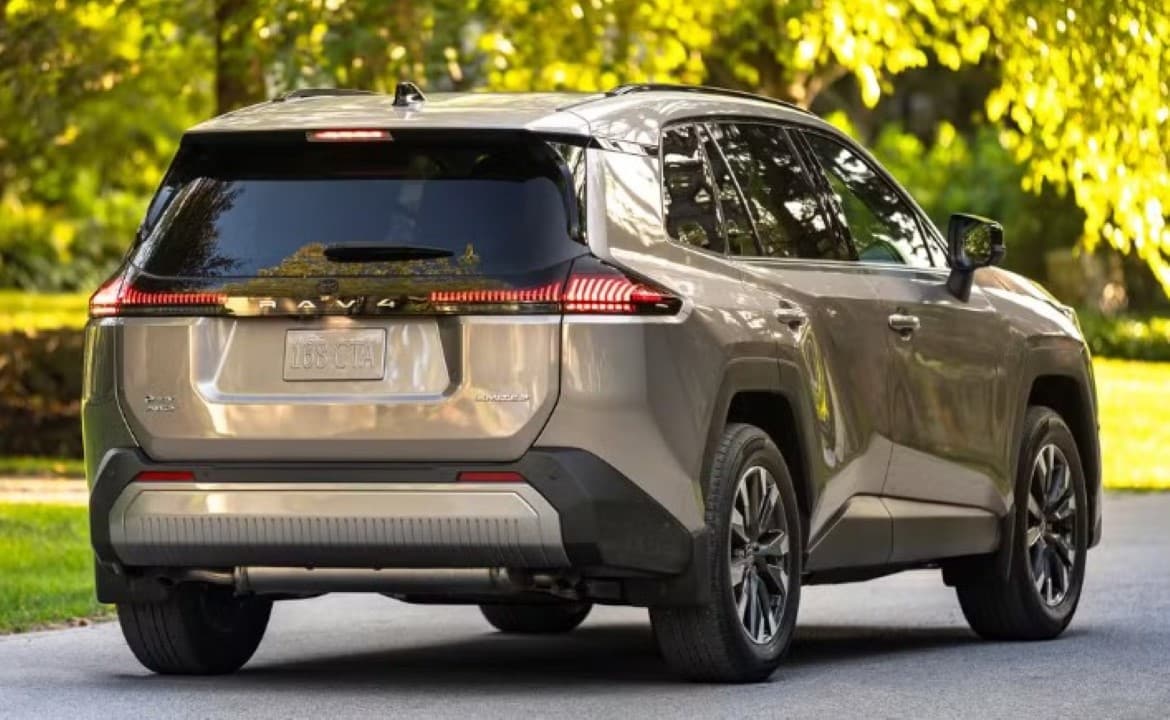
At the rear, the lights were redesigned and visually connected, with the model name highlighted on the trunk lid. The rear bumper incorporates a subtle air diffuser, which improves the vehicle’s aerodynamics. The new RAV4 maintains its balanced dimensions, measuring 4.60 meters long, 1.85 meters wide and 1.66 meters high, ensuring good maneuverability in urban centers and generous internal space. The light alloy wheels, which can reach 20 inches in the most equipped versions, complete the sporty and sophisticated look.
Technological and more spacious interior
The interior of the new RAV4 has been completely renewed to offer a more technological, comfortable and premium experience. The panel adopts a more vertical and ergonomic layout, facilitating access to controls. The highlight is the new set of screens: a 12.3-inch fully digital instrument panel and a new 12.9-inch floating multimedia center. Este system, called ARENE, is new to the model and offers over-the-air (OTA) updates, advanced connectivity with smartphones and a more intuitive interface. The cabin also gained in sophistication with the use of soft-touch materials on the dashboard and doors, increasing the perception of quality. Passenger space has been optimized, especially in the rear seat, which now offers more leg area, improving comfort on long journeys for up to five occupants. Para To enhance convenience, the SUV includes features such as an induction cell phone charger, a head-up display projected onto the windshield and an optional premium sound system.
High-performance hybrid mechanics
The Toyota maintained the 2.5-liter gasoline engine as the basis for the new RAV4’s hybrid systems, but optimized its operation in conjunction with the electric units. The conventional hybrid version (HEV) offers 183 horsepower with front-wheel drive, ensuring agility and an average fuel consumption of approximately 20.4 km/l.
The big star, however, is the plug-in hybrid engine (PHEV), which raises the SUV’s performance level. Esta configuration is available in two options: one with front-wheel drive and 268 horsepower.
The top-of-the-line version features the AWD-i intelligent all-wheel drive system, which adds an electric motor to the rear axle, increasing combined power to an impressive 308 horsepower.
With this configuration, the RAV4 accelerates from 0 to 100 km/h in just 5.8 seconds, a figure worthy of a sports car, combining efficiency and exciting driving.
Trunk capacity and functionality
The new Toyota RAV4 is designed to meet the needs of families and outdoor enthusiasts, offering a versatile and spacious trunk. Nas versions with conventional hybrid system, the cargo compartment offers 514 liters, a generous volume for the category.
In plug-in hybrid configurations, due to the accommodation of the larger battery, space is slightly reduced to 446 liters. Mesmo therefore, the useful area is large and can be expanded to 672 liters by folding the rear seats.
Versions and main equipment
The new RAV4 will be offered in four main trim levels: Advance, Spirit, Limited and the sporty GR Sport, each with distinct equipment packages. The entry-level version Advance is already well equipped, with 18-inch wheels, parking sensors and heated front seats.
The intermediate Spirit adds two-tone paint, 20-inch wheels and, optionally, a panoramic sunroof. The Limited and GR Sport versions are reserved for the most powerful engines with AWD-i all-wheel drive.
The GR
Enhanced security
Safety is a fundamental pillar in the new RAV4, which features the latest version of the Toyota Safety Sense package. The system has been improved and now includes up to 15 driving assistants, such as autonomous emergency braking with improved pedestrian detection at night and intersection assistance, as well as advanced adaptive cruise control and lane keeping assistant.
Positioning in the global market
The RAV4 faces fierce competition in the global market, competing for consumer preference with models such as the Honda CR-V and the Hyundai Tucson. Toyota’s strategy with the new generation is clear: reinforce its strengths, such as reliability and low maintenance costs, while raising the level of technology and performance.
The launch is expected to take place in phases, starting with the European and North American markets. No Brasil, the arrival of the new model should take place in the second half of 2026, with prices and versions to be defined, but the expectation is that it will be positioned competitively against already established premium hybrid SUVs.



