


Toyota is preparing the launch of the sixth generation of the RAV4, one of the best-selling SUVs in the world, with a complete restyling and significant advances in its engine. The new model will completely abandon combustion versions to adopt an exclusively hybrid system, promising more power and efficiency. The debut is scheduled for the end of 2025 on Japão, with arrival in other global markets in the following months.
The highlight of the new generation is the adoption of the visual language known as “hammerhead”, which completely modernizes the appearance of the vehicle, giving it a more robust and technological appearance. Internamente, the SUV will also receive a dashboard with larger screens and the ability to receive remote updates (over-the-air), keeping the software always up to date without the need to visit a dealership.
For the Brazilian market, expectations are high. Unidades of the new RAV4 have already been spotted testing in the country, which indicates that Toyota is adapting the model to local conditions, including possible flex hybrid technology. The launch of the Brasil is expected to take place in the first half of 2026, strengthening the brand’s position in the competitive medium SUV segment.
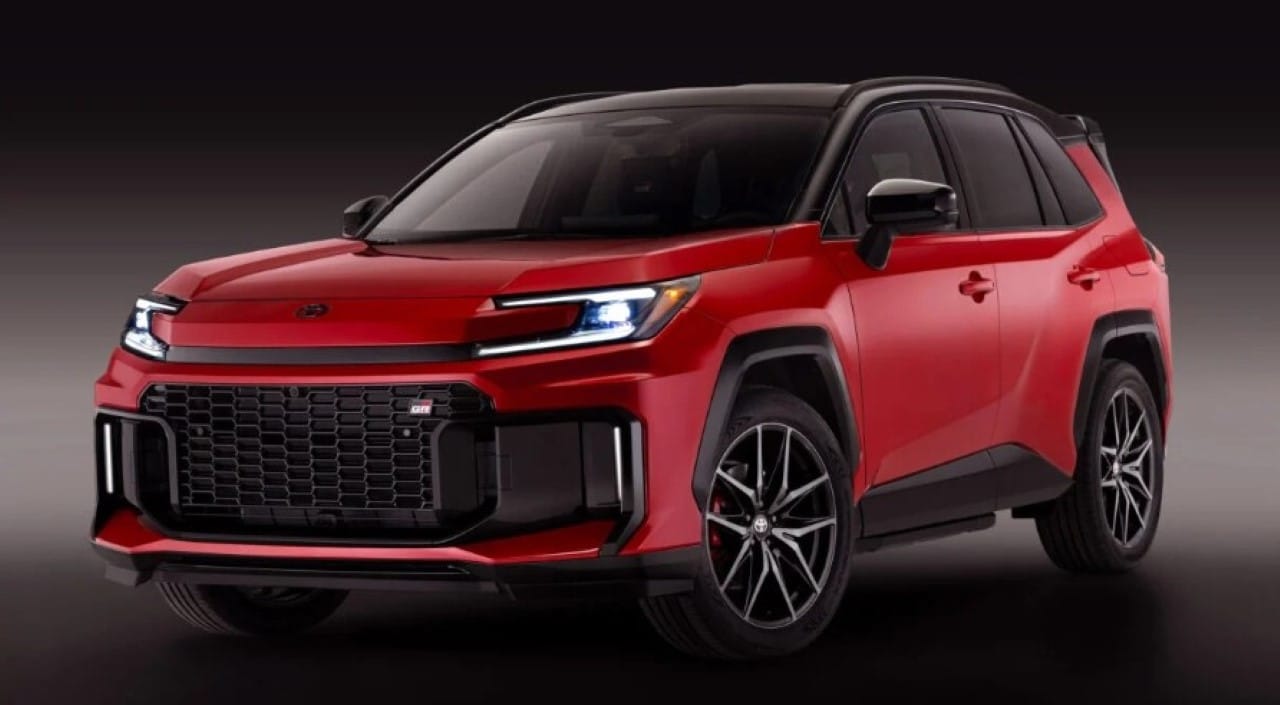
A revolution in exterior design
The look of the new Toyota RAV4 represents a break with the style of the previous generation. The “hammerhead” front end is characterized by tapered LED headlights and a front grille integrated into the bumper, creating a modern and imposing visual signature. Essa design approach replaces the current model’s more angular lines with a cleaner, more sophisticated look.
Despite the modernization, the SUV maintains elements that reinforce its adventurous vocation, such as higher profile tires and pronounced fenders. At the rear, the lights are connected by an illuminated horizontal bar, a design trend that Toyota has applied to its most recent releases to create a cohesive and easily recognizable visual identity.
Technological and more spacious interior
Inside, the RAV4 cabin has been completely redesigned to offer more comfort and technology. The dashboard now houses a multimedia center with a screen of up to 14 inches, depending on the version, which centralizes the entertainment and navigation functions. The operating system has been updated to allow remote updates, ensuring the vehicle receives new features and improvements on an ongoing basis.
The interior space was slightly increased, mainly benefiting rear seat passengers and the trunk capacity. The Toyota also invested in higher quality finishing materials, with soft-touch surfaces and synthetic leather upholstery options, increasing the perception of sophistication and comfort on board the SUV.
Exclusively hybrid and more powerful engine
The sixth generation RAV4 will be offered exclusively with a hybrid engine. The system combines a 2.5-liter combustion engine with electric drives, delivering a combined power of up to 226 horsepower in the entry-level version, a notable increase compared to the current model. Essa configuration guarantees more vigorous acceleration and greater fuel consumption efficiency.
The E-Four all-wheel drive system has also been improved, using a dedicated electric motor for the rear axle, which distributes torque intelligently to ensure maximum grip on different types of terrain. With this technology, the SUV offers more safety and stability, whether on asphalt or dirt roads.
In addition to the conventional hybrid version, the Toyota will offer a plug-in hybrid (PHEV) variant in selected markets. Este model will feature a larger capacity battery, allowing a purely electric range of more than 100 kilometers, ideal for daily urban use without pollutant emissions.
Improved security with new Toyota Safety Sense
The Toyota Safety Sense safety package has been updated to its latest generation, bringing even more advanced driver assistance features. The automatic emergency braking system, for example, now has an improved ability to detect pedestrians and cyclists, even in low light conditions, increasing safety in urban environments.
Adaptive cruise control (ACC) has been refined to operate more smoothly at low speeds, making driving in traffic jams less tiring. The functionality is complemented by the lane keeping assistant, which makes more precise steering corrections to keep the vehicle centered, providing a safer semi-autonomous driving experience.
To make maneuvering in tight spaces easier, the new RAV4 has a 360-degree camera system and ultrasonic parking sensors. Essas technologies offer a complete view of the vehicle’s surroundings, helping to prevent minor collisions and making parking simpler and safer for the driver.
The vehicle’s structure also received reinforcements, with the extensive use of high-strength steel in the construction of the body. Esse structural enhancement improves energy absorption in the event of a collision, ensuring greater protection for all occupants and aiming for the highest ratings in global safety tests.
Versions and prices for the global market
At Japão, the new RAV4 will initially be launched in two main versions: Adventure, with a more robust and off-road appeal, and Z, focused on a more urban and sophisticated finish. Ambas configurations will come equipped with the complete hybrid system and the brand’s latest connectivity and safety features, catering to different consumer profiles since its launch.
On the Estados Unidos, the range of versions will be wider, including options such as the Woodland, designed specifically for outdoor activities with elevated suspension. Starting prices for the North American market should start at approximately $31,900. Pacotes options will allow you to add luxury items, such as a panoramic sunroof and premium sound systems, further personalizing the onboard experience.
The arrival of the new RAV4 at Brasil
The presence of prototypes of the sixth generation RAV4 being tested at Brasil is a strong indication that Toyota is committed to bringing the model to the country with the necessary adaptations. The main one should be the calibration of the hybrid system to operate with ethanol, resulting in a flex hybrid technology that combines energy efficiency with a renewable fuel. The Essa strategy has already been successfully used in other models of the brand, such as the Corolla and the Corolla Cross, and is widely accepted by the Brazilian public due to the tax and environmental benefits. The official launch on the national market is expected in the first half of 2026, positioning the new RAV4 to compete directly with other successful medium SUVs, such as the Honda CR-V and the Volkswagen Tiguan. Although prices have not yet been defined, an increase in relation to the current generation is expected, justified by the incorporation of new technologies, the renewed design and the more powerful and efficient powertrain. The Toyota dealership network is already preparing to receive the model, which has a successful history and a loyal customer base in the Brasil, consolidated by its reputation for reliability and low maintenance costs.
Evolution of a segment icon
Since its original launch in 1994, the Toyota RAV4 has established itself as one of the pioneers and leaders in the compact and midsize SUV segment. The sixth generation continues this legacy, evolving on the solid foundation of the TNGA platform to deliver a vehicle that prioritizes electrification, safety and connectivity, aligned with the trends and demands of the modern automotive market.



