


Toyota officially confirmed the launch of the Yaris Cross XR in the Brazilian market, a strategic move that intensifies competition in the fierce compact SUV segment. The new model arrives with the mission of directly challenging consolidated competitors such as the Honda WR-V and the Nissan Kicks. The automaker is betting on a package that balances modern design, efficiency and a robust set of equipment to attract consumers.
The vehicle will be produced at the Toyota factory in Sorocaba, São Paulo, the result of a significant investment to modernize the assembly line. The arrival of the Yaris Cross XR fills an important gap in the brand’s portfolio, which until then did not have a strong representative in the entry-level sports utility vehicle range, positioning itself below the Corolla Cross.
The price range established for the Yaris Cross XR, starting at R$149,990, puts it in direct confrontation with the intermediate and top versions of its main rivals. Essa aggressive pricing strategy demonstrates Toyota’s intention to gain a significant share of the market, attracting customers looking for a well-equipped SUV without exceeding the R$160,000 barrier.
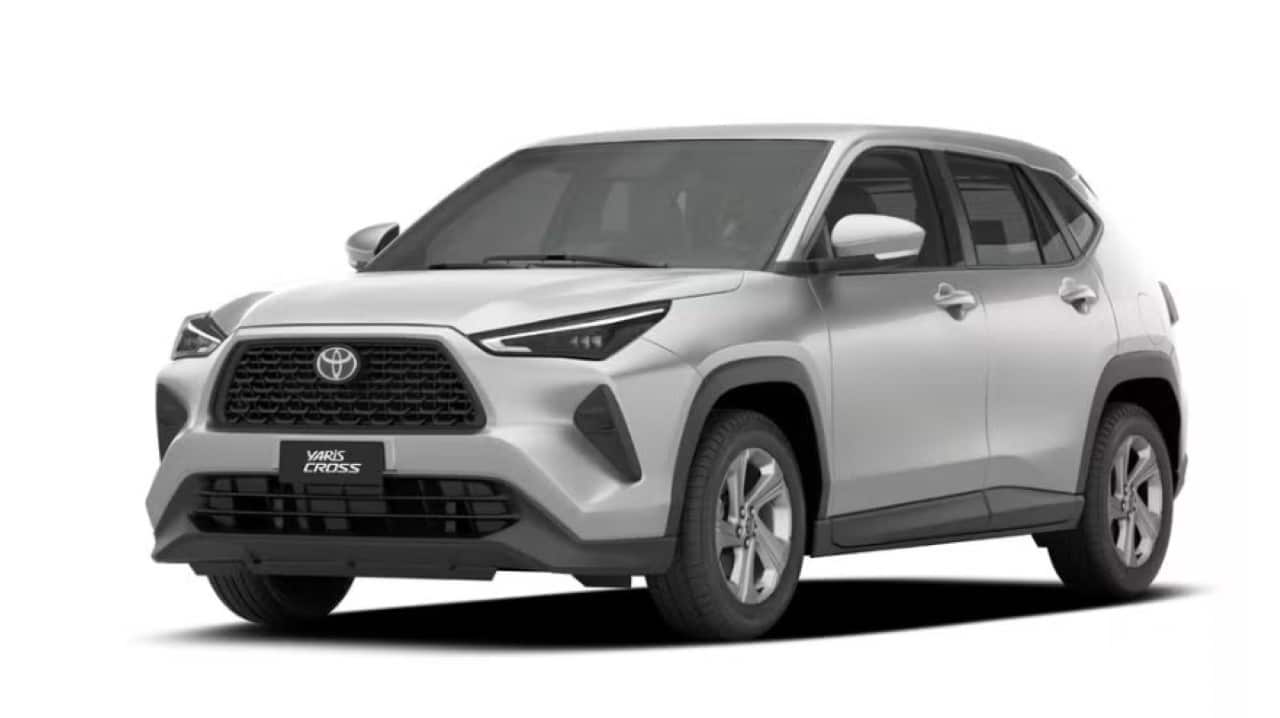
Sales are expected to begin next semester, with dealerships preparing to receive the first units. Toyota plans a strong marketing campaign to highlight the model’s differences, focusing on its heritage of reliability and the new platform that promises a superior driving experience.
Strategic positioning in the national market
Toyota’s decision to introduce the Yaris Cross XR into the Brasil reflects a careful analysis of trends in the national automotive market, where compact SUVs continue to dominate consumer preference. By positioning the model at a competitive price, the brand not only challenges the Honda and Nissan, but also enters the fray with other high-volume vehicles such as the Hyundai Creta and Chevrolet Tracker. The strategy aims to capture both the brand’s loyal customers, who have been waiting for a more affordable SUV option, and new consumers who value the reputation for durability and low maintenance costs associated with the Toyota. The launch is seen by experts as one of the most important for the automaker in recent years, as it has the potential to redefine the sales ranking in the segment and significantly increase the company’s market share. Local production in Sorocaba is also a crucial factor, allowing greater logistical flexibility and control over costs, which is directly reflected in the final price to the consumer and the ability to respond to market demand.
Engine and performance comparison
The Toyota Yaris Cross XR is equipped with a 1.5 flex naturally aspirated engine, capable of generating up to 122 horsepower and 15.3 kgfm of torque. Este mechanical set works in harmony with a CVT automatic transmission that simulates seven speeds, a configuration that prioritizes comfort and efficiency in fuel consumption.
In comparison, the Honda WR-V uses a 1.5 engine with direct injection, which delivers a slightly higher power of 126 horsepower and a more robust torque of 18.5 kgfm. Acoplado to a CVT transmission, the Honda model stands out for offering more agile responses, being an interesting option for those looking for more dynamic performance in the city and on the highway.
The Nissan Kicks, in turn, has a 1.6 flex engine that produces 113 horsepower and 15.3 kgfm of torque, numbers that place it in a more modest position in terms of power. The transmission is also a CVT, with six-speed simulation, focusing on smooth and economical driving, which has been one of its main attractions over the years.
The fight for fuel efficiency
In terms of consumption, the Yaris Cross XR presents competitive numbers. Utilizando gasoline, the model records an average of 12.6 km/l in urban cycle and 14.3 km/l on highways. Quando fueled with ethanol, averages are 8.8 km/l in the city and 10.2 km/l on the highway, positioning it as one of the most economical options in the category.
The Honda WR-V also shows good efficiency. With gasoline, it achieves 12 km/l in the city and 12.8 km/l on the highway. With ethanol, the numbers are 8.2 km/l and 8.9 km/l, respectively. Embora is more powerful, its road consumption is a little lower than that of the Toyota rival.
The Nissan Kicks stands out with averages of 11.3 km/l in the city and 13.7 km/l on the highway when fueled with gasoline. With ethanol, consumption is 7.8 km/l and 9.4 km/l. Esses data confirms its vocation for economy, although the Yaris Cross XR has a small advantage, especially in the road cycle.
These numbers are crucial to the purchasing decision, as they directly impact the cost of owning the vehicle in the long term. The efficiency of the Yaris Cross can be an important differentiator to attract consumers who travel long distances daily.
Dimensions and internal space in the scale
The Honda WR-V stands out as the most spacious among the three, measuring 4.32 meters in length and with a wheelbase of 2.65 meters, ensuring excellent legroom for rear seat passengers. Seu trunk is the largest in the category, with a capacity of 458 liters, a great attraction for families.
The Toyota Yaris Cross XR has more compact dimensions, measuring 4.31 meters long and with a wheelbase of 2.62 meters, offering comfortable interior space, although slightly smaller than that of the WR-V. Its trunk capacity is 400 liters, a volume suitable for everyday use and short trips.
Embedded technology and connectivity
All three models are well equipped in terms of technology, offering multimedia centers with connectivity for Android Auto and Apple CarPlay. The Yaris Cross XR and Honda WR-V have 10-inch screens, while the Nissan Kicks uses a 9-inch screen in its most complete versions.
The Yaris Cross XR’s instrument panel combines analog and digital elements, offering a modern and easy-to-read interface for the driver. The quality of the sound system and the tactile response of the screen are points that Toyota sought to improve to differentiate itself from the competition.
Driver safety and assistance
Safety is a strong point in the three SUVs, which come standard with six airbags, stability and traction control, and hill start assistant. The Toyota Yaris Cross XR, however, stands out for including features from the Toyota Safety Sense package, such as adaptive cruise control and an emergency braking system, raising the standard of active safety in the segment.



