


Toyota officially announced the launch price of the Yaris Cross XR, which will arrive at dealerships from April 2026 at a cost of R$149,990. Este price positioning places the new model in a direct and fierce dispute in the compact SUV segment, one of the most competitive in the national market.
The launch of the Toyota aims to attract consumers who seek a balance between equipment, performance and reliability, characteristics already associated with the brand. The strategy is clear: directly face established rivals such as the Honda WR-V and the Nissan Kicks, which already have a solid customer base in the country.
With the arrival of the Yaris Cross XR, the expectation is for a reconfiguration of consumer preferences. Toyota is betting on a robust equipment package and its after-sales reputation to gain a significant share of this market, which continues to expand and increasingly attracts the attention of large automakers.
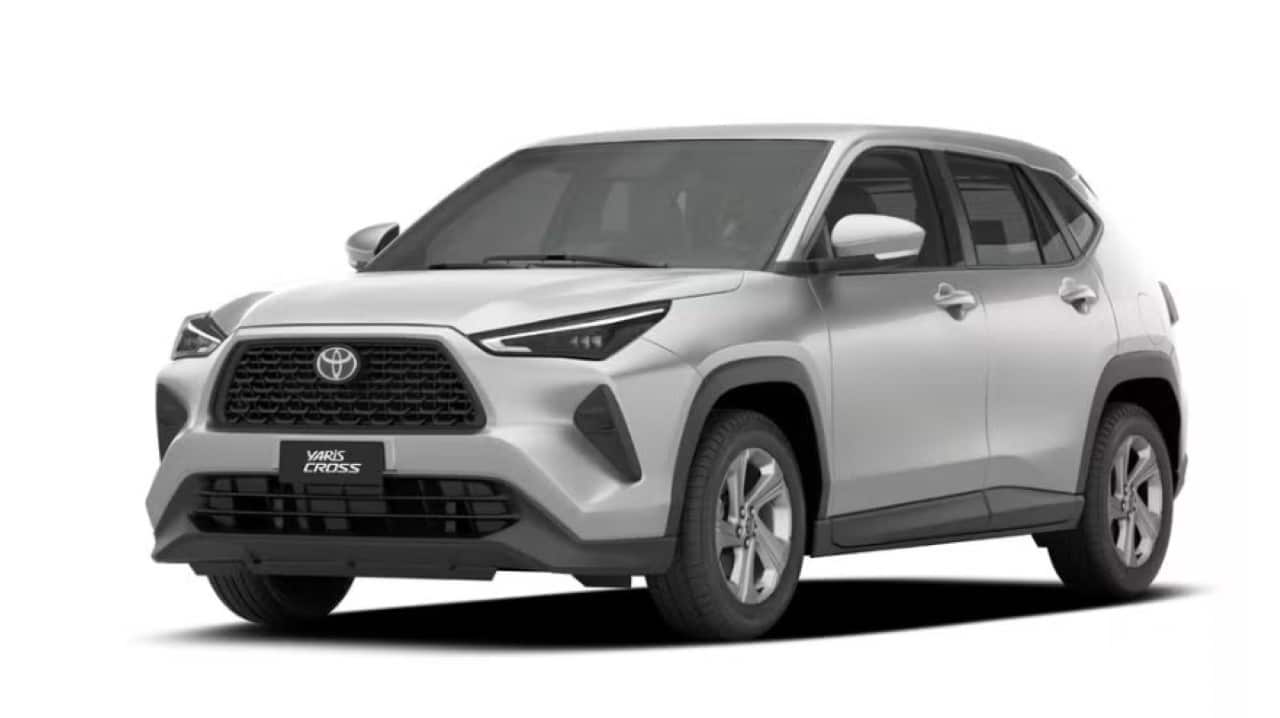
Price details and market positioning
The value of R$149,990 for the Toyota Yaris Cross XR strategically positions it among its main competitors. The Honda WR-V, for example, has a price range starting at R$147,100 in the EX version and reaching R$152,100 in the top-of-the-line EXL configuration. Já o Nissan Kicks, in the Advance Plus version, is sold for R$ 149,890, a value practically identical to that of the launch of the Essa proximity of prices indicates that the consumer’s decision will be strongly influenced by factors such as the list of equipment, design, performance and maintenance costs. With this strategy, Toyota seeks to offer an added value package that justifies the choice of its model, focusing on technology differences and mechanical reliability, which are pillars of the brand. The intention is to attract not only loyal customers, but also those who are looking for their first SUV and analyze in detail the cost-benefit of each option available in the segment.
Engine and performance comparison
The Toyota Yaris Cross XR is equipped with a 1.5 flex aspirated engine, capable of generating up to 122 horsepower and 15.3 kgfm of torque. The transmission is a CVT, which simulates seven gears, a configuration that prioritizes comfort and efficiency in fuel consumption, both in urban environments and on highways.
In contrast, the Honda WR-V uses a 1.5 direct injection engine that delivers 126 horsepower and a higher torque of 18.5 kgfm. Também coupled to a CVT transmission, the Honda model stands out for offering more vigorous performance, with more agile responses, which can be a decisive factor for drivers who value more dynamic driving.
The Nissan Kicks Advance Plus, in turn, comes with a 1.6 flex engine that produces 113 horsepower and 15.3 kgfm of torque, combined with a CVT transmission that simulates six speeds. Embora has the lowest power among the three, the Nissan model is recognized for its sporty driving and agility, especially in urban traffic, which appeals to a specific segment of consumers.
The three SUVs are designed to offer a balance between performance and economy, with CVT transmissions that help with smooth everyday driving. The choice between them will depend on the driver’s priorities: the efficiency of the Yaris Cross, the power of the WR-V or the sporting agility of the Kicks.
Fuel efficiency in focus
One of the great highlights of the Yaris Cross XR is its remarkable energy efficiency. Segundo official data, with gasoline, the model records a consumption of 12.6 km/l in the city and 14.3 km/l on the highway. Quando fueled with ethanol, the figures are 8.8 km/l in the urban cycle and 10.2 km/l on the highway, making it one of the most economical options in the segment.
The Honda WR-V, in turn, has a consumption of 12 km/l in the city and 12.8 km/l on the highway with gasoline. With ethanol, the SUV achieves 8.2 km/l and 8.9 km/l, respectively. While the Embora’s power figures are superior, its efficiency on the road is slightly below that of the Toyota’s competitor.
The Nissan Kicks Advance Plus records, with gasoline, an average of 11.3 km/l on urban routes and 13.7 km/l on highways. With ethanol, the values are 7.8 km/l and 9.4 km/l. Esses data reinforces the Yaris Cross’s position as a strong competitor in terms of fuel economy, an increasingly relevant factor for the consumer.
Dimensions and internal space
In the compact SUV segment, dimensions and interior space are crucial, and the three models have important differences. The Honda WR-V stands out as the largest of the trio, measuring 4.32 meters long, 1.79 meters wide and with a wheelbase of 2.65 meters, ensuring great space for rear seat passengers. Seu trunk, with a capacity of 458 liters, is the largest in the category, making it a great attraction for families.
The Toyota Yaris Cross XR, despite being slightly smaller, offers competitive dimensions with a length of 4.31 meters and a wheelbase of 2.62 meters. The trunk has a capacity of 400 liters, a volume suitable for daily needs and short trips. The Nissan Kicks has similar measurements, measuring 4.30 meters long and with a wheelbase of 2.62 meters, and its luggage compartment holds 432 liters, positioning itself as an intermediate option in terms of space.
Equipment and standard items
In terms of equipment, the three SUVs are well suited to compete in the market. Todos models feature LED headlights and taillights and 17-inch alloy wheels as standard. The interior of the Yaris Cross XR and WR-V stands out for the use of soft touch materials on the dashboard, providing a feeling of greater refinement.
An important difference is in the seats. The Enquanto, the Yaris Cross XR and the Nissan Kicks Advance Plus offer leather-covered seats, the Honda WR-V, even in its most expensive version, the EXL, is the only one that offers this option, which can influence the purchasing decision of those who value a more sophisticated interior finish.
Technology and connectivity on board
All three vehicles are well equipped in terms of connectivity, offering multimedia centers with mirroring for Android Auto and Apple CarPlay. The Toyota Yaris Cross XR and Honda WR-V have 10-inch screens, while the Nissan Kicks comes with a 9-inch screen. The Yaris Cross XR’s instrument panel combines analog and digital elements, offering a modern and easy-to-read interface for the driver.
Safety and driving assistants
Safety is a strong point in the three models, which come standard with six airbags, stability and traction control. The Toyota Yaris Cross XR includes the Toyota Safety Sense package, which offers automatic emergency braking and lane keeping assist, reinforcing occupant protection in various driving situations.
Driver assistance technologies also set competitors apart. The Honda WR-V has adaptive cruise control and lane keeping assistant. Já o Nissan Kicks Advance Plus offer forward collision warning and intelligent braking assistant, ensuring that the three vehicles deliver a high level of safety for the segment.



