

The pre-season of Fórmula 1 at Circuito of Barcelona-Catalunya continues in full swing, with this Thursday morning (29) revealing a grid of multiple speeds and different challenges. The young talent Andrea Kimi Antonelli, driving the Mercedes, set the pace, recording the fastest time of the session and demonstrating a remarkable adaptation to the new technical regulations. Sua consistent performance contrasted with the setbacks faced by other top teams.
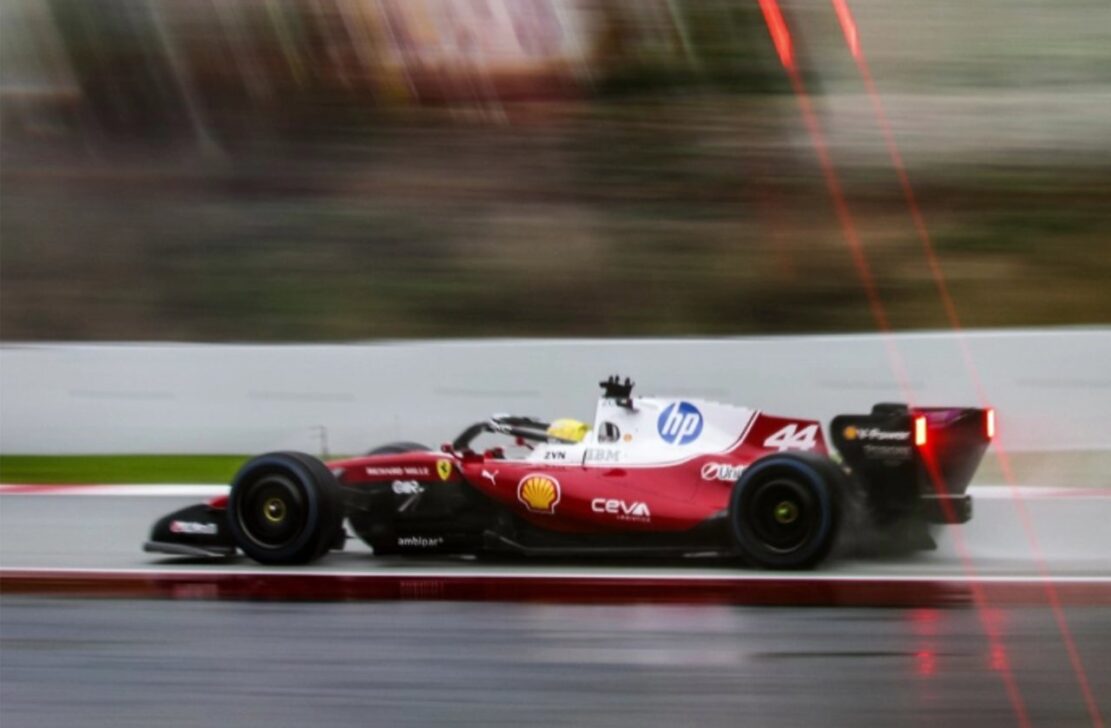
While Mercedes exhibited reliability, Ferrari experienced a moment of apprehension with its new pilot, Lewis Hamilton. The seven-time world champion lost control of his single-seater and spun into the middle of the track, an incident which, although without serious consequences for the car, briefly halted his testing program and raised questions about the balance of the new Maranello design. The Briton managed to return to the pits, but the lost track time is valuable at this crucial stage of development.
The scenario in the pits was also one of intense activity and some logistical setbacks. Equipes like Red Bull and Aston Martin face a race against time to get their cars into optimal condition, dealing with delays in the arrival of parts and complex rebuilds. The morning session showed that the search for performance goes hand in hand with the need for maximum reliability before the start of the championship.
Lap times recorded up to 10:30am local time reflect the different testing programs underway, with some teams focusing on qualifying pace and others on full-tank race simulations. The preliminary time table shows an interesting competitiveness between the different power unit suppliers:
- Andrea Kimi Antonelli (Mercedes): 1min17s081
- Lewis Hamilton (Ferrari): 1min18s654
- Oscar Piastri (McLaren): 1min18s863
- Liam Lawson (Red Bull/RB): 1min19s369
- Sergio Pérez (Red Bull): 1min22s508
Headaches for Red Bull in the pits of Montmeló
Red Bull Racing, the current champion team, faces a significant logistical challenge that directly impacts its schedule. Após the accident of Isack Hadjar on Tuesday, the Austrian team awaits the arrival of crucial components sent from the factory in Milton Keynes to finalize the rebuild of the main chassis. The situation left mechanics in a state of forced waiting, with track time running out.
The team’s top priority is to get the car ready for the return of Max Verstappen, scheduled for Friday. Enquanto that, Sergio Pérez continues work with the spare chassis, accumulating mileage and collecting data. However, its considerably higher lap times indicate that the focus is on systems checks rather than performance, which could leave the team a step behind in aerodynamic optimization.
The loss of track time in a pre-season with new rules is a considerable setback. Cada lap is essential to understand tire behavior, fuel consumption and the correlation between simulator data and reality. The technical team works under pressure to ensure that the delay does not compromise preparation for the first stage of the world championship.
The situation also puts extra pressure on Pérez, who has the responsibility of running the development program alone for now. The team needs to maximize information gathering with the spare car to compensate for the absence of the main chassis, focusing on long-term testing and the reliability of the new power unit.
Aston Martin starts activities with provisional look
Aston Martin also deals with a tight schedule, having only received her car on Wednesday morning. The logistical delay forced the Silverstone team to adopt a contingency strategy to avoid losing any more track time. The single-seater took to the asphalt with a temporary all-black paint job, a common tactic to hide aerodynamic details and design innovations from prying eyes and photographers’ lenses.
Engineers work intensely to finalize systems integration and software adjustments, tasks that would normally be carried out more calmly. The British team’s initial focus is on checking the structural integrity of the chassis and the cooling system of the new power unit, which is one of the biggest challenges of the new regulations. The camouflage livery allows the team to carry out crucial aerodynamic tests without revealing its solutions to rival teams, ensuring a strategic advantage until the car’s official unveiling.
Technical performance and reliability in focus
Andrea Kimi Antonelli’s performance with Mercedes did not go unnoticed in the paddock. The time of 1min17s081, combined with 31 laps completed without any apparent problems, suggests that the German team has found a solid base for its new car. The reliability demonstrated at the beginning of work allows engineers to move on to more complex programs, such as race simulations and tire wear tests over long stints, which represents a significant advantage over competitors who still resolve basic faults. The durability of the electrical components and power unit seems to be a strong point of the Mercedes package at the beginning of this era.
On the other side of the coin, the incident with Lewis Hamilton raised a warning signal at Ferrari. The Maranello team is now looking at telemetry data to identify the cause of the round. The investigations seek to determine whether the problem was an aerodynamic instability inherent to the design, a failure in engine torque mapping or simply a pilot error when exploring the limits of a still unknown car. Entender the root cause is vital to ensure that the problem does not recur, especially in high-speed curves where the driver’s confidence is essential to extract maximum performance from the equipment.
Divergent strategies mark the testing week
The absence of teams like Williams and Haas on the track this Thursday illustrates the different working philosophies on the grid. Escuderias with more limited budgets need to manage their resources extremely carefully. Williams, for example, has chosen to focus its efforts on simulation work at its factory in Grove, believing it can obtain more valuable data this way before putting the car on the track.
Haas, in turn, consolidated its testing program for Friday, aiming for a unique and intensive journey to optimize logistics and personnel costs. Essa “all or nothing” approach in a single day requires impeccable preparation, as any mechanical failure can jeopardize your entire pre-season. Spare parts management is also a critical factor, as stock of new components is limited for all teams at the beginning of the year.
McLaren and RB show solid progress
While the top teams dealt with their own dramas, McLaren and RB (formerly AlphaTauri) had a productive morning. Oscar Piastri kept McLaren consistently among the frontrunners, with the team focusing on extensive airflow testing. Sensores and paraffins were used on the fairing to visualize aerodynamic behavior and validate wind tunnel data, an essential process to ensure the effectiveness of future upgrades.
Liam Lawson, driving for RB, also recorded a competitive time, placing the team in a promising position in the midfield. The progress of both teams suggests that the contest in the middle of the grid will be as tight as at the front, with every tenth of a second being fought for fiercely through optimizations and precise data collection.
The importance of the Catalan route
The Circuito of Barcelona-Catalunya remains the ideal stage for the pre-season of the Fórmula 1 for a clear reason: its varied configuration tests all aspects of a car. Fast corners require aerodynamic efficiency, while slower sectors demand good mechanical balance and traction. Performing well in Montmeló is often a strong indication of a car’s potential for the rest of the season.