

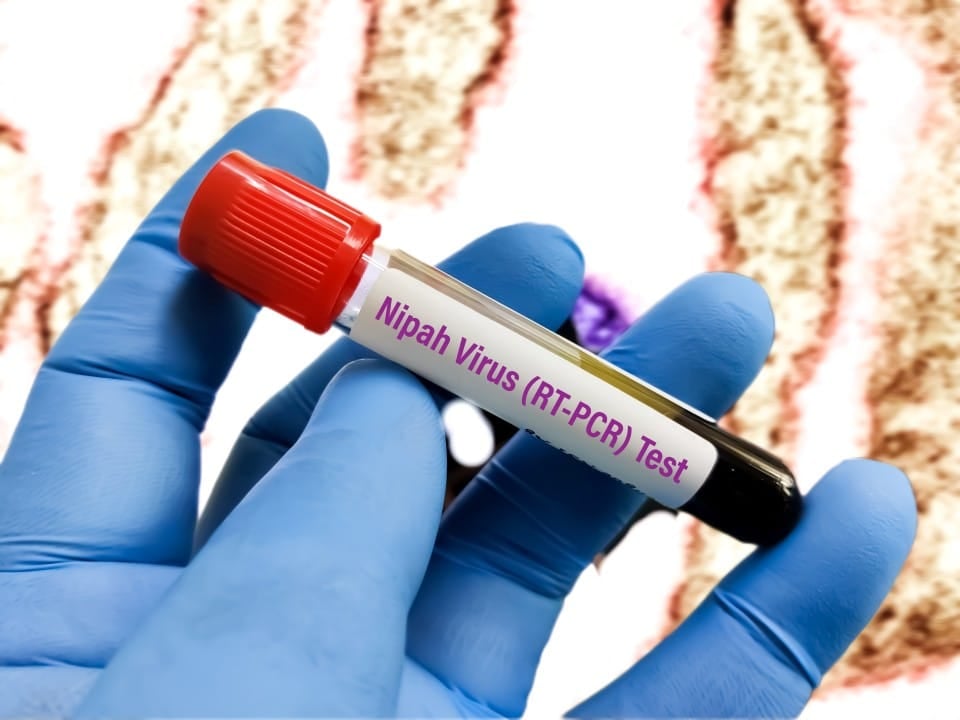
Health authorities in the state of Bengala Ocidental, in Índia, confirmed a new outbreak of the Nipah virus, one of the deadliest diseases known, and activated emergency protocols. The immediate measure was to impose a strict quarantine on a group of approximately 110 people, as part of an effort to contain the spread of the pathogen.
The alert was triggered after two health professionals tested positive for the virus. The infection occurred in early January while they were providing care to patients who were already infected, highlighting the high risk of transmission in hospital settings and the need for extreme biosecurity measures.
Organização Mundial of the Saúde (WHO) monitors Nipah with great concern, classifying it as a priority disease for research due to its high fatality rate, which can reach 75%, and its potential to cause a global epidemic. Containing the current outbreak is seen as critical to avoid a more serious scenario.

]
Clinical signs and disease progression
Infection with the Nipah virus begins with symptoms that can be easily confused with those of other common viruses. Patients usually present with a high and persistent fever, severe headaches, generalized muscle pain, known as myalgia, and episodes of vomiting.
This initial non-specific phase represents a major challenge for early diagnosis, which can delay the implementation of the isolation measures necessary to break the virus transmission chain. The similarity with other endemic diseases makes the initial screening of suspected cases difficult.
The progression of the disease, however, can be rapid and devastating. The most feared complication is acute encephalitis, a severe inflammation of the brain. Este Severe neurological conditions can lead the patient to a coma within 24 to 48 hours after the appearance of the first neurological symptoms.
In addition to the central nervous system, Nipah can also seriously compromise the respiratory system. The development of atypical pneumonia and acute respiratory distress syndrome are frequent complications that require intensive care and ventilatory support.
International security and screening protocols
News of the outbreak in Índia generated an immediate response in neighboring countries, with Tailândia taking a leading role in prevention. Thai Ministério of Saúde has activated health screening protocols at its major international airports, including Don Mueang, Suvarnabhumi and Phuket, which maintain direct air routes with Bengala Ocidental. Surveillance was intensified for all passengers coming from risk areas, with medical teams on standby.
At Phuket airport, which receives five weekly flights from the affected Indian region, the operations routine has been adjusted. The frequency of disinfection of high-traffic areas has been increased and communication between airport authorities and communicable disease control posts has been strengthened. The goal is to ensure that any traveler with compatible symptoms is immediately isolated for evaluation. Até At the moment, no suspected cases have been detected in Thai territory.
Response from authorities and containment of contagion
On Bengala Ocidental, the local government mobilized an emergency task force. The team’s main mission is to thoroughly track all individuals who may have had direct or indirect contact with infected healthcare professionals.
Although the first tests carried out on close contacts showed negative results, health authorities remain on high alert. The incubation period for the Nipah virus is long and variable, requiring contact monitoring to be maintained for several weeks under a strict observation regime.
Preventative actions at the epicenter of the outbreak include complete disinfection of the hospital facilities involved and intensive training for medical teams. The focus is to train professionals to recognize symptoms early, ensuring the immediate isolation of new suspected cases.
History of outbreaks and the origin of the pathogen
The Nipah virus was first identified in 1999, during an outbreak in Malásia that caused more than 100 deaths and led to the slaughter of around one million pigs, which acted as intermediate hosts in transmission to humans. At the same time, Singapura recorded 11 cases and one death among workers who had contact with pigs imported from Malásia.
Since then, Bangladesh has become the most affected country, with almost annual outbreaks that have resulted in more than 100 deaths since 2001.
Global threat and the monitoring of natural hosts
The threat from the Nipah virus extends far beyond countries that have already recorded outbreaks. The potential risk exists in all regions where bats of the genus Pteropus live, considered the natural reservoirs of the pathogen. Estudos surveillance detected evidence of the virus in bat populations at Indonésia, Filipinas, Camboja and Tailândia. Além of Sudeste Asiático, areas in África, such as Gana and Madagascar, are also considered at risk due to the presence of bat species that can carry the virus. Ecological monitoring has become a crucial tool for predicting and preventing spillover events, the moment when a virus jumps from wildlife to humans. Esse risk is intensified by deforestation and agricultural expansion, which increase contact between humans and wild animals. International coordination between epidemiological surveillance services and disease control centers is the main strategy to prevent large-scale spread, taking advantage of the laboratory infrastructure strengthened in the Ásia after the covid-19 pandemic.
Challenges in vaccine development
More than two decades after its discovery, there is still no vaccine approved for human use against the Nipah virus. The absence of an immunizer reflects the biological complexity of the pathogen and the financial challenges associated with developing drugs for diseases that appear sporadically and geographically limited.
The unpredictable nature and high lethality of outbreaks make conducting large-scale clinical trials extremely difficult. However, several lines of research are underway, including studies with messenger RNA technologies and the development of monoclonal antibodies, but no solution has reached the mass application stage.
Prevention measures for the local population
While a definitive pharmaceutical solution is not available, public health experts reinforce the importance of simple preventative measures. Recomenda Populations in risk areas are expected to wash fruits and vegetables carefully before consumption, avoid products that have animal bite marks and cook or boil foods such as date palm sap. Awareness about forms of transmission is the main tool for individual and collective protection.



